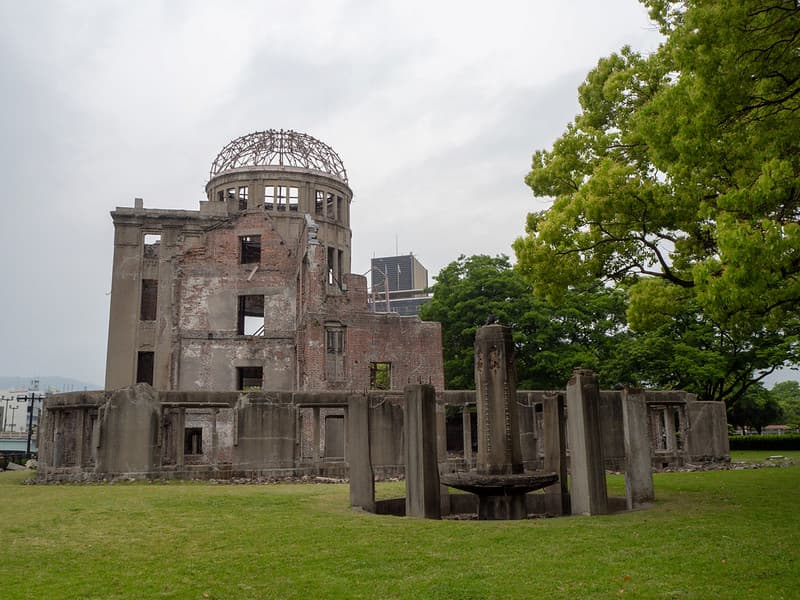
The Hiroshima Peace Memorial (Genbaku Dome) is a poignant historical landmark and a powerful symbol of peace, located in Hiroshima, JAPAN. Originally constructed in 1915 as the Hiroshima Prefectural Commercial Exhibition Hall, this European-style building was situated almost directly below the hypocenter of the atomic bomb detonated on August 6, 1945. Remarkably, while the city around it was decimated, the central portion of the structure’s skeletal frame and outer walls survived. Today, it stands as a preserved ruin, maintained exactly as it appeared after the blast to serve as a stark reminder of the destruction caused by nuclear weapons and a testament to the endurance of humanity.
Attraction
Tourists from around the world visit the site to engage with a profound chapter of modern history.
- Symbol of Peace: It serves as a universal monument advocating for the abolition of nuclear weapons and the pursuit of lasting global peace.
- Historical Reflection: Visitors can contemplate the contrast between the preserved ruins and the reconstructed, thriving city of Hiroshima, offering a moving experience that balances tragedy with hope and resilience.
- Immersive Educational Experience: The dome is the centerpiece of the larger Hiroshima Peace Memorial Park, which includes the Hiroshima Peace Memorial Museum. The museum provides detailed, human-centered narratives through survivor testimonies, historical photography, and recovered artifacts, allowing visitors to deeply understand the impact of the bombing.

World Heritage
Inscribed on the UNESCO World Heritage List in 1996, the Genbaku Dome was recognized for its Outstanding Universal Value:
- Testimony to Human History: It serves as a silent, powerful witness to the first use of an atomic bomb on a civilian population and is a globally recognized legacy of the tragic consequences of nuclear warfare.
- Cultural Significance: The site is a manifestation of Hiroshima’s pledge to peace. Its preservation represents a common awareness that nuclear weapons must never be used again, making it a legacy for the entire human race.
- Architectural Resilience: It acts as a rare, authentic structure that links the pre-war era to the post-war recovery, preserved as a historical asset under Japan’s cultural protection laws.
Gateway
Hiroshima City serves as the primary gateway to the memorial.
- Airport: Hiroshima Airport (HIJ) is the closest facility. It provides convenient access to the city center, from which you can easily reach the Peace Memorial Park via shuttle bus, streetcar, or train.
- Lodging: Hiroshima City offers a wide range of accommodation, from luxury hotels to budget-friendly business inns and traditional options, making it an excellent base for an overnight stay while exploring the park, museum, and other local landmarks.
When
- Spring (March–May): This is widely considered the best time to visit. The weather is mild and pleasant, making it comfortable to explore the expansive park grounds on foot.
- August 6th: For those wishing to participate in the solemnity of history, this date marks the annual Peace Memorial Ceremony. It is a time when people gather to honor the victims and pray for peace, though it is also the most crowded time of year.
Consideration
- Emotional Impact: The museum and memorial grounds contain graphic and sobering details regarding the bombing. It is a place of deep reflection that many find emotionally intense.
- Etiquette: Visitors are asked to remain respectful within the park and inside the museum. Avoid disturbing exhibits or causing disturbances, as the site is a place of mourning and remembrance.
- Planning Ahead: If you wish to visit during peak times, such as the anniversary in August, ensure you check for any special entry requirements or reservation needs, as the city can be very busy.

Resources
- Hiroshima Peace Memorial Museum Official Website: The primary source for historical exhibits, museum hours, and visitor information.
- UNESCO World Heritage Centre: Official documentation regarding the site’s World Heritage status and its historical significance.
- Hiroshima Peace Memorial Park (Japan National Tourism Organization): Offers practical travel tips, access information, and background on the surrounding park.
- Hiroshima City Official Website: Provides comprehensive information on peace initiatives, historical background, and local government perspectives.
- Trip.com: A travel platform that offers bookable guided tours and transportation passes for the Hiroshima area.


Comments:
One response to “Hiroshima Peace Memorial (Genbaku Dome)”
-
Perhaps the saddest section of the park is dedicated to the children who died such as Sadako Sasaki, a schoolgirl who survived the blast only to be eaten away by leukaemia a decade later. While in hospital, she started folding paper cranes, trying to reach 1,000, a number said to grant a wish from the gods. However, the illness claimed her when she had completed 644 (other sources say she actually made it to 1,000). When she had passed away, Sasaki’s family and classmates completed the chain and buried it with her. This practice continues for anyone afflicted, and Sasaki’s statue at Children’s Peace Monument is often besieged with origami.

Leave a Reply