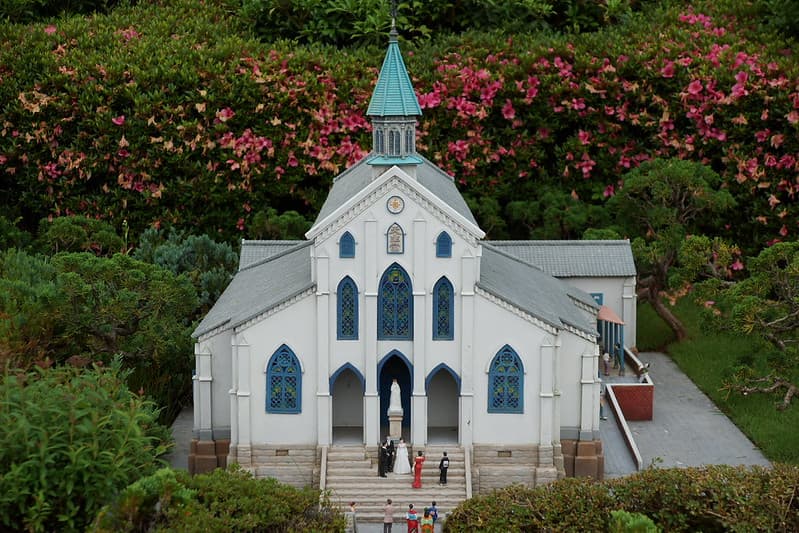
The Hidden Christian Sites in the Nagasaki Region is a collection of 12 distinct locations across Nagasaki and Kumamoto prefectures in JAPAN that bear witness to a unique period in Japanese religious history. These sites commemorate the Kakure Kirishitan (Hidden Christians) who, after Christianity was banned in the 17th century, secretly practiced their faith for over two centuries amidst strict persecution.
The property consists of remains of villages, churches, and holy places that represent different stages of this secret history:
- Persecution and Hiding: Sites like the Remains of Hara Castle mark the site of the Shimabara-Amakusa Rebellion, which triggered the total prohibition of Christianity.
- The “Secret” Faith: Locations such as Kasuga Village, Sakitsu Village, and Ono Village show how Hidden Christians disguised their faith by using everyday objects or Shinto shrines to revere Christian symbols.
- Revival: Iconic churches like Oura Cathedral—the oldest standing church in Japan—mark the eventual end of the ban in the 19th century and the “discovery” of the Hidden Christians.
Attraction
- Unique History: Visitors are fascinated by the “living history” of a community that survived in extreme secrecy, blending Christian motifs with local Buddhist and Shinto traditions.
- Architectural Beauty: The sites include stunning wooden and brick churches (like Egami Church or Kashiragashima Church) set against Japan’s serene, rugged coastal landscapes.
- Cultural Pilgrimage: The sites offer 35 dedicated pilgrimage routes through rural villages and islands, appealing to those seeking quiet contemplation and deep cultural insight.

World Heritage
Inscribed in 2018, these sites were recognized for:
- Outstanding Universal Value: They provide rare evidence of a “vanished” religious tradition—a unique subculture that developed in isolation.
- Cultural Interchange: The sites demonstrate the creative adaptation of a foreign faith (Catholicism) into the socio-cultural fabric of Japan, despite centuries of total prohibition.
Gateway
Nagasaki City is the ideal gateway.
- Airport: Nagasaki Airport (NGS) handles domestic flights from major Japanese hubs like Tokyo and Osaka.
- Lodging: Nagasaki City offers a vast array of accommodations and serves as the central hub for accessing the outlying islands and villages via train, ferry, or local bus.
When
Spring (April–May) and Autumn (October–November) provide the most comfortable weather for navigating the often rural, hilly terrain of these sites. Avoid the peak of the rainy season (June) and the height of the summer heat.
Consider
- Sacred Spaces: Many churches remain active places of worship. Visitors must maintain strict silence, refrain from photography inside, and avoid entering the sanctuary (altar) area.
- Advance Booking: Entry to certain sites, such as Egami Church or the Former Gorin Church, often requires advance reservation via the official Nagasaki Church Information Centre.
- Respectful Conduct: Remember that these locations are not merely museums; they are sites of profound spiritual struggle. Modest dress is expected when visiting churches.

Resources
- Orasho-kokorotabi – The official site for “Hidden Christian Sites in the Nagasaki Region,” offering maps, pilgrimage routes, and history.
- Nagasaki Church Information Centre – Essential for booking tours and checking visitor etiquette.
- UNESCO World Heritage – Nagasaki – Official UNESCO documentation on the site’s status.
- Discover Nagasaki – A broad tourism portal for planning logistics in the Nagasaki region.
- Trip.com – A platform to book guided tours of the region, including Nagasaki city and surrounding cultural sites.


Comments:
Leave a Reply