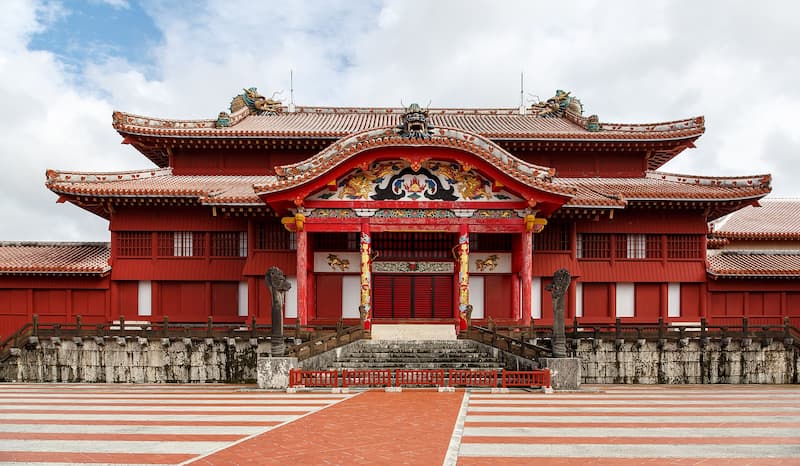
The Gusuku Sites and Related Properties of the Kingdom of Ryukyu is a UNESCO World Heritage site consisting of nine separate locations across Okinawa, JAPAN. These sites commemorate the history of the Ryukyu Kingdom (12th–17th centuries), a unique maritime state that flourished as an independent trade hub between China, Japan, and Southeast Asia.
The property includes five gusuku (fortified castles), two utaki (sacred groves/holy sites), one mausoleum, and one royal garden:
- Shuri Castle: The grandest palace of the Ryukyu kings (mostly reconstructed after WWII destruction).
- Nakijin, Zakimi, Katsuren, and Nakagusuku Castles: Notable ruins famous for their distinctively curved, mortar-free limestone walls that follow the natural terrain—a design unique to Okinawan engineering.
- Tamaudun: A royal mausoleum carved into the stone.
- Sonohyan-utaki Ishimon: A sacred stone gate.
- Shikinaen: A royal garden that blends Chinese and Japanese landscaping styles.
Attraction
Tourists are drawn by the unique architectural aesthetic—the flowing, curved limestone walls differ significantly from the rigid, vertical style of mainland Japanese castles. The sites also offer a window into a “lost” civilization. Visitors are captivated by the fusion of Ryukyuan, Chinese, and Japanese cultural influences, set against the backdrop of Okinawa’s stunning subtropical scenery and ocean views.

World Heritage
Inscribed in 2000, these sites represent the “Outstanding Universal Value” of the Ryukyu Kingdom:
- Unique Cultural Identity: They testify to a rare cultural tradition of a vanished kingdom that acted as a crucial economic junction in East Asia.
- Architectural Innovation: The sites showcase a specific technique of stone masonry and castle layout that evolved to suit the island’s geography and climate.
- Spiritual Significance: The inclusion of utaki reflects the indigenous religious beliefs (worship of nature and ancestors) that define Ryukyuan culture.
Gateway
Naha is the definitive gateway city.
- Airport: Naha Airport (OKA) is the primary international and domestic hub for the Okinawa islands.
- Lodging: As the capital, Naha offers extensive accommodation, from luxury hotels to traditional guest houses. It is the most convenient base for day trips to the various sites, many of which are accessible by monorail, bus, or rental car.
When
- Spring (March–May) or Autumn (September–November): These months offer the most comfortable temperatures for walking among ruins, which are largely open-air.
- Avoid: Mid-summer (July–August) can be intensely hot and humid, and the region is susceptible to typhoons.
Consideration
- Transportation: While Shuri Castle is reachable by the Okinawa Monorail, the other sites are spread across the island. Renting a car is the most efficient way to visit the outlying ruins like Nakijin or Zakimi.
- Physical Activity: Most sites are built on hills for defense and involve uneven stone paths and stairs. Wear sturdy walking shoes.
- Respect Sacred Spaces: Keep in mind that some areas (especially the utaki) remain sacred to local residents; please observe all signage regarding where photography or walking is prohibited.

Resources
- Visit Okinawa Japan – The official travel guide for comprehensive information.
- UNESCO World Heritage Centre – Official documentation of the site’s historical significance.
- Shuri Castle Park Official Site – Essential for updates on the reconstruction and events at the kingdom’s center.
- Japan Travel (JNTO) – A great resource for logistical planning and cultural context.
- Trip.com – Naha Hotels – A reliable platform for comparing accommodation in your gateway city.


Comments:
Leave a Reply