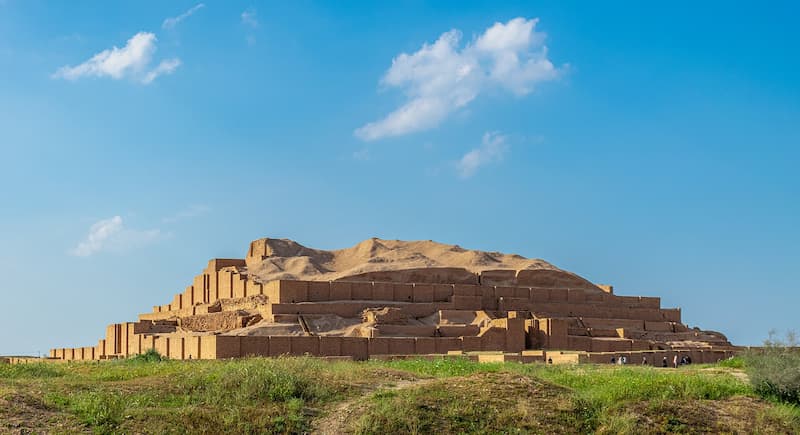
Tchogha Zanbil (Chogha Zanbil), located in the Khuzestan province of southwest IRAN, is the finest surviving example of Elamite architecture in the world. It is a massive ceremonial complex centered around a breathtaking ziggurat—a stepped pyramidal temple—that has stood for over 3,000 years.
Founded around 1250 BCE by King Untash-Napirisha, the site was originally known as Al-Untash-Napirisha (the City of Untash). It was intended to be a religious capital for the Elamite Empire, dedicated to the gods Inshushinak and Napirisha.
The complex is defined by three concentric walls:
- The Inner Enclosure: Contains the massive ziggurat. Originally, it had five levels and stood 50 meters high; today, about half of its height remains.
- The Middle Enclosure: Houses eleven temples dedicated to lesser divinities.
- The Outer Enclosure: Features the royal palaces and funerary tombs.
The ziggurat is unique because of its construction method: unlike Mesopotamian ziggurats where levels were built on top of each other, each of the five levels at Tchogha Zanbil rises directly from the ground. Thousands of baked bricks are inscribed with Elamite cuneiform, many of which are still clearly legible today.
Attraction
Tchogha Zanbil is a magnet for those fascinated by the “cradle of civilization”:
- Architectural Purity: It is the best-preserved ziggurat outside of Mesopotamia and offers a much more complete visual experience than many ruins in Iraq.
- The Cuneiform Bricks: Walking along the perimeter, visitors can see thousands of bricks stamped by hand over 3,000 years ago, creating a visceral connection to the ancient world.
- The Solar Calendar: Many scholars believe parts of the structure functioned as a sophisticated astronomical tool for determining seasons and time.
- Atmospheric Solitude: Because it is located in a relatively remote desert area, the site often lacks the heavy crowds of Persepolis, allowing for a quiet, contemplative exploration of the ruins.

(Elaheabed, Wikimedia/CC BY-SA 4.0).
World Heritage
Tchogha Zanbil was the very first site in Iran to be inscribed on the UNESCO World Heritage List in 1979, recognized under Criteria (iii) and (iv):
- Exceptional Testimony: It is the last remaining tangible evidence of the Elamite civilization, which played a pivotal role in the history of the Ancient Near East.
- Architectural Masterpiece: The ziggurat represents the pinnacle of Elamite building techniques and urban planning. Its ingenious water supply system, which brought water from the Karkheh River 45 kilometers away through a series of reservoirs, was a marvel of ancient engineering.
Gateway
The city of Ahvaz is the primary gateway for international and domestic travelers.
- Commercial Airport: Ahvaz International Airport (AWZ). It is a major domestic hub with multiple daily flights from Tehran, Shiraz, and Isfahan, as well as some international connections.
- Lodging: Ahvaz offers several high-quality lodging options suitable for an overnight stay, such as the Pars International Hotel and the Oxin Hotel.
- Logistics: Tchogha Zanbil is approximately 120 km (about 1.5 to 2 hours) north of Ahvaz. Most travelers hire a private driver or join a tour from Ahvaz to visit both Tchogha Zanbil and the nearby Shushtar Historical Hydraulic System in a single day.
When
- Late Autumn to Early Spring (November to March): This is the only recommended time to visit. The weather is mild and pleasant, with temperatures ranging from 15°C to 25°C.
- Avoid Late Spring and Summer (April to October): Khuzestan is one of the hottest inhabited places on Earth. Summer temperatures frequently exceed 50°C (122°F), making outdoor exploration dangerous and nearly impossible.
Consideration
- Remoteness: The site is in a desert area with virtually no facilities. There are no shops or cafes at the ruins. Bring plenty of water and snacks.
- Sun and Dust: The sun is intense, and the area can be prone to dust storms. Wear long-sleeved, breathable clothing, a wide-brimmed hat, and polarized sunglasses.
- Footwear: You will be walking on sand, gravel, and ancient brickwork. Wear sturdy, comfortable walking shoes.
- Combined Visit: Because of its proximity, you should combine this trip with a visit to Susa (another UNESCO site) and the Shushtar Hydraulic System.
- Photography: The late afternoon “golden hour” light is spectacular for photography, highlighting the texture of the ancient bricks and the desert landscape.

Resources
- UNESCO World Heritage Centre – Tchogha Zanbil – The official listing containing technical descriptions, maps, and conservation history.
- Visit Iran (Official Tourism Portal) – The national board’s guide providing travel logistics, entry fees, and regional highlights.
- Encyclopaedia Iranica – ČOḠĀ ZANBĪL – A scholarly, high-depth resource for those interested in the academic and archaeological details of the site.
- Iran Doostan – A well-established local travel company that provides detailed itineraries for the Khuzestan region.
- Trip.com – A commercial platform for traveler reviews and booking guided tours from Ahvaz; this site utilizes affiliate marketing.


.jpg)

Comments:
Leave a Reply