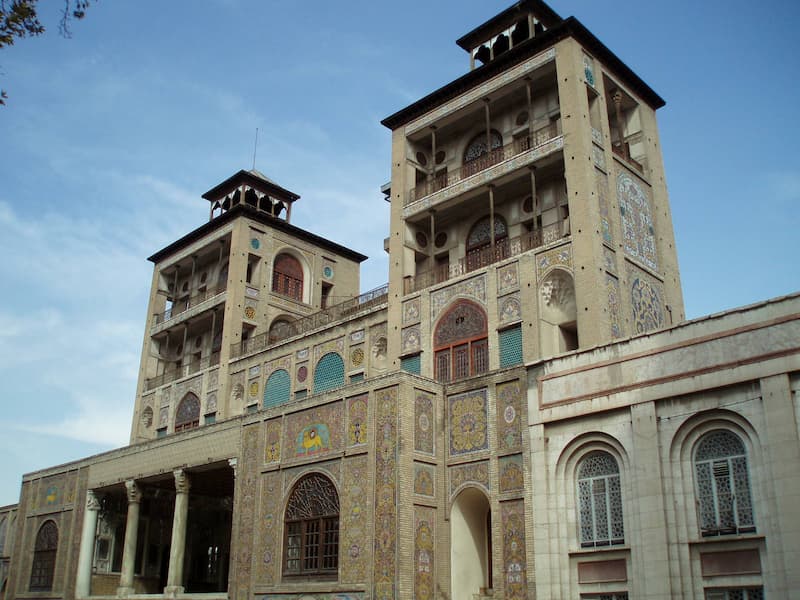
The Golestan Palace is a lavish, historic complex located in the heart of Tehran, IRAN. Serving as the seat of government for the Qajar dynasty, which ruled from 1794 to 1925, the palace complex is one of the oldest and most significant architectural ensembles in the city. It consists of 17 structures, including palaces, museums, and grand halls, all set within lush, symmetrical Persian gardens.
The complex is a masterpiece of the Qajar era, characterized by an intricate fusion of traditional Persian craftsmanship and 19th-century European architectural influences. Key structures include:
- The Marble Throne (Takht-e Marmar): An exquisite terrace adorned with intricate marble carvings, tile-work, and mirror-work.
- The Mirror Hall (Talar-e Aineh): Famed for its extraordinary, complex mirror mosaics that reflect light to create a dazzling, crystalline effect.
- The Windcatcher Mansion (Emarat-e Badgir): An iconic structure showcasing traditional Persian cooling technology (windcatchers) and exquisite stained-glass windows.
- Shams-ol-Emareh (Edifice of the Sun): A prominent multi-story building that blends Persian and European styles, once the tallest building in Tehran.
Attraction
Tourists are drawn to Golestan Palace for its opulent aesthetics and deep historical resonance. The palace offers a rare, immersive look into the life of the Persian monarchy at the dawn of modernity. Its combination of vibrant tile-work, delicate mirror-inlay art, and meticulously curated royal collections (including paintings and gifts from European monarchs) provides a stunning backdrop for photography and cultural exploration.

World Heritage
Inscribed in 2013, the palace is recognized for its Outstanding Universal Value:
- Architectural Synthesis: It is a prime example of the successful integration of earlier Persian artistic traditions (such as geometric gardens and tile-work) with Western influences absorbed by Qajar monarchs during their travels to Europe.
- Historical Testimony: The site symbolizes the evolution of Tehran as a capital city and reflects the social, political, and artistic transformations of Iran during the 18th and 19th centuries.
Gateway
Tehran is the city where the palace is located and serves as the gateway.
- Airport: Tehran Imam Khomeini International Airport (IKA) serves as the primary international entry point.
- Lodging: As a major capital, Tehran provides a vast range of accommodations. The palace is situated in the historic city center (near the Grand Bazaar), where many boutique hotels and traditional guesthouses are available.
- Getting There: The palace is centrally located at Arg Square. The most convenient way to reach it is via the Tehran Metro; the Panzdah-e Khordad (15 Khordad) Station (Line 1) is just a short walk away.
When
- Spring (April–May) and Autumn (September–October): These months offer the most temperate and comfortable weather for walking through the gardens and exploring the various open-air buildings.
- Pro-Tip: Aim for weekday mornings to avoid the larger weekend crowds and experience the tranquil beauty of the gardens in a more serene setting.
Consideration
- Dress Code: Visitors must adhere to local regulations; women should cover their hair with a scarf (hijab) and wear loose-fitting clothing that covers the arms and legs. Men should avoid wearing shorts.
- Tickets: You may need to purchase separate tickets for the different halls and museums within the complex. Budget at least 2–3 hours to see the major highlights.
- Photography: Mobile photography is generally allowed, but professional equipment often requires special permission.
- Guided Tours: Check for official English-speaking guides at the entrance; they can provide deep historical context that signage alone may lack.

Resources
- UNESCO World Heritage – Golestan Palace – The official documentation and historical summary.
- Iranian Tours – A detailed guide with specific information on the various halls and historical periods.
- Visit Iran – The official national tourism portal for broader travel logistics and cultural etiquette.
- Tehran Metro Map/Guide – Essential for planning your transit to the 15 Khordad station.
- Booking.com – Tehran Hotels – Use this platform to research and secure your accommodation; this link uses affiliate marketing to support your travel planning.
Featured Image
Shams-ol-Emareh, Golestan Palace (David Holt, Wikimedia/CC BY-SA 2.0).
News Feed
Advertisement


Comments:
Leave a Reply