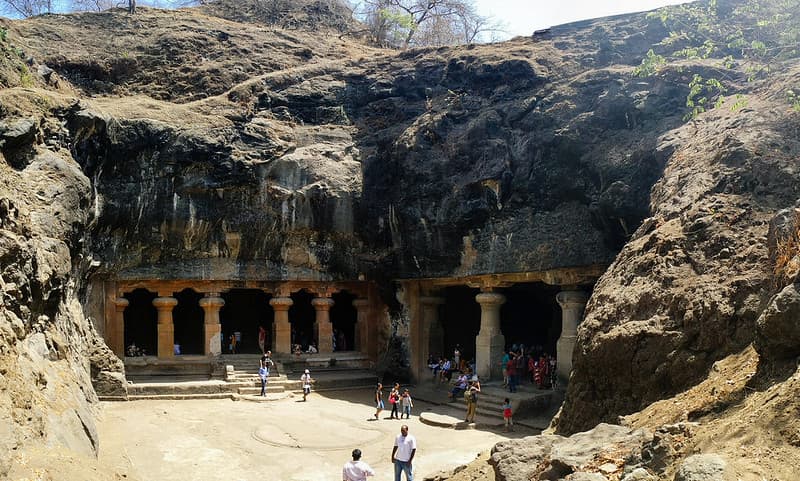
The Elephanta Caves, located on Elephanta Island (historically known as Gharapuri) in the Mumbai Harbour, INDIA, represent one of the most remarkable examples of Indian rock-cut art and architecture. These caves provide a profound glimpse into the artistic and religious fervor of the 5th to 7th centuries AD.
The site consists of two main groups of caves carved directly into the basalt rock of the island’s hills:
- The Hindu Caves: This is the primary group, consisting of five caves. The largest and most significant is Cave 1 (The Great Cave), which measures approximately 39 meters from the front entrance to the back. It is a masterpiece of the Pashupata Shaivism sect, featuring a massive hall supported by rows of carved pillars and filled with high-relief sculptures.
- The Buddhist Caves: A smaller group located on a different hill, containing two caves and the remnants of stupas, dating back to a slightly earlier period (roughly 2nd century BCE).
The focal point of the entire complex is the Trimurti (Maheshmurti) sculpture in Cave 1. This 6-meter-high colossal bust depicts Lord Shiva with three heads, representing his roles as the Creator (Vamadeva), the Preserver (Tatpurusha), and the Destroyer (Aghora).
Attraction
Elephanta Caves draw international travelers for their unique blend of mystery, spiritual depth, and artistic mastery:
- The “Island Journey”: The experience begins with a scenic one-hour ferry ride from the Gateway of India, offering a panoramic view of the Mumbai skyline against the Arabian Sea.
- Artistic Precision: The sculptures are renowned for their “classical” style, characterized by fluid forms, massive scale, and emotional depth. The interplay of light and shadow within the deep caverns makes the rock-cut figures appear almost lifelike.
- Historical Mystery: Much about the caves remains a mystery, including the exact identity of the dynasties that funded them, which adds a layer of intrigue for history enthusiasts.
- Cultural Continuity: Though no longer a primary temple, the site remains a place of reverence, especially during the Mahashivratri festival.

World Heritage
Inscribed in 1987, the Elephanta Caves were recognized by UNESCO for their “outstanding universal value” under two main criteria:
- Masterpiece of Human Creative Genius (Criterion i): The cave temple layout, with its cruciform plan and elaborate pillars, along with the sophisticated aesthetics of the sculptures, represents a peak of Indian rock-cut architecture.
- Unique Cultural Testimony (Criterion iii): The site provides exceptional evidence of a cultural tradition and a period of Indian history where the cult of Shiva reached a high point of artistic and philosophical expression.
Gateway
The undisputed gateway to the Elephanta Caves is Mumbai, India.
- Commercial Airport: Chhatrapati Shivaji Maharaj International Airport (BOM). It is a major global hub with extensive direct international and domestic connections.
- Lodging: Mumbai offers an enormous range of accommodations. For the easiest access to the caves, visitors often stay in South Mumbai (Colaba or Fort), where historic hotels like the Taj Mahal Palace and numerous boutique guest houses are located within walking distance of the ferry point.
- Logistics: The ferries depart from the Gateway of India jetty. The first boat usually leaves at 9:00 AM, and the last return boat from the island is typically around 5:30 PM.
When
- Winter (November to February): This is the peak season. The weather is dry and pleasant, making the walk up the island’s hills manageable.
- Avoid the Monsoon (June to August): During the heavy rains, the sea becomes rough, and ferry services are frequently suspended or cancelled.
- Time of Day: Arrive at the Gateway of India by 8:30 AM to catch the first ferry. This allows you to explore the caves in the cooler morning hours before the midday heat and the largest crowds arrive.
Consideration
- Physical Effort: After docking at the island, there is a 120-step climb to the cave entrance. A small “toy train” can take you from the pier to the base of the steps, and “dolly” services (palanquins carried by locals) are available for those with mobility issues.
- The Monkeys: The island is home to a large population of macaques. They are expert thieves; avoid carrying visible food or plastic bags, as they can be aggressive in their pursuit of snacks.
- Footwear: Wear sturdy, comfortable walking shoes. The stone floors inside the caves can be uneven and occasionally slippery.
- Guides: Licensed guides are available at the entrance. While not mandatory, they are helpful for interpreting the complex iconography of the Shiva panels.

Resources
- UNESCO World Heritage Centre – Elephanta – The official international documentation and conservation status.
- Archaeological Survey of India (ASI) – The primary government body responsible for the maintenance and history of the site.
- Incredible India – Elephanta Caves – The national tourism portal offering cultural context and travel tips.
- Maharashtra Tourism Development Corp (MTDC) – Local travel information, including ferry updates and nearby regional attractions.
- GetYourGuide – Elephanta Caves Guided Tours – A platform to book private or group tours.


Comments:
One response to “Elephanta Caves”
-
Every carving here has a story to tell. These stories provide you an insight into Indian culture and religious beliefs. It also reveals a lot about the Indian sense of beauty.

Leave a Reply