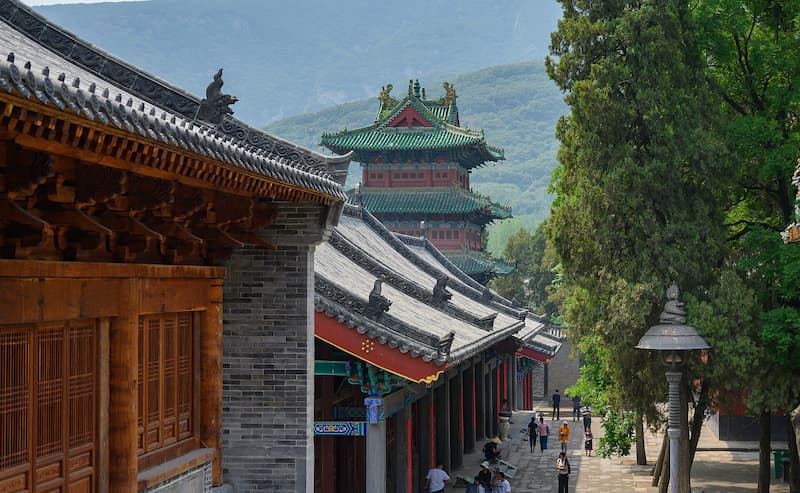
Visit Dengfeng: Home of Shaolin Kung Fu and Ancient Science
The UNESCO World Heritage property “Historic Monuments of Ancient Dengfeng in ‘The Centre of Heaven and Earth’” is an exceptional collection of historic architectural, scientific, and religious structures clustered around the sacred Mount Songshan in Henan Province, CHINA. Spread across a 40-square-kilometer area near Dengfeng City, the property encompasses eight distinct clusters containing 13 individual historic complexes.
In ancient Chinese cosmology, Mount Songshan was perceived as the physical and spiritual center of the universe—the exact point where heaven and earth met. Over a span of nine imperial dynasties, successive rulers built grand monuments to legitimize their divine rule. Key monuments include:
- The Shaolin Monastery: World-famous birthplace of Chan (Zen) Buddhism and Chinese martial arts (Shaolin Kung Fu), featuring the ancient Pagoda Forest.
- Zhongyue Temple: One of China’s largest and most complete Taoist temple complexes, featuring axial courtyards and ancient cypresses.
- The Three Han Que Gates: Taishi, Shaoshi, and Qimu gates—representing the oldest surviving stone ritual gate towers in China, dating to the Han Dynasty (206 BC–220 AD).
- Songyue Temple Pagoda: A 12-sided brick pagoda built in 523 AD, recognized as the oldest surviving brick pagoda in China.
- Songyang Academy: One of the four great classical Confucian academies of imperial China.
- Zhougong Sundial Platform and Dengfeng Observatory: A monumental Yuan Dynasty astronomical observatory constructed by astronomer Guo Shoujing in 1276 AD.
Attraction
Dengfeng draws travelers from around the globe due to its unique convergence of martial arts culture, ancient science, and deep spiritual heritage. As the global spiritual home of Shaolin Kung Fu, the Shaolin Temple offers visitors the rare opportunity to witness live martial arts demonstrations performed by resident monks, explore centuries-old training grounds, and wander among hundreds of stone pagodas honoring deceased abbots.
Beyond martial arts, the site offers a rare physical manifestation of China’s “Three Teachings”—Buddhism, Taoism, and Confucianism—coexisting harmoniously around one sacred mountain. Science enthusiasts and history buffs travel to inspect the Dengfeng Observatory, where ancient astronomers measured the solar year with astonishing accuracy. Combined with dramatic scenery along Mount Songshan, visitors enjoy serene mountain hikes, ancient calligraphy steles, and rare timber-frame architecture.

World Heritage
In 2010, UNESCO inscribed the Historic Monuments of Dengfeng on the World Heritage List under cultural criteria (iii) and (vi).
- Criterion (iii) – Exceptional Cultural Tradition: The monuments represent an outstanding physical manifestation of the concept of “The Centre of Heaven and Earth,” an ancient cosmological ideology that governed Chinese imperial legitimacy, state rituals, and urban planning for millennia. The structures demonstrate elite architectural craftsmanship spanning over 2,000 years, preserving rare Han Dynasty ritual gates, Tang and Song timber halls, and Yuan astronomical instruments.
- Criterion (vi) – Direct Association with Philosophical and Sacred Beliefs: The ensemble is directly associated with foundational religious, intellectual, and scientific traditions. It stands as the birthplace of Zen Buddhism, a major center for Taoist ritual, the seat of Confucian intellectual discourse, and the origin point for monumental astronomical discoveries.
Gateway
The primary gateway city serving Dengfeng is Zhengzhou, the provincial capital of Henan Province. Zhengzhou is a major transportation hub in central China, situated roughly 80 kilometers northeast of Dengfeng. Travelers can reach Dengfeng from Zhengzhou via direct express motorways, long-distance intercity buses, or private transfers in about 60 to 90 minutes.
Zhengzhou is served by Zhengzhou Xinzheng International Airport (IATA Code: CGO; ICAO Code: ZHCC), a major international aviation hub. Zhengzhou offers vast lodging options ranging from international five-star luxury hotel chains to budget business accommodations. Alternatively, visitors can stay directly in Dengfeng City, which provides numerous mid-range hotels, boutique inns, and kung fu school homestays.
When
The best time to visit Dengfeng is during the shoulder seasons of Spring (April to May) and Autumn (September to November).
- Spring and Autumn: These seasons feature mild, comfortable temperatures averaging 15°C to 24°C (59°F to 75°F) with relatively dry skies. Autumn offers crisp air and vibrant fall foliage across the slopes of Mount Songshan, while spring brings blooming mountain vegetation and pleasant hiking conditions.
- Summer (June to August): Summers are hot, humid, and rainy, with temperatures frequently exceeding 32°C (90°F) and high tourist volumes during school holidays.
- Winter (December to February): Winters are cold and dry, with temperatures dropping below freezing (–5°C to 8°C / 23°F to 46°F). While mountain paths can be icy, winter offers a quiet, uncrowded atmosphere.
Considerations
- Cluster Spread and Transportation: The 13 historic monuments are scattered across different valleys surrounding Mount Songshan. While the Shaolin Temple is serviced by local shuttle buses, reaching dispersed sites like the Dengfeng Observatory or Zhongyue Temple requires hiring a local taxi, charter car, or joining a guided tour.
- Crowds and Holidays: The Shaolin Scenic Area experiences intense overcrowding during Chinese national holidays (Golden Week in October and Spring Festival). Visiting early in the morning on weekdays helps avoid heavy tour groups.
- Physical Terrain: Exploring the temples, Pagoda Forest, and Mount Songshan trails requires walking across stone staircases, cobblestones, and steep mountain paths. Sturdy, comfortable walking shoes are essential.
- Respectful Conduct: Visitors should maintain respectful behavior inside active places of worship, avoiding loud noises or flashing cameras inside main prayer halls.

Resources
- UNESCO World Heritage Centre: Official UNESCO web page detailing the inscription criteria, property boundaries, and technical reports.
- Henan Provincial Tourism Administration: Official regional portal offering travel itineraries, cultural background, and transport advice for Henan destinations.
- China Highlights: Comprehensive travel platform providing detailed logistical advice, site descriptions, and booking options for Dengfeng tours.
- Travel China Guide: Detailed information portal featuring transit routes, ticket prices, and historical context for Mount Songshan attractions.
- Trip.com: Major travel platform containing user reviews, travel forums, hotel options, and tour bookings.


Comments:
Leave a Reply