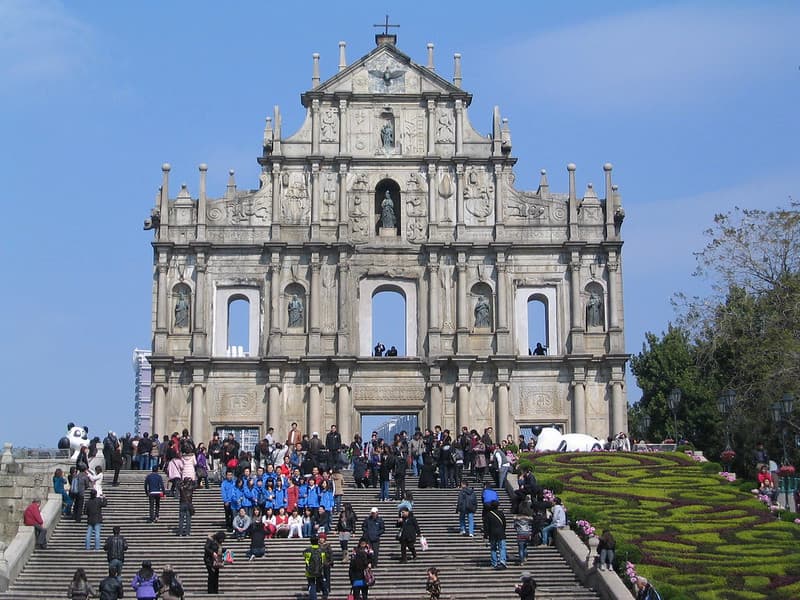
The Historic Centre of Macao is an exceptional urban collection of over twenty designated locations spread across the Macau Peninsula, CHINA. As Europe’s first and last colonial outpost in Asia under Portuguese administration until 1999, Macao evolved as a unique melting pot. The site links traditional Chinese temples, residential mansions, and public squares with Portuguese-style Baroque churches, military fortresses, and neo-classical government buildings, creating an integrated urban fabric that maps out more than four centuries of cross-cultural interaction.
Attraction
Tourists worldwide flock to Macao for its vibrant juxtaposition of Eastern traditions and Mediterranean charm:
- Iconic Landmarks: Visitors are drawn to the iconic stone facade of the Ruins of St. Paul’s (the remains of a 17th-century Jesuit college church), the historic A-Ma Temple dedicated to the Taoist goddess of seafarers, and the bustling mosaic-paved Senado Square.
- Culinary Fusion: The destination is globally celebrated for its distinct Macanese cuisine, blending Portuguese spices and techniques with Cantonese ingredients.

World Heritage
Inscribed on the UNESCO World Heritage list in 2005, the Historic Centre was recognized for its Outstanding Universal Value:
- Cultural Assimilation: It provides an unmatched historical testimony to the meeting of Western and Eastern aesthetic, architectural, technological, and religious influences.
- Urban Integration: The site preserves an unbroken spatial network of ancient streets, plazas, and multi-ethnic structures that demonstrate centuries of harmonious coexistence between two distinct civilizations.
Gateway
Macau serves as its own direct gateway city.
- Airport: The destination is served by Macau International Airport (MFM).
- Transport: Visitors can also seamlessly arrive via high-speed ferry or cross-border land transit from neighboring transport hubs like Hong Kong (HKG).
- Lodging: Macau provides a massive abundance of accommodation choices, ranging from budget heritage guesthouses to world-class luxury resort hotels on the Cotai Strip.
When
- Autumn to Winter (October to December): This window offers the most comfortable weather, characterized by pleasant, cooler temperatures and lower humidity, which is ideal for walking the outdoor historic trails.
Consideration
- Footwear: Exploring the heritage zones involves navigating steep stone hills, flights of stairs, and traditional mosaic pavements; comfortable walking shoes are essential.
- Crowd Levels: Major landmarks like Senado Square and the Ruins of St. Paul’s experience heavy tourist traffic during weekends and regional holidays.

Resources
- Macao Government Tourism Office: The official destination portal for maps, walking tour routes, and event schedules.
- UNESCO World Heritage Centre: Official documentation detailing the historical justification and heritage criteria for Macao.
- Cultural Affairs Bureau of Macao: Comprehensive institutional guides covering conservation and individual protected monuments.
- Lonely Planet – Macau Guide: Practical advice on local transit, dining, and cultural highlights.
- Trip.com: A popular global platform used to find and reserve accommodation across the city.


Comments:
4 responses to “Historic Centre of Macao”
-
These historical and architectural treasures are mostly accessible through short walking tours. Just make sure to wear light clothing and bring bottles of water, because the weather in Macau is usually hot and humid. It wouldn’t hurt to also have an umbrella prepared, since rain showers are common during the late afternoon.
Walk through the narrow and often congested Rua de Tomas Vieira and you will reach Macau’s most iconic landmark: the Ruins of St. Paul. This remnant of an ancient church and seminary stands atop a flight of stone steps, with grandeur typical of baroque structures. The unique mix of inscriptions embossed on the Ruins’ façade serves as a testament to Macau’s bicultural heritage. For instance, a Chinese dragon is depicted beside images of Roman Catholic saints and Jesuit priests. Chinese characters are also juxtaposed with Latin words dedicating this place of worship to the Blessed Virgin Mary.
A few paces away from the Ruins of St. Paul is another baroque structure: the Church of St. Dominic. Its cream-colored stone façade, emerald green windows and intricate stucco moldings give a vibrant feel to this 17th century church. Inside, the decorations are simple yet elegant—from the ceramic mosaic flooring with floral accents to the beautifully carved wooden roof.
Further down the alley from the Ruins of St. Paul is Macau’s central hub: the bustling Senado Square. It is a cobblestoned plaza featuring a striking wave design—a reminder of the region’s maritime past. Most of the buildings around the square, such as the Santa Casa da Misericordia (Holy House of Mercy) and the Leal Senado Building, are neoclassical in style. This is evident in the structure’s simple geometric forms and frequent use of columns as accents.
-
Walking around western Macau is like stepping back in time. With narrow streets lined by Chinese and European-style buildings, its history leaps out at you. The site many travellers head to first is St Paul’s — the remains of the first church the Jesuits established in China. With a massive set of stairs leading up to it from the street below, surrounded by historical buildings, it’s a must-see. Overlooking St Paul’s on a hill covered with trees is Mt Fortress, a castle-like structure also built in the 17th century that today houses Macau Museum. Here you can stroll through and read about the history of Macau.
-
A few thoughts to share!
Handover Gifts Museum is a free museum that is a real gem, although very few tourists manage to fit it into their itineraries. This one is highly recommendable if you have a few days in Macau, although there are other museums you may wish to visit first, like Macau Museum, instead.Another famous landmark, which has unfortunately has slipped down the ranks of tourist priorities over the past decade is the 20 metre tall Kun Iam Statue, which rests in the harbour. This is a neat landmark to see but is rarely mentioned these days in discussions of what to do/see in Macau.
-
Do check out the Macau Museum next time you’re there. It’s quite impressive and spending time in Macau’s museums is a great way to learn a bit more about Macau’s fascinating history.

Leave a Reply