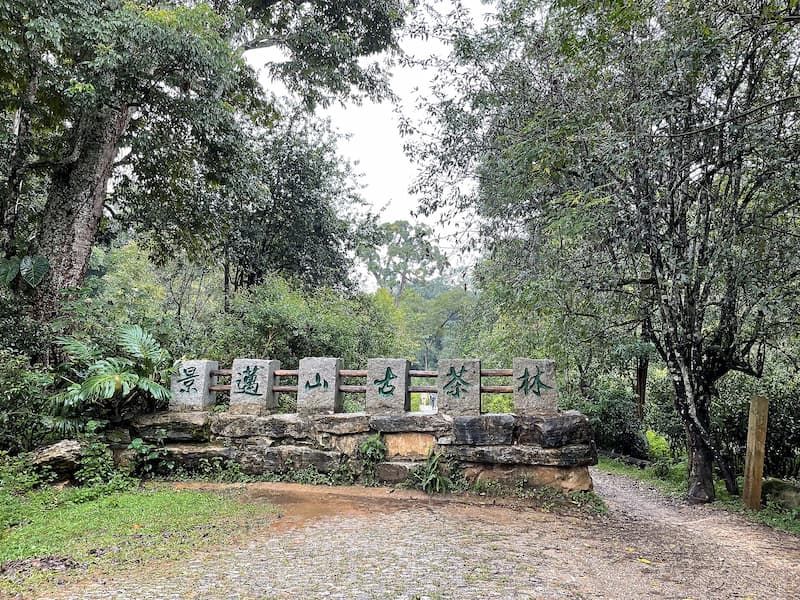
The Cultural Landscape of Old Tea Forests of the Jingmai Mountain in Pu’er, located in the Yunnan Province of CHINA, is a living masterpiece of sustainable agriculture. Inscribed as a UNESCO World Heritage site in 2023, it represents the world’s oldest and best-preserved example of human-cultivated ancient tea forests.
The site is a vast, high-altitude landscape consisting of five large-scale ancient tea forests, nine traditional ethnic villages (primarily inhabited by the Blang and Dai peoples), and protective “partition forests” that separate the tea groves from human settlements.
Unlike industrial tea plantations where bushes are planted in neat, low rows, the tea trees here grow under the shade of a natural forest canopy. This is known as understorey cultivation. The tea trees are centuries old, some reaching heights of several meters, and they grow alongside native timber trees and wild flora. This creates a multi-layered ecosystem that naturally controls pests and maintains soil fertility without the need for chemical fertilizers.
Attraction
Jingmai Mountain offers a “fairyland” atmosphere that differs significantly from China’s bustling urban centers:
- The Sea of Clouds: Due to the subtropical climate and high elevation, the valleys are frequently filled with a thick, ethereal mist. At sunrise, the traditional village rooftops appear to float above a white sea.
- Winter Cherry Blossoms: In December and January, thousands of winter cherry trees planted within the tea forests bloom in vibrant pink, creating a stunning contrast against the deep green tea leaves.
- Pu’er Tea Pilgrimage: As one of the birthplaces of Pu’er tea, the mountain is a “holy land” for tea connoisseurs. Visitors can participate in “first-pick” harvests, traditional roasting, and tasting sessions with local tea masters.
- Ancient Architecture: The villages, such as Wengji and Nuogan, feature well-preserved traditional wooden houses with distinctive “bull-horn” or “mushroom” roof designs that have remained unchanged for generations.


World Heritage
UNESCO recognized the site for its Outstanding Universal Value under two specific criteria:
- Criterion (iii): It is an exceptional testimony to the understorey tea cultivation tradition. This method has been maintained for over a thousand years through a unique governance system—a mix of tribal, government, and religious rules—centered on the “Tea Ancestor” belief, which dictates that spirits protect the trees and the community.
- Criterion (v): It is an outstanding example of a sustainable land-use system. The vertical distribution of forest (top), village (middle), and tea grove (slopes) demonstrates an ancient but sophisticated understanding of mountain ecology that remains viable in the modern world.
Gateway
The primary gateway for this site is the town of Menglang, which is the administrative center of the Lancang Lahu Autonomous County.
- Commercial Airport: Lancang Jingmai Airport (JMJ). This modern airport is located approximately 30 kilometers (a 45–60 minute drive) from the town of Lancang and about 1.5 to 2 hours from the core tea forests. It offers frequent domestic flights from Kunming, the provincial capital.
- Lodging: Lancang (Menglang) provides sufficient lodging options for an overnight stay, including modern business hotels like the Lancang Anyiyi Inn and larger regional hotels. For a more immersive experience, many tourists choose to stay overnight in “boutique guesthouses” within the ancient villages of Wengji or Jingmai once they reach the mountain.
When
- Spring (March to May): This is the most active time for tea lovers. It marks the harvest of the “Spring Bud,” the most prized tea leaves. The weather is pleasant, and the tea production process is in full swing.
- Winter (December to January): Ideal for photographers. This is when the cherry blossoms bloom and the “sea of clouds” is most frequent and stable.
- Avoid the Monsoon (July to August): Heavy rains can make the winding mountain roads dangerous and may lead to thick fog that obscures the views for days at a time.
Consideration
- The Road to the Mountain: The final ascent into the Jingmai heritage area involves narrow, winding mountain roads. If you are prone to motion sickness, prepare accordingly. Hiring a local driver is recommended over self-driving.
- Cultural Etiquette: The Blang and Dai people consider the old tea trees sacred. Never pick leaves without permission, and always dress modestly when entering village temples or “Tea Ancestor” shrines.
- Cash and Connectivity: While major hotels accept digital payments (Alipay/WeChat), signal can be spotty in the deep forests. It is wise to carry some cash for purchasing tea directly from small-scale farmers.
- Packing Essentials: Even in summer, mountain temperatures drop significantly at night. Bring layers and sturdy, waterproof walking shoes for exploring the forest paths.


(Tcchang0825, Wikimedia/CC0 1.0).
Resources
- UNESCO World Heritage Centre – The official source for the technical documentation, history, and maps of the site.
- Trip.com (Jingmai Guide) – A practical guide with user reviews, photos, and up-to-date entry information.
- Wonders of Yunnan – An in-depth travel portal specializing in Yunnan’s ethnic culture and heritage sites.
- Eastern Leaves – A specialist resource for tea scholars and travelers looking for “tea-focused” itineraries in the Pu’er region.
- GetYourGuide – A commercial platform where you can book multi-day private tours to Jingmai Mountain from nearby hubs like Jinghong.
Featured Image
Entrance to Old Tea Forest, Jingmai (919sth, Wikimedia/CC BY-SA 4.0).
News Feed
Advertisement


Comments:
Leave a Reply