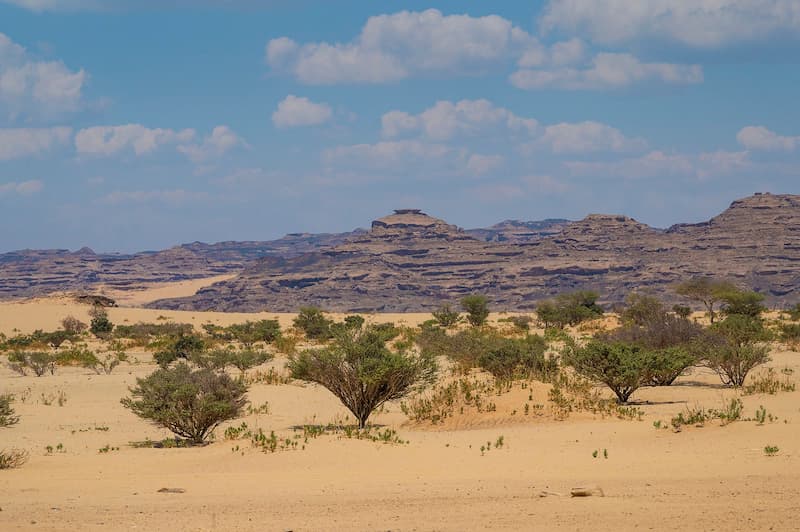
The Ḥimā Cultural Area is a vast “outdoor library” of human history located in the arid, mountainous region of southwestern SAUDI ARABIA. Inscribed as a UNESCO World Heritage site in 2021, it is one of the largest and most significant rock art complexes in the world, preserving a staggering record of life, travel, and belief in the Arabian Peninsula.
The site is situated along one of the Arabian Peninsula’s most ancient and vital desert caravan routes. It spans over 550 square kilometers and features more than 550 individual rock art panels containing hundreds of thousands of petroglyphs and inscriptions.
The area is famous for the Wells of Bi’r Ḥimā, a series of at least six ancient wells that date back over 3,000 years. Remarkably, these wells—excavated directly into the rock—still produce fresh water today. The landscape is a striking mix of sandstone mesas and rocky outcrops, where the vertical faces served as canvases for thousands of years of travelers, hunters, and soldiers.
Attraction
Ḥimā is a magnet for history enthusiasts, anthropologists, and adventure travelers because of its pristine state:
- The Chronological Record: The rock art shows a clear progression of human life over 7,000 years. You can see transition points in technology (from bows to spears to firearms) and changes in the environment (the disappearance of certain animals like ostriches and lions).
- Linguistic Diversity: It is a linguistic treasure trove. Inscriptions are written in various ancient scripts, including Musnad (South Arabian), Thamudic, Aramaic-Nabatean, Greek, and early Kufic Arabic.
- The Living Wells: Visiting Bi’r Ḥimā allows you to see a functional piece of ancient engineering that has sustained desert caravans for millennia.
- Untouched Wilderness: Unlike more developed heritage sites, Ḥimā offers a raw, quiet desert experience far from urban noise, providing exceptional “dark sky” conditions for stargazing.

World Heritage
UNESCO recognized the Ḥimā Cultural Area under Criterion (iii):
- Exceptional Testimony to Ancient Traditions: It serves as an unequaled historical record of the Arab people and the various civilizations that traversed the peninsula. The site chronicles the evolution of hunting, flora, fauna, and lifestyles across the Holocene period.
- Cultural Continuity: It is rare to find a site with such a long, uninterrupted record of human expression—from the Neolithic era through to the late 20th century.
- Integrity and Authenticity: Because of the hyper-arid climate and its remote location, the petroglyphs have been naturally preserved in near-perfect condition without modern development encroaching on the core zone.
Gateway
The city of Najran serves as the essential gateway to the Ḥimā Cultural Area.
- Commercial Airport: Najran Regional Airport (EAM) is the primary hub. It is well-connected to major Saudi cities like Riyadh and Jeddah, which are accessible via international flights.
- Lodging: Najran is a significant urban center with ample lodging. Options range from well-regarded hotels like the Park Inn by Radisson Najran and Gloria Inn Najran to various modern furnished apartments suited for longer stays.
- Distance: The Hima site is approximately 100 to 120 kilometers north of Najran city, a drive of about 1.5 to 2 hours on well-maintained desert highways.
When
The ideal time to visit is during the winter months (October to March).
- Temperature: Daytime temperatures are comfortable (around 20^C to 25^C), which is vital since exploring the rock art requires significant time outdoors in the sun.
- Avoid Summer: From May to September, the heat in this region can be brutal, often exceeding 40^C, making sightseeing physically exhausting and potentially dangerous.
Consideration
- Permits and Guides: Access to the heritage sectors often requires a permit from the Saudi Heritage Commission. It is highly recommended to hire a licensed local guide who can handle the logistics and navigate the specific sectors that are open to the public.
- Border Proximity: Najran is located near the border with Yemen. While the city and heritage sites are generally accessible, travelers should check their national travel advisories for the latest security updates before departure.
- Cultural Sensitivity: Dress modestly (covering shoulders and knees) and always ask for permission before taking photos of local people.
- Preservation Rules: It is strictly forbidden to touch, chalk, or wet the rock art. The oils from human hands can damage the ancient patina of the carvings.
- Logistics: Carry plenty of water, as there are no facilities once you leave the main highway and enter the desert tracks toward the rock panels.

Resources
- UNESCO World Heritage Centre – The definitive source for the official maps and the scientific justification for its heritage status.
- Saudipedia: Hima Cultural Area – A comprehensive encyclopedia-style entry covering the history and specific landmarks within the site.
- KSA for UNESCO – The official Saudi portal for its heritage sites, offering high-quality visuals and context on the Kingdom’s preservation efforts.
- Hisar Travel: Najran Guide – A travel agency resource that provides practical day-trip logistics and local travel tips.
- MakeMyTrip: UNESCO Sites in Saudi – A major travel platform that includes heritage guides and operates a marketing program for hotel and flight bookings.
Featured Image
Hima Cultural Area (Heritage Commission, Wikimedia/CC BY-SA 4.0).
News Feed
Advertisement


Comments:
Leave a Reply