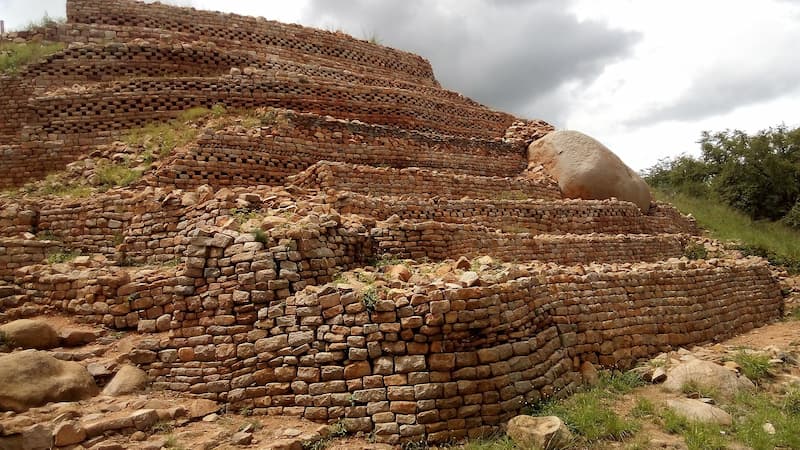
Kingdom of Butua kings governed from Khami’s terraced heights
The UNESCO World Heritage site titled “Khami Ruins National Monument” is a major archaeological complex situated on a plateau along the banks of the Khami River, approximately 22 kilometers west of Bulawayo in western ZIMBABWE. Spanning over 500 hectares, Khami emerged around the mid-15th century AD and served as the political, economic, and cultural capital of the Kingdom of Butua under the Torwa dynasty following the collapse of Great Zimbabwe.
The site features extraordinary dry-stone architecture built without mortar, showcasing an evolution of the traditional Shona stone-masonry style. Unlike Great Zimbabwe’s free-standing circular walls, Khami is renowned for its elaborate terraced retaining walls built directly into granite hillsides. The complex consists of distinct royal and ceremonial platforms, including the Hill Complex—which housed the royal palace of the mambo (king)—the Cross Complex, the Northern Platform, and surrounding residential enclosures. The walls feature decorative stone motifs, including check, herringbone, chevron, and cord patterns, representing a masterpiece of ancient African military and domestic engineering.
Attraction
Khami Ruins National Monument draws historians, archaeologists, photographers, and cultural travelers who seek an authentic, uncrowded alternative to Great Zimbabwe.
Visitors explore the stone-terraced platforms that cascade down granite hills, taking in panoramic views of the surrounding bushveld and the Khami River reservoir. Tourists marvel at the intricate decorative friezes carved into the dry-stone walls and examine the ancient layout of elite residences and ceremonial courtrooms. The small on-site museum displays fascinating archaeological discoveries excavated at the site, including 16th-century Spanish porcelain, Chinese Ming dynasty ceramics, Portuguese silver, and brass objects. These imported artifacts offer tangible proof of ancient, sophisticated trade routes connecting interior Africa with the Indian Ocean and global markets.

World Heritage
Inscribed on the UNESCO World Heritage List in 1986, the Khami Ruins National Monument is recognized under Cultural Criteria (iii) and (iv):
- Criterion (iii) – Exceptional Testimony to a Disappeared Civilization: Khami holds unique testimony to the Torwa state and the broader Zimbabwe culture that flourished between the 15th and 17th centuries. The site offers crucial archaeological evidence documenting the cultural, technological, and chronological evolution of southern African Iron Age societies from prehistory to early European contact.
- Criterion (iv) – Outstanding Architectural Ensemble: The dry-stone terraced platforms and dry-stone walling represent an outstanding example of architectural development in southern Africa. The site demonstrates exceptional structural adaptation to natural landforms and stands as a monumental record of long-distance international trade networks.
Gateway
Travelers planning a trip to the Khami Ruins can access the property via practical Zimbabwean gateway locations featuring public IATA-listed airports searchable on IATA’s public directory, lodging options, transport infrastructure, and guide services:
- Bulawayo (Primary Local Gateway / Nearest Airport):
- Airport: Joshua Mqabuko Nkomo International Airport (IATA Code: BUQ; ICAO Code: FVBU).
- Infrastructure and Distance: Located approximately 22 kilometers east of Khami Ruins. BUQ is an active public international airport listed in IATA’s directory, offering regular domestic and regional flights. As Zimbabwe’s second-largest city, Bulawayo provides extensive accommodation ranging from boutique heritage hotels to guesthouses, private car rentals, taxis, and certified local guides who lead daily day tours to Khami.
- Harare (Primary Regional Capital Gateway):
- Airport: Robert Gabriel Mugabe International Airport (IATA Code: HRE; ICAO Code: FVRG).
- Infrastructure and Distance: Located approximately 440 kilometers northeast of Bulawayo. HRE is the nation’s primary international aviation hub searchable on IATA’s directory. Harare features luxury hotels, rental car desks, luxury coach buses, intercity rail links, and safari tour operators organizing multi-day heritage circuits across Zimbabwe including Bulawayo and Khami.
When
The ideal window to visit Khami Ruins is during the Dry Season (May to October):
- Dry Winter Season (May to August): Highly recommended for optimal exploration. Temperatures are comfortable and warm (18°C to 24°C / 64°F to 75°F) with low humidity and clear skies. Vegetation dries back, improving visibility of hidden stone walls and pathways.
- Late Dry Season (September to October): Warm to hot (28°C to 34°C / 82°F to 93°F); arriving early in the morning is ideal for avoiding peak midday heat along open-air stone platforms.
- Wet Season (November to April): Brings seasonal summer rains and high humidity; while the surrounding countryside is lush, heavy downpours can make stone paths slippery and unpaved site tracks muddy.
Consideration
- Sun Protection and Hydration: The site features minimal shade along the open terraced platforms. Carrying bottled drinking water, applying high-SPF sunscreen, and wearing a wide-brimmed hat are essential.
- Footwear for Uneven Terrain: Exploring the ruins requires climbing unpaved earth trails, granite steps, and grassy slopes. Wearing sturdy, non-slip hiking or walking shoes is strongly recommended.
- Hiring an On-Site Guide: While basic interpretive signs exist, hiring a certified local guide at the entrance greatly enriches the historical understanding of the complex architectural terraces and royal customs.
- Site Preservation Rules: The dry-stone walls are fragile and held together purely by gravity. Visitors must refrain from climbing directly onto dry-stone walls or removing any stones or artifacts.
- Currency and Cash: US Dollars (USD) and local currency are widely used in Zimbabwe. Carrying physical cash for entrance fees, local taxi transport, guide tips, and small craft purchases is necessary.

Resources
- UNESCO World Heritage Centre: Official inscription portal detailing site boundaries, criteria evaluations, and state of conservation reports.
- National Museums and Monuments of Zimbabwe (NMMZ): Official administrative body overseeing archaeological site conservation, opening hours, and visitor regulations.
- Visit Zimbabwe (Zimbabwe Tourism Authority): Official national tourism portal providing regional transit logistics, accommodation directories, and cultural itineraries for Bulawayo.
- World Monuments Fund (WMF): International non-profit resource detailing conservation programs and historical architecture summaries for Khami.
- Trip.com: Global online travel marketplace offering bookings for private guided day tours, driver transfers, and historical excursions from Bulawayo to Khami.


Comments:
Leave a Reply