From Savannah Lions to Nesting Sea Turtles: Africa’s Ultimate Coastal Wilderness
The UNESCO World Heritage site titled “iSimangaliso Wetland Park – Maputo National Park” represents a transboundary coastal conservation area along the subtropical Indian Ocean shores of southeastern Africa. While spanning the international border connecting KwaZulu-Natal in eastern SOUTH AFRICA with southern Mozambique, the South African component centers on iSimangaliso Wetland Park (formerly the Greater St. Lucia Wetland Park). Encompassing 332,000 hectares on the South African side, this reserve extends from Maphelane northward along 220 kilometers of pristine coastline to Kosi Bay on the Mozambican border.
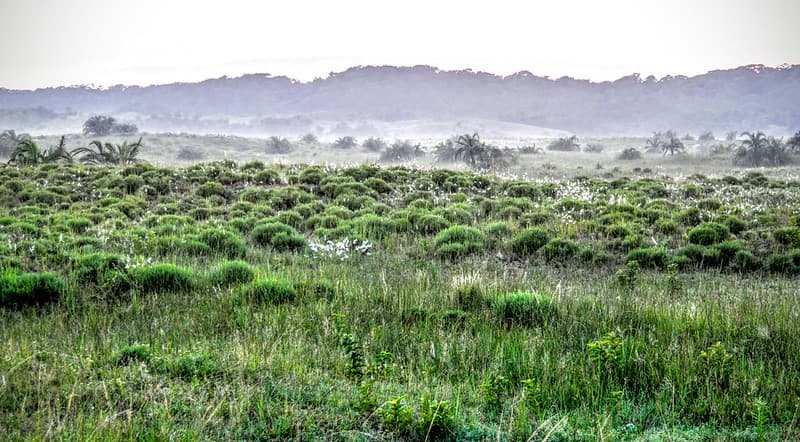
The park features an extraordinary mosaic of interconnected coastal and estuarine habitats across eight interlocking ecosystems. These environments include Africa’s largest estuarine system (Lake St. Lucia), coastal swamp forests, freshwater lakes like Lake Sibaya, mangroves, marshlands, savanna woodlands, 25,000-year-old vegetated sand dunes, and vibrant offshore marine environments with coral reefs and submarine canyons.
Attraction
iSimangaliso Wetland Park captivates eco-tourists by offering an extraordinary range of biodiversity within a contiguous landscape. It is one of few places on Earth where visitors can observe terrestrial big game alongside marine megafauna in close geographic proximity.
On land, the park supports lions, elephants, leopards, rhinos, and buffaloes alongside giraffes, zebras, hippopotamuses, and crocodiles. Lake St. Lucia hosts South Africa’s largest congregations of hippos and crocodiles, explored via boat safaris. Offshore, warm Indian Ocean waters shelter migrating humpback whales, dolphins, and rare dugongs. Between November and March, isolated beaches serve as protected nesting grounds for loggerhead and leatherback sea turtles. Sodwana Bay ranks among the world’s premier scuba diving destinations, famous for coral reefs and marine life. With over 520 recorded bird species, the park is also a world-class birdwatching sanctuary.

World Heritage
Inscribed on the UNESCO World Heritage List in 1999 (and later expanded as a transboundary property with Mozambique), the site meets UNESCO Natural Criteria (vii), (ix), and (x):
- Criterion (vii) – Superlative Natural Beauty: The property exhibits scenic beauty featuring dramatic contrasts between vegetated sand dunes, estuarine lakes, golden beaches, swamp forests, and offshore coral reefs along an uninterrupted coastline.
- Criterion (ix) – Ecological Processes: The park displays ongoing ecological dynamics driven by complex hydrological interactions, sea-level changes, estuarine sedimentation, and weather events that continuously shape ecosystems.
- Criterion (x) – Biodiversity Conservation: The reserve protects critical natural habitats for thousands of flora and fauna species, including rare, endemic, and endangered species such as leatherback sea turtles, coelacanths, black rhinos, and Samango monkeys.
Gateway
Travelers accessing iSimangaliso Wetland Park can utilize two primary gateway cities in KwaZulu-Natal featuring public IATA-listed airports, lodging, and transport services:
- Richards Bay (Primary Local Gateway):
- Airport: Richards Bay Airport (IATA Code: RCB; ICAO Code: FARB).
- Infrastructure and Distance: Situated 75 kilometers south of the main southern entry point at St. Lucia village. RCB operates domestic passenger flights from Johannesburg. Richards Bay provides extensive accommodation, including waterfront hotels, guesthouses, and self-catering units. The city offers car rentals, highway links (N2 corridor), and tour operators conducting guided day trips and safari transfers into southern iSimangaliso.
- Durban (Primary International Gateway):
- Airport: King Shaka International Airport (IATA Code: DUR; ICAO Code: FALE).
- Infrastructure and Distance: Located 215 kilometers south of St. Lucia. As a major hub, DUR handles domestic and international flights. Durban offers extensive lodging options across all budget levels, highway networks, rental car facilities, and safari agencies running guided excursions into the reserve.
When
The ideal time to visit iSimangaliso Wetland Park depends on chosen activities, with the Dry Winter Season (May to September) and Summer Turtle Season (November to March) representing peak periods:
- Dry Winter Season (May to September): Brings pleasant daytime temperatures (20°C to 25°C / 68°F to 77°F) with low rainfall. Thinner vegetation makes winter ideal for game viewing, Lake St. Lucia boat safaris, and outdoor hiking.
- Humpback Whale Season (June to November): Coincides with annual humpback whale migrations along the coast, offering offshore whale-watching.
- Summer Turtle Nesting Season (November to March): Warm and humid (25°C to 32°C / 77°F to 90°F) with seasonal rains. Prime for nighttime guided turtle-tracking tours on beaches as loggerhead and leatherback turtles nest.
- Birdwatching Season (October to March): Migratory bird species arrive, expanding bird populations across wetlands and estuarine lagoons.
Consideration
- Malaria Precautions: Northern KwaZulu-Natal sectors near the Mozambican border (such as Kosi Bay and Sodwana Bay) lie in a low-to-moderate malaria risk zone. Antimalarial medication and DEET repellent are strongly advised.
- 4×4 Vehicle Requirements: While access roads to St. Lucia and Cape Vidal are paved, exploring northern park sectors (Kosi Bay, Lake Sibaya, coastal tracks) requires a high-clearance four-wheel-drive (4×4) vehicle capable of driving on deep sand.
- Park Gate Hours and Permits: Entry gates enforce strict seasonal opening and closing hours. Conservation entry fees are payable at gates, and advance permits are required for scuba diving and beach driving.
- Wildlife Safety: Maintain safe distances from wild animals. Lake St. Lucia hosts large populations of wild hippos and Nile crocodiles; walking near water margins or swimming in unapproved estuarine zones is hazardous.
- Sun Protection: Coastal solar radiation and humidity require high-SPF sunscreen, wide-brimmed hats, polarized sunglasses, and hydration.

Resources
- UNESCO World Heritage Centre: Official designation listing covering boundaries, criteria, and transboundary reports.
- iSimangaliso Wetland Park Official Authority: Official park portal offering entry fees, gate opening hours, maps, and activity bookings.
- South African National Parks (SANParks): Official national conservation agency website detailing protected reserves and travel guidelines.
- Tourism KwaZulu-Natal Portal: Official provincial tourism board site providing accommodation directories and transit guides.
- GetYourGuide: Travel marketplace providing safari excursions, boat tours, and transfers to iSimangaliso Wetland Park.
Featured Image
Grassy wetlands and low hills of the iSimangaliso Wetland Park (Fyre Mael, Flickr/CC BY 2.0).
News Feed
Advertisement


Comments:
Leave a Reply