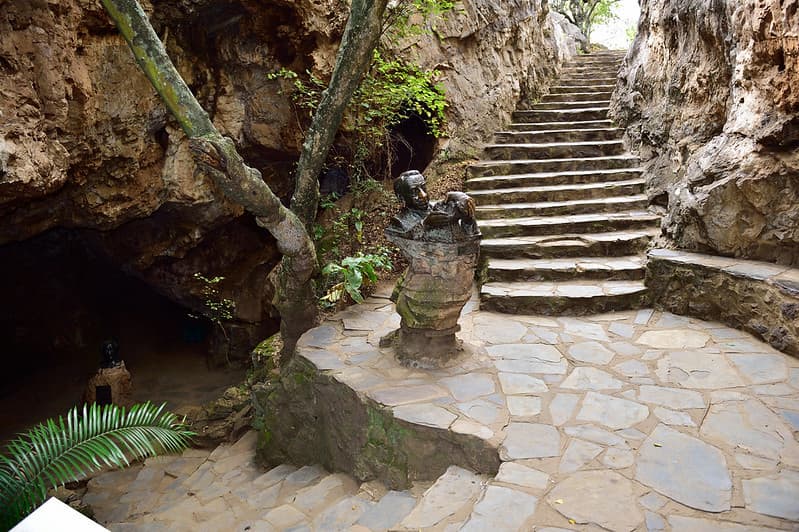
The Fossil Hominid Sites of SOUTH AFRICA, widely known as the Cradle of Humankind, is a globally significant paleontological area located primarily in the Gauteng province. It is a series of limestone caves—including the famous Sterkfontein, Swartkrans, and Kromdraai sites—that have yielded one of the world’s most concentrated and important collections of early human ancestral remains, dating back as far as 3.5 million years.
Attraction
- The “Human Origin” Narrative: Tourists are drawn by the opportunity to stand at the very place where modern humanity’s evolutionary journey began. Discoveries like “Mrs. Ples” and “Little Foot” have made this site legendary.
- Immersive Science: Beyond simple viewing, visitors can explore the Maropeng Visitor Centre, a state-of-the-art facility that makes complex evolutionary science accessible and engaging for all ages.
- Cave Exploration: The physical experience of descending into the Sterkfontein Caves provides a sense of adventure and a tangible connection to the geological environments where our ancestors once lived.
- Educational Tourism: It is a premier destination for those interested in biology, history, and anthropology, often combined with visits to the nearby Magaliesberg Biosphere.

World Heritage
Inscribed in 1999 (and later extended), the site meets UNESCO criteria for its Outstanding Universal Value:
- Evolutionary Record: It provides the most comprehensive and significant record of hominid evolution anywhere on the planet.
- Scientific Rarity: The dolomite caves provided the perfect chemical environment (limestone sedimentation) to trap and fossilize ancient remains and tools over millions of years, creating a “time capsule” of prehistoric life.
- Technological Landmarks: Evidence found here, such as the early use of fire and stone tool production, marks critical milestones in the development of human cognitive and behavioral abilities.
Gateway
Johannesburg is the essential gateway.
- Commercial Airport: O.R. Tambo International Airport (JNB) is the primary gateway, offering extensive domestic and international flight connections.
- Lodging: Johannesburg and its northern suburbs offer vast accommodation options, from high-end hotels at the airport to boutique retreats closer to the Cradle of Humankind (such as the Maropeng Boutique Hotel).
When
- May to September (Winter): This is the peak season. The climate is dry, cool, and crisp, which is ideal for hiking, cave tours, and outdoor exploration. The vegetation thins out, improving visibility for wildlife viewing in the surrounding reserves.
- Avoid: Summer (November to March) can be very hot and humid with frequent afternoon thunderstorms, which can occasionally impact cave accessibility if heavy rain leads to localized flooding.
Consideration
- Booking Ahead: Guided tours, especially at Sterkfontein, are highly popular. Book your tickets online in advance to ensure availability, particularly during weekends and school holidays.
- Physical Activity: Cave tours involve walking on uneven, sometimes slippery surfaces. Wear sturdy, comfortable walking shoes.
- Professional Guidance: While self-exploration is possible at the Maropeng Visitor Centre, hiring a professional guide for the cave systems is essential to fully understand the stratigraphy and the significance of specific fossil finds.
- Safety: Always remain on marked trails and follow the instructions of the site management regarding environmental conservation.

Resources
- Maropeng Visitor Centre (Official) – The primary hub for tickets, scientific exhibitions, and information on the Cradle of Humankind.
- UNESCO World Heritage Centre – The formal documentation of the site’s world heritage significance.
- South Africa Tourism – An excellent resource for broader regional travel tips, including accommodation and transport.
- Sterkfontein Caves Visitor Info – A practical guide for planning your visit and nearby local activities.
- Booking.com – Johannesburg Hotels – Use this platform to research and secure your base in Johannesburg.
Featured Image
Entrance to Sterkfontein Cave (South African Tourism, Flickr/CC BY 2.0).
News Feed
Advertisement


Comments:
Leave a Reply