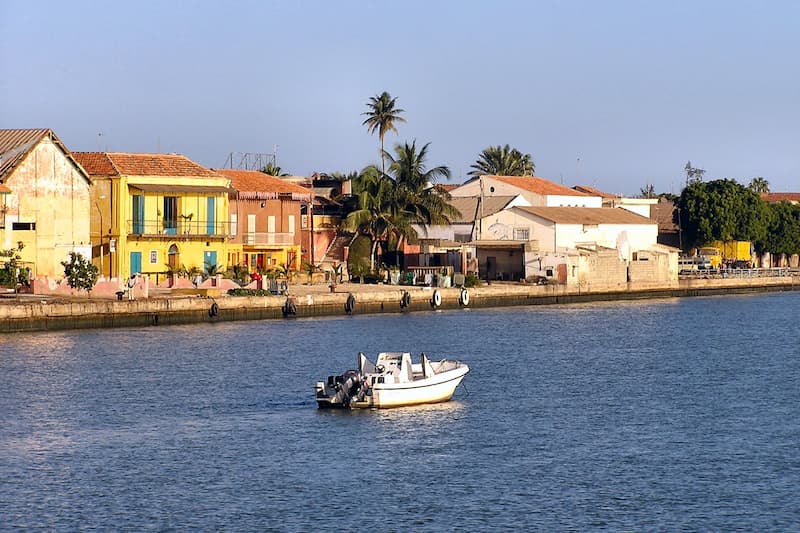
The Historic Island Gateway to West Africa’s Cultural Soul
The UNESCO World Heritage site titled “Island of Saint-Louis” (Île de Saint-Louis) is a narrow, elongated riverine island situated near the mouth of the Senegal River in northwestern SENEGAL, approximately 320 kilometers north of the national capital, Dakar. Measuring roughly two kilometers in length and 400 meters in width, the island sits between two arms of the Senegal River, separated from the Atlantic Ocean by a slender sandpit known as the Langue de Barbarie.
Founded by French merchants in 1659 as a fortified trading post, Saint-Louis served as the first French colonial settlement in West Africa and functioned as the capital of Senegal and French West Africa (Afrique-Occidentale Française) until 1957. The island’s urban layout exhibits a grid-based street plan featuring two-story colonial townhouses with wooden balconies, wrought-iron railings, inner courtyards, and tiled roofs. The island connects to the mainland district of Sor via the historic Faidherbe Bridge (Pont Faidherbe), an iconic 507-meter-long wrought-iron swing bridge designed by French engineers in the late 19th century.
Attraction
The Island of Saint-Louis attracts historians, cultural travelers, jazz enthusiasts, and ecotourists drawn to its unique blend of West African heritage and French colonial architecture. Renowned for its laid-back atmosphere and Senegalese hospitality (teranga), the island offers a living museum of colonial history, architectural nostalgia, and vibrant arts.
Visitors flock to the island during the annual Saint-Louis International Jazz Festival, one of Africa’s premier musical events, drawing international musicians and spectators every spring. Walking through the colorful, narrow streets allows tourists to inspect historic landmarks, including the Governor’s Palace (Palais du Gouverneur), the 19th-century Cathedral of Saint-Louis, and old merchant warehouses. Saint-Louis also serves as a gateway base for nature excursions to nearby ecological sanctuaries, including Djoudj National Bird Sanctuary (Parc National des Oiseaux du Djoudj), a major UNESCO-listed wintering site for millions of migratory pelicans and waterfowl.

World Heritage
Inscribed on the UNESCO World Heritage List in 2000 under Cultural Criteria (ii) and (iv), the Island of Saint-Louis is recognized for its historic and architectural significance:
- Criterion (ii) – Interchange of Human Values: Saint-Louis played a foundational role in colonial West Africa as a commercial hub for gum arabic, gold, and slave trading. The island served as a cultural melting pot where European, Islamic, and indigenous African traditions interacted, fostering a unique creole society known for the social influence of signares—wealthy Afro-French merchant women.
- Criterion (iv) – Architectural Ensemble: The island represents an exceptional example of a colonial river port city. Its preserved urban layout and unified architectural ensemble of French colonial townhouses, administrative buildings, and military structures from the 18th to 20th centuries illustrate the evolution of European colonial administration in West Africa.
Gateway
Travelers can access the site via two Senegalese gateways featuring public IATA-listed commercial airports, lodging, transport infrastructure, and tour services:
- Saint-Louis (Primary Local Gateway):
- Airport: Saint-Louis Airport (IATA Code: XLS; ICAO Code: GOSS).
- Infrastructure and Distance: Located 10 kilometers east of the island. XLS operates domestic flights from Dakar. Saint-Louis provides lodging choices from restored colonial boutique hotels on the island to guesthouses in mainland Sor. Taxis and horse-drawn carriages (caleches) connect the airport to the island. Local tour operators based on the island offer personalized guided walking tours, river boat cruises, and wildlife excursions to Djoudj Sanctuary.
- Dakar (Primary International Gateway):
- Airport: Blaise Diagne International Airport (IATA Code: DSS; ICAO Code: GOBD).
- Infrastructure and Distance: Situated 260 kilometers south of Saint-Louis. DSS is Senegal’s main international hub with global flight connections. Dakar offers extensive hotels, car rentals, and tour agencies. Travelers reach Saint-Louis via private taxis, express buses, or toll highways in 3.5 to 4.5 hours.
When
The optimal window to visit the Island of Saint-Louis is during the Dry Season (November to May), which provides pleasant weather for sightseeing and birdwatching:
- Cool Dry Season (November to February): Brings comfortable temperatures averaging 20°C to 28°C (68°F to 82°F) with low humidity and ocean breezes. Ideal for exploring the historic island and viewing migratory birds at Djoudj Sanctuary.
- Warm Dry Season / Festival Period (March to May): Features warmer temperatures (25°C to 33°C / 77°F to 91°F) and aligns with the Saint-Louis International Jazz Festival in May.
- Wet Season (June to October): Brings high humidity, heat (30°C to 36°C / 86°F to 97°F), and rainy weather that can cause localized flooding.
Consideration
- Health and Vaccinations: Senegal strictly requires Yellow Fever vaccination certificates for arriving international travelers. Malaria is present; taking antimalarial prophylaxis and using insect repellent are strongly advised.
- Sun Protection: Strong tropical sunshine requires high-SPF sunscreen, wide-brimmed hats, sunglasses, and light, breathable clothing.
- Currency and Payments: The local currency is the West African CFA Franc (XOF). Cash is necessary for small artisan shops, traditional markets, taxi fares, and local tour guides; reliable ATMs are available across the island and mainland.
- Language and Etiquette: French is official, while Wolof is widely spoken. Learning basic Wolof greetings (Nanga def) is warmly appreciated by locals. As Senegal is mostly Muslim, modest dress is recommended outside beach areas.
- Environmental Context: The low-lying island faces coastal erosion and rising sea levels. Supporting local conservation efforts and eco-friendly lodging helps preserve the heritage site.

Resources
- UNESCO World Heritage Centre: Official listing page detailing criteria, maps, and conservation state reports.
- Senegal Ministry of Tourism Official Portal: Official portal offering national travel information, visa guidelines, and tourist resources.
- Saint-Louis Tourism Office: Regional travel portal with event schedules, hotel directories, and historic walking routes.
- Au Senegal Official Travel Guide: Tourism guide providing travel itineraries, cultural highlights, and national park guides.
- GetYourGuide: Booking portal offering affiliate-supported guided walking tours, day trips, and excursions from Dakar to Saint-Louis.


Comments:
Leave a Reply