The Island of Gorée is a serene, car-free sanctuary located just 3.5 kilometers off the coast of Dakar, SENEGAL. Despite its small size—only about 28 hectares—it carries a profound historical weight that resonates globally.
Gorée is an island of striking contrasts. Architecturally, it is a Mediterranean-style gem, characterized by narrow, sandy alleys and colonial-era houses painted in warm shades of ochre, pink, and terracotta, often draped in vibrant bougainvillea.
Key landmarks include:
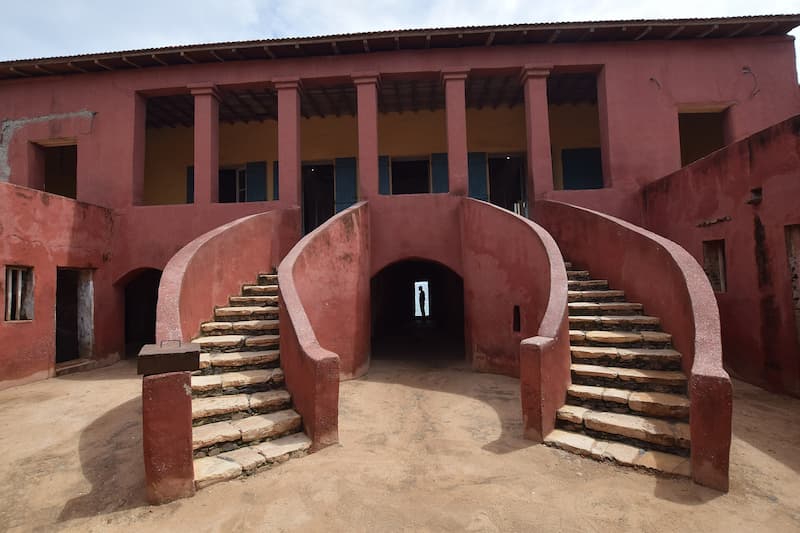
- The House of Slaves (Maison des Esclaves): A poignant pink building with a famous double-curved staircase, serving as a memorial to the transatlantic slave trade.
- Fort d’Estrées: A thick-walled citadel that now houses the IFAN Historical Museum, detailing Senegal’s history from the Stone Age to the present.
- The Castel: The island’s highest point, featuring rocky plateaus, old fortifications, and massive WWII-era naval guns that offer a panoramic view of the Atlantic and the Dakar skyline.
- The Women’s Museum (Musée de la Femme): A tribute to the social and political roles of Senegalese women, located in a beautifully restored home.
Attraction
Gorée serves as a powerful “Site of Memory.” It attracts a diverse range of visitors for several reasons:
- Pilgrimage Site: For many in the African diaspora, particularly from the Americas, visiting Gorée is a deeply emotional journey to reconnect with their ancestral roots. High-profile figures like Nelson Mandela, Barack Obama, and Pope John Paul II have all made symbolic visits here.
- Atmospheric Tranquility: Because there are no cars on the island, the pace of life is remarkably slow. It provides a peaceful respite from the high-energy “freneticism” of downtown Dakar.
- Arts and Culture: The island is home to a thriving community of artists. You will find vibrant open-air galleries showcasing sand paintings, sculpture, and traditional jewelry in the shaded courtyards.

World Heritage
UNESCO inscribed the Island of Gorée in 1978 as one of its very first sites. It was recognized primarily under Criterion (vi):
- A Symbol of Human Suffering and Reconciliation: Gorée is an exceptional testimony to one of the greatest tragedies in human history: the slave trade. It serves as a symbolic bridge between Africa and the Americas.
- Architectural Duality: The island’s layout perfectly illustrates the brutal social hierarchy of the colonial era—the elegant, airy homes of the wealthy traders on the upper floors stood in stark contrast to the dark, cramped, and windowless holding cells for captives on the ground floor.
Gateway
The gateway to the island is Dakar, the capital of Senegal.
- Commercial Airport: Blaise Diagne International Airport (DSS) is the primary hub. It is a modern facility located about 50 km (roughly 1 to 1.5 hours) from the city center and the ferry terminal.
- Lodging: Dakar offers extensive accommodation options, from luxury international chains (like the Pullman Dakar Teranga or Radisson Blu) to boutique hotels in the “Plateau” district near the ferry terminal.
- Connectivity: The Dakar-Gorée Ferry (Liaison Maritime Dakar-Gorée) departs from the main terminal near Independence Square. The crossing takes approximately 20 minutes and runs frequently from 7:30 AM until midnight.
When
- Peak Season (November to February): This is the dry, cool season. Temperatures are pleasant (around 24°C–28°C), and the humidity is low, making it the most comfortable time for walking.
- Shoulder Season (March to May): Still dry, but temperatures begin to rise. It is less crowded than the winter peak.
- Avoid the Rainy Season (July to September): Expect high humidity and heavy, short downpours. While the island is lush and green, the heat can be oppressive for sightseeing.
Consideration
- Passport Requirement: You must bring your physical passport to purchase a ferry ticket and to board the boat. Copies are generally not accepted.
- Monday Closures: Most museums on the island, including the House of Slaves, are closed on Mondays. Plan your visit for Tuesday through Sunday.
- Mid-Day Break: The House of Slaves typically closes for a long lunch break between 12:00 PM and 2:30 PM. Time your arrival to avoid this gap or use the time to have lunch at one of the harborside restaurants.
- Cash is Essential: There are very few ATMs on the island, and many of the artisanal shops and small cafés do not accept cards.
- Walking Terrain: The paths are a mix of sand and uneven cobblestones. Sturdy walking shoes are far superior to flip-flops for exploring the Castel.

Resources
- UNESCO World Heritage Centre – The official entry detailing the historical significance and conservation efforts.
- Lonely Planet: Dakar – Practical logistics and background on the island’s primary landmarks.
- Cicotours Guide – A locally-focused resource providing detailed ferry schedules and a guide to the island’s smaller museums.
- Erika’s Travels: Gorée Island – A well-documented travelogue that offers a balanced view of the island’s beauty versus its tragic history.
- GetYourGuide – A commercial platform where you can book guided day trips from Dakar that include ferry tickets and historical guides.


Comments:
Leave a Reply