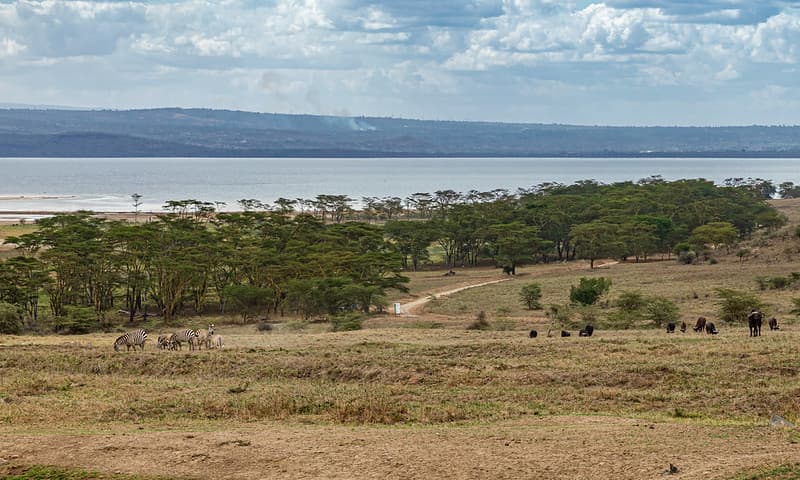
Dynamic hydrological systems shape unique wildlife habitats across Kenya
The UNESCO World Heritage site titled “Kenya Lake System in the Great Rift Valley” is a serial property comprising three inter-linked, shallow alkaline lakes—Lake Bogoria, Lake Nakuru, and Lake Elementaita—situated along the floor of the Great Rift Valley in central KENYA. Covering a total area of over 32,000 hectares, these inter-connected soda lakes nestle between steep rift escarpments, volcanic cones, hot springs, and gushing geysers.
Surrounded by savanna, acacia woodlands, and wetland marshes, the three lakes represent a dynamic hydrological and biological continuum. Because the lakes are landlocked with high evaporation rates and no surface outlets, their waters support prolific blooms of Spirulina platensis cyanobacteria. This rich food supply anchors a delicate food web that sustains incredible concentrations of avifauna and diverse African megafauna across the Rift Valley landscape.
Attraction
The Kenya Lake System attracts wildlife enthusiasts, birdwatchers, photographers, and safari adventurers seeking one of the planet’s most dramatic natural spectacles. The primary global draw is the breathtaking gathering of up to 1.5 million lesser flamingos, which paint the shorelines in a brilliant shade of pink as they feed on microscopic algae.
Visitors embark on 4×4 game drives in Lake Nakuru National Park to spot endangered black and white rhinos, Rothschild’s giraffes, lions, leopards, and waterbucks. Tourists explore Lake Elementaita’s tranquil shorelines and Soysambu Conservancy to witness major breeding colonies of great white pelicans. At Lake Bogoria, travelers marvel at Africa’s highest concentration of true geothermal geysers and bubbling hot springs against the backdrop of the Siracho Escarpment.

World Heritage
Inscribed on the UNESCO World Heritage List in 2011, the property is recognized under Natural Criteria (vii), (ix), and (x) for its exceptional natural beauty, ecological processes, and global species diversity:
- Criterion (vii) – Exceptional Natural Beauty: Flanked by towering Rift Valley walls, the three lakes create an unmatched visual landscape where massive pink bird congregations contrast with volcanic landforms, hot springs, and savanna ecosystems.
- Criterion (ix) – Outstanding Biological Processes: The alkaline soda lakes represent one of the world’s most productive ecosystems, offering key insights into extreme aquatic environment dynamics and food web interactions.
- Criterion (x) – In-Situ Species Conservation: The site harbors 13 globally threatened bird species and acts as the world’s single most critical feeding ground for lesser flamingos. It serves as a vital stopover on the African-Eurasian flyway for over 500 million migratory birds, while protecting vital sanctuaries for black rhinos and Rothschild’s giraffes.
Gateway
Travelers planning a safari across the Kenya Lake System can access the property via practical Kenyan gateway locations featuring public IATA-listed airports searchable directly on IATA’s directory, lodging options, transit infrastructure, and safari guide services:
- Nakuru (Primary Local Gateway / Nearest Airport):
- Airport: Lanet Airport / Nakuru Airport (IATA Code: NUU; ICAO Code: HKNK).
- Infrastructure and Distance: Located directly adjacent to Nakuru City, within 10 to 15 kilometers of the Lake Nakuru National Park gates. NUU is a public airfield listed in IATA’s directory. As Kenya’s fourth-largest city, Nakuru provides extensive accommodations ranging from luxury safari lodges overlooking the lake to budget city hotels. Local transport desks, 4×4 safari rentals, and certified wildlife guides operate daily transfers across Nakuru, Elementaita, and Bogoria.
- Nairobi (Primary Regional International Gateway):
- Airport: Jomo Kenyatta International Airport (IATA Code: NBO; ICAO Code: HKJK).
- Infrastructure and Distance: Situated approximately 160 kilometers southeast of the lakes along the smooth A104 highway. NBO is East Africa’s major international aviation hub indexed in IATA’s directory. Nairobi offers extensive luxury hotel infrastructure, car rental desks, and specialized safari agencies running multi-day tours into the Rift Valley.
- Nyeri (Secondary Regional Gateway):
- Airport: Nyeri Airport (IATA Code: NYE; ICAO Code: HKNI).
- Infrastructure and Distance: Located approximately 110 to 130 kilometers east of the lakes. NYE is a public airfield searchable in IATA’s public directory. Nyeri provides comfortable safari lodge accommodations, car rentals, intercity bus connections, and tour operator services connecting travelers westward toward Lake Nakuru and Lake Bogoria.
When
The ideal windows to visit the Rift Valley lakes are during the Dry Seasons (July to October and January to March):
- Dry Seasons (July to October & January to March): Highly recommended for wildlife viewing. Receding water levels concentrate algae, attracting peak flamingo populations to the shores. Unpaved park tracks are dry and easily navigable by safari vehicles.
- Wet Seasons (April to May & November): Rain showers bring lush green foliage and influxes of Palaearctic migratory birds. However, rising water levels can dilute lake alkalinity—causing flamingos to temporarily disperse to other regional lakes—and make dirt roads muddy.
Consideration
- Fluctuating Lake Water Levels: Regional rainfall patterns impact water levels and salinity across the soda lakes. Because flamingos move between lakes based on algae availability, checking recent wildlife reports helps determine whether Nakuru, Elementaita, or Bogoria currently holds the largest flocks.
- Park Entry Permits: Lake Nakuru is managed as a national park by the Kenya Wildlife Service (KWS), requiring digital eCitizen entry passes purchased in advance. Lake Bogoria and Elementaita operate under local county or conservancy administration with separate fee structures.
- Geothermal Hazards: At Lake Bogoria, hot springs and steam vents reach boiling temperatures. Visitors must remain on designated walkways and exercise caution near geothermal zones.
- Sun Protection and Dust: Open-top 4×4 safaris along dirt roads produce heavy dust. Carrying a face scarf, sunglasses, high-SPF sunscreen, and a wide-brimmed hat is recommended.
- Currency and Payments: Kenyan Shilling (KES) is the standard currency. While major safari lodges accept credit cards, local cash or mobile money (M-Pesa) is necessary for park entry payments, driver gratuities, and local craft purchases.

Resources
- UNESCO World Heritage Centre: Official inscription portal detailing site boundaries, criteria evaluations, and conservation reports.
- Kenya Wildlife Service (KWS): Official government management agency overseeing park conservation, entry fees, and visitor guidelines for Lake Nakuru.
- Magical Kenya: Official national tourism portal providing Rift Valley travel itineraries, transport logistics, and accommodation directories.
- National Museums of Kenya: Official cultural and natural heritage body detailing research and ecological preservation efforts across the lakes.
- Trip.com: Global travel marketplace offering bookings for guided 4×4 day safaris, flamingo watching tours, and driver transfers from Nairobi or Nakuru.


Comments:
Leave a Reply