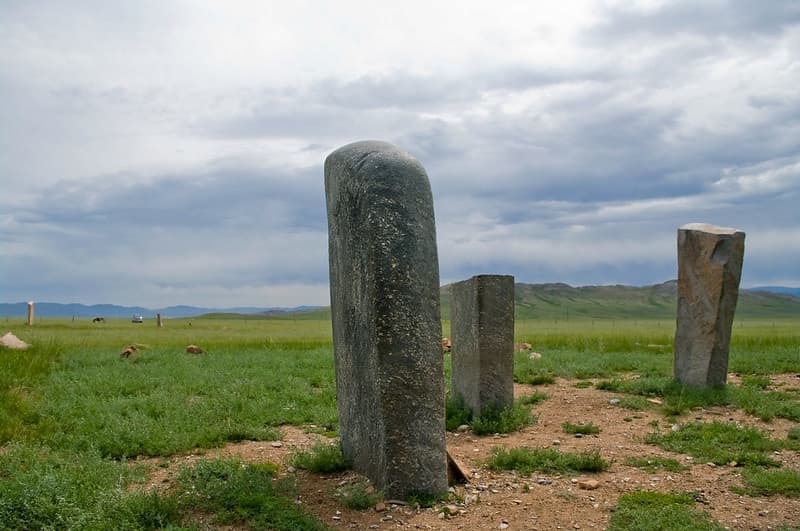
The Deer Stone Monuments and Related Bronze Age Sites represent one of the most enigmatic and visually striking archaeological legacies of the Eurasian steppe. Inscribed as a UNESCO World Heritage site in 2023, these monuments offer a profound connection to the nomadic cultures that thrived in Central Asia three millennia ago.
The site is a serial property consisting of four primary locations in central and northern MONGOLIA: Khoid Tamir, Jargalantyn Am, Urtyn Bulag, and Uushigiin Övör. These areas contain “Deer Stones”—giant granite or sandstone steles ranging from one to four meters in height.
Dating from approximately 1200 to 600 BCE (Late Bronze Age), the stones are called “Deer Stones” because they are intricately carved with stylized images of stags, often depicted as if they are flying or leaping toward the sky. They are rarely found in isolation; instead, they are part of larger ceremonial and funerary complexes that include massive stone burial mounds (khirgisüürs), sacrificial altars, and thousands of small stone heaps containing the remains of sacrificed horses.
Attraction
The Deer Stones are an attraction for those seeking a mix of ancient mystery and untouched wilderness:
- Mystical Iconography: The “flying” deer, with their elongated, flowing antlers and bird-like beaks, represent a unique artistic style that predates and influenced the famous Scythian animal art.
- The “Stonehenge” of the Steppe: Much like the megaliths of Europe, the purpose of these stones—whether they were landmarks for warriors, representations of ancestors, or totems for spiritual transformation—remains a subject of intense global fascination.
- Spiritual Continuity: Even today, many Mongolians treat these sites as sacred, leaving offerings or blue ceremonial scarves (khadags) on the stones, allowing tourists to witness a living connection to the past.
- Vast Open Landscapes: The monuments are set against the backdrop of the Mongolian steppe—an endless horizon of rolling green hills, nomadic gers (yurts), and herds of wild horses.

World Heritage
UNESCO recognized the site in 2023 based on its “Outstanding Universal Value”:
- Criterion (i): The monuments are considered masterpieces of human creative genius. The artistic elegance of the carvings, executed with stone and bronze tools, demonstrates an extraordinary level of craftsmanship and prehistoric aesthetic vision.
- Criterion (iii): They provide exceptional testimony to the vanished culture of the Bronze Age nomads. The layout of the complexes reflects a sophisticated social structure and a complex belief system involving ancestor veneration and celestial symbolism.
Gateway
While the capital city, Ulaanbaatar, is the primary entry point into Mongolia, the specific gateway for these heritage sites is the town of Mörön.
- Commercial Airport: Mörön Airport (MXV). It is a significant regional hub with regular domestic flights from Ulaanbaatar, making it the most accessible entry point for international travelers heading to the northern sites.
- Lodging: Mörön offers a wide range of overnight options, from established hotels like the 50100 Hotel and Dul Hotel to specialized tourist ger camps on the outskirts of town.
- Access: The famous Uushigiin Övör site is located just 18 to 20 km west of Mörön, making it easily reachable by a short jeep drive. The other sites in the Khangai Ridge are further south but are typically accessed via expeditions starting from this region or Arkhangai.
When
- Summer (June to August): This is the peak season. The weather is warm, the grass is lushly green, and the Naadam Festival in July provides a vibrant cultural experience.
- Shoulder Season (May and September): Ideal for those who prefer solitude and photography. The air is crisp, and the autumn colors in September add a golden hue to the landscape.
- Avoid Winter: Temperatures can plummet to -30°C (-22°F) or lower, and many rural roads and ger camps close due to heavy snow and extreme cold.
Consideration
- Dress in Layers: Even in the height of summer, the Mongolian steppe is prone to sudden temperature drops and strong winds. A windproof jacket and warm fleece are essential.
- Hire a Guide: The sites are often unmarked and deep in the countryside. A local guide is necessary not just for navigation, but to explain the intricate carvings and ensure you do not inadvertently disturb a burial site.
- Physicality: Exploring the complexes involves walking over uneven, rocky terrain. Sturdy, waterproof hiking boots are a must.
- Respect the Stones: Never sit on, climb, or pour liquids over the deer stones. These are protected monuments and spiritual sites.
- Logistics: Outside of Mörön, facilities (toilets, shops, ATMs) are non-existent. Carry your own water, snacks, and a portable power bank.

Resources
- UNESCO World Heritage Centre – The official listing providing detailed maps, criteria, and conservation status for all four component sites.
- Smithsonian Global: Deer Stone Project – An excellent research-based site documenting 15 years of archaeological studies and 3D scans of the stones.
- Google Arts & Culture: Sacrificial Deer Stone Monuments – A visually stunning immersive guide created in collaboration with the Mongolian Ministry of Culture.
- Travel Buddies Mongolia – A comprehensive local travel site that offers logistical tips and guided tour itineraries for the Uushigiin Övör site.
- Agoda.com – A reliable platform for booking hotels and guesthouses in Mörön.


Comments:
Leave a Reply