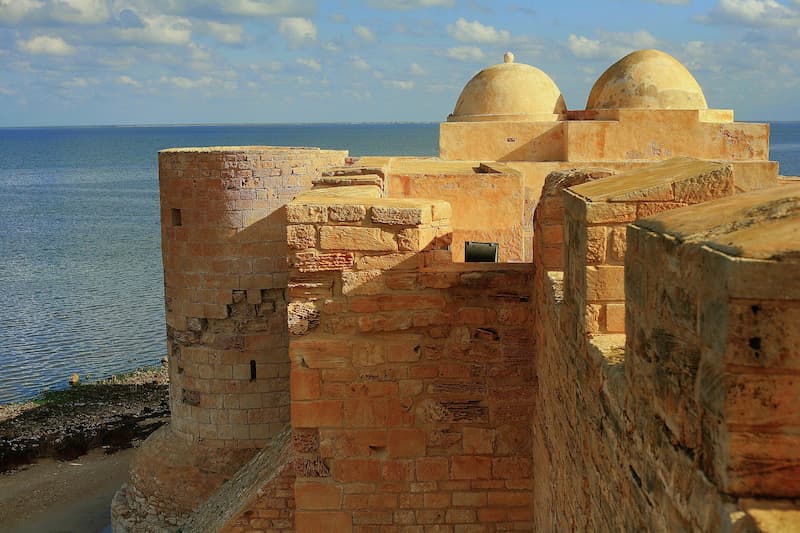
The island of Djerba, located in the Gulf of Gabès off the southern coast of TUNISIA, is often called “The Island of Dreams.” Its UNESCO designation, “Djerba: Testimony to a settlement pattern in an island territory,” honors a landscape that isn’t just beautiful—it’s a masterclass in human survival and social harmony.
Djerba is a Mediterranean island characterized by a unique, decentralized urban form. Unlike typical North African cities centered around a dense “medina” or urban core, Djerba’s settlement is dispersed.
The island is divided into small, self-sufficient neighborhoods called houma. Each houma consists of family homesteads known as houch. A houch is a fortified, white-washed farm complex with a central courtyard, designed to protect families from both the scorching sun and historical pirate raids. These homesteads are connected by a web of narrow, winding lanes and are interspersed with thousands of small, simple mosques that served as both spiritual centers and defensive watchtowers.
Attraction
Djerba attracts travelers through a rare blend of “sun-and-sand” relaxation and profound cultural depth:
- The Ghriba Synagogue: One of the oldest and most beautiful synagogues in North Africa, it is a site of annual pilgrimage for the Jewish diaspora and a stunning example of blue-tiled architecture.
- Djerbahood: In 2014, the village of Erriadh was transformed into an open-air museum where over 150 street artists from around the world painted murals on traditional walls, creating a vibrant contrast between the ancient and the modern.
- Guellala Pottery: This village is the island’s pottery hub, where artisans still use ancient Berber techniques and underground kilns to create terracotta jars and intricately decorated ceramics.
- Mediterranean Beaches: The island’s northeastern “Zone Touristique” offers pristine white sands and turquoise waters that are significantly more affordable than European alternatives.

World Heritage
Inscribed by UNESCO in 2023, Djerba was recognized for its Outstanding Universal Value under Criterion (v):
- Adaptation to Scarcity: The site is a testimony to how human populations adapted to a water-scarce environment. Inhabitants developed an ingenious system of cisterns and impluviums to catch every drop of rainwater, supporting life for centuries on an island with no permanent rivers.
- Cultural Coexistence: For over a millennium, Djerba has been a sanctuary for diverse religious groups. The island hosts Ibadite Muslims, Maliki Muslims, and one of the oldest Jewish communities in the world. Their peaceful co-habitation is etched into the very layout of the island’s mosques, synagogues, and churches.
- Intact Settlement Pattern: The houch system represents a unique response to geographic isolation, preserving a 9th-to-18th-century landscape that has largely resisted the pressures of modern over-urbanization.
Gateway
The primary gateway to the site is the town of Houmt Souk, the island’s capital.
- Commercial Airport: Djerba–Zarzis International Airport (DJE), also known as Mellita Airport. It handles direct flights from Tunis, as well as seasonal charters from major European cities like Paris, Frankfurt, and Brussels.
- Lodging: Houmt Souk offers excellent lodging, ranging from Traditional Fondouks (historic inns converted into boutique hotels) like Hotel Arischa to high-end resorts along the coast.
When
- Spring (April to June): The most pleasant weather, ideal for exploring the inland houma and the murals of Djerbahood without the intense summer heat.
- The Ghriba Pilgrimage (May): If you wish to witness the island’s cultural heart, visit during the 33rd day of the Counting of the Omer for the Jewish pilgrimage.
- Autumn (September to October): The sea remains warm enough for swimming, but the heavy summer tourist crowds have thinned.
Consideration
- Modesty and Respect: When visiting the Ghriba Synagogue or the island’s historic mosques, dress conservatively. Women should carry a scarf to cover their hair, and both men and women should cover their shoulders and knees.
- Cash is King: While major resorts accept credit cards, the souks (markets) and smaller cafes in Houmt Souk and Erriadh primarily operate in Tunisian Dinars.
- Water Conservation: Djerba’s UNESCO status is based on its history of water management. Be mindful of your water usage, as the island still relies heavily on desalination and limited groundwater.
- Transportation: The best way to see the dispersed sites is by renting a scooter or bicycle, though “louages” (shared taxis) are a very cheap way to get between the main villages.

Resources
- UNESCO – Djerba Official Listing – The definitive source for the historical maps and legal boundaries of the protected zones.
- Tunisia Tourism – Djerba Guide – The official national portal for travelers, offering event calendars and regional history.
- Djerba Explore Park – A specialized site for the island’s largest cultural complex, including the Lalla Hadria Museum.
- Association de Sauvegarde de l’Ile de Djerba (ASSIDJE) – A local NGO dedicated to the preservation of the island’s unique architecture and heritage.
- GetYourGuide – Djerba Vacation Packages – A commercial platform for booking flights and hotels.


Comments:
Leave a Reply