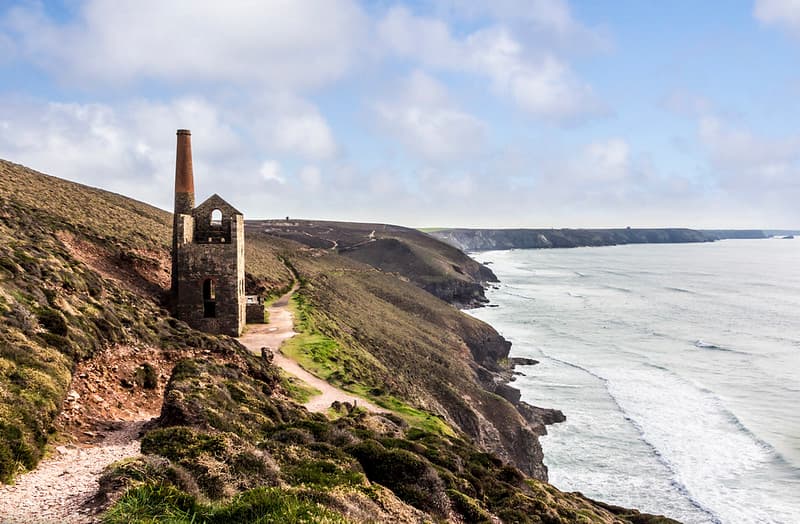
The Cornwall and West Devon Mining Landscape is a sprawling industrial tapestry that tells the story of how a rugged corner of southwestern England transformed the world. Inscribed by UNESCO in 2006, it is the largest industrial World Heritage Site in the United Kingdom, spanning approximately 20,000 hectares across ten distinct geographic areas.
The site is not a single monument but a series of ten non-contiguous areas stretching from the St Just Mining District in the far west of Cornwall to the Tamar Valley and Tavistock in West Devon. During the 18th and 19th centuries, this region was the global epicenter of deep-level mining for tin and copper.
The landscape is defined by its iconic “Engine Houses”—tall, stone-built chimneys and rectangular towers that once housed massive steam-powered beam engines used to pump water from the deep mines. Beyond these structures, the site encompasses:
- Mining Villages and Towns: Architecturally distinct settlements like Camborne and Redruth.
- Infrastructure: Extensive networks of canals, mineral railways (tramroads), and ports like Hayle and Charlestown.
- Foundries and Smelters: Industrial complexes where the machinery of the Industrial Revolution was forged.
- Smallholdings: The unique pattern of tiny agricultural plots created by miners who farmed to supplement their income.
Attraction
The landscape attracts millions of visitors who come to experience a unique blend of industrial grit and coastal beauty:
- Iconic Scenery: Many of the most famous engine houses, such as Wheal Coates or the Crowns at Botallack, are perched dramatically on the edges of granite cliffs, providing some of the most photographed vistas in the UK.
- The “Poldark” Effect: The region gained massive international fame through the Poldark television series, which utilized these historical sites as filming locations, sparking a wave of “heritage tourism.”
- Industrial Adventure: Sites like Geevor Tin Mine and Levant Mine offer underground tours where visitors can experience the cramped, dark conditions faced by Cornish miners.
- The South West Coast Path: The world-renowned 630-mile walking trail passes directly through many of the mining districts, allowing hikers to explore the ruins while enjoying Atlantic views.

Heritage
UNESCO recognized the Cornwall and West Devon Mining Landscape because it was the primary catalyst for the international spread of deep-metal mining technology.
- Criterion (ii): It reflects an “important interchange of human values.” The high-pressure steam engines developed here by pioneers like Richard Trevithick were exported globally, revolutionizing mining in Australia, South Africa, and the Americas.
- Criterion (iii): It is an exceptional testimony to a vanished cultural tradition. The “Cornish Miner” became a global identity; as the saying went, “a mine is a hole in the ground with a Cornishman at the bottom of it.”
- Criterion (iv): It is an outstanding example of a technological ensemble. The combination of the engine houses, transport links, and managed landscapes represents the birth of modern industrialized society.
Gateway
To explore the core of the Cornish mining districts, the most convenient gateway is Newquay.
- Commercial Airport: Cornwall Airport Newquay (NQY) serves as the region’s main air hub, offering regular domestic flights from London and other UK cities, as well as seasonal international routes.
- Lodging: Newquay is a premier tourist hub with extensive lodging, from luxury clifftop hotels (like The Atlantic or The Headland) to a wide array of boutique guesthouses and holiday apartments.
- Proximity: From Newquay, you are within a 30- to 45-minute drive of the central mining districts of Camborne, Redruth, and St Agnes.
Note: For the eastern Devon side of the site, Exeter (with its own international airport, EXT) serves as the primary gateway.
When
- Spring (May to June): This is widely considered the best time. The coastal cliffs are carpeted in wildflowers (thrift and gorse), the days are long, and the weather is generally mild before the summer crowds arrive.
- September: The “shoulder season” offers warm seas and quieter paths. The golden autumn light is particularly striking for photographers capturing the stone ruins.
- Winter (November to February): While many indoor attractions close, winter is ideal for “storm watching.” Seeing the Atlantic swells crash against the cliffs near the mines is a visceral experience, though you must be prepared for wind and rain.

Consider
- The “Ten Areas” Layout: Because the site is spread across 10 separate areas, renting a car is essential for seeing more than one district. Public transport exists but can be slow between remote mine sites.
- Weather Volatility: The Cornish coast is notoriously unpredictable. Always pack high-quality waterproofs and wind-resistant layers, even if the morning starts sunny.
- Terrain: To see the best ruins, you will need to walk on the South West Coast Path. Some sections are steep and rugged; sturdy hiking boots are a must.
- Safety: Do not venture off marked paths. This is an old mining landscape with hidden shafts; while the main tourist areas are safe, “exploring” abandoned, unmanaged ruins can be dangerous.
- Booking Tours: Popular sites like the Levant Beam Engine (which still runs on steam) have limited capacity and often require pre-booking, especially in summer.

Resources
- Cornish Mining World Heritage (Official) – The definitive resource for maps, histories, and visitor guides for all ten areas.
- UNESCO World Heritage Centre – Technical details on the inscription and conservation of the mining landscape.
- The National Trust – This organization manages many of the most famous mine sites, including Botallack and Levant.
- Visit Cornwall – The official tourism board’s portal for practical travel tips and local itineraries.
- GetYourGuide – A platform to book guided “Poldark” tours, coastal photography walks, and heritage day trips; this link supports affiliate marketing.


Comments:
Leave a Reply