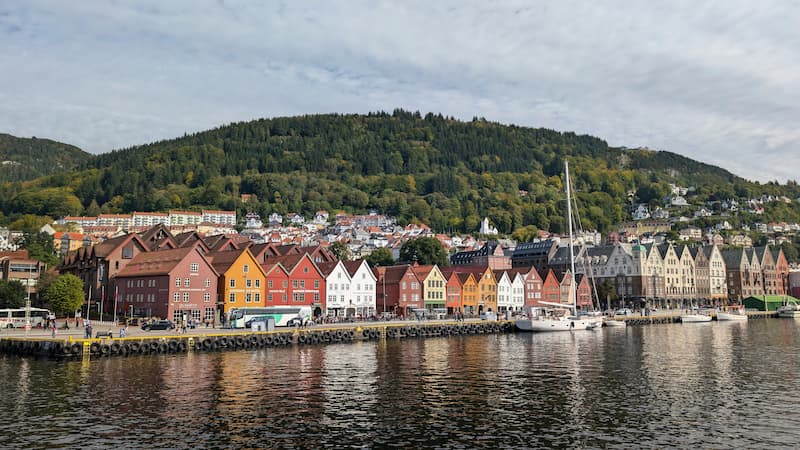
Bryggen, also known as Tyskebryggen (The German Wharf), is the historic harbor district of Bergen, Norway’s second-largest city. It is an iconic row of colorful wooden commercial buildings that stand as a living monument to the city’s medieval past and its importance in global trade.
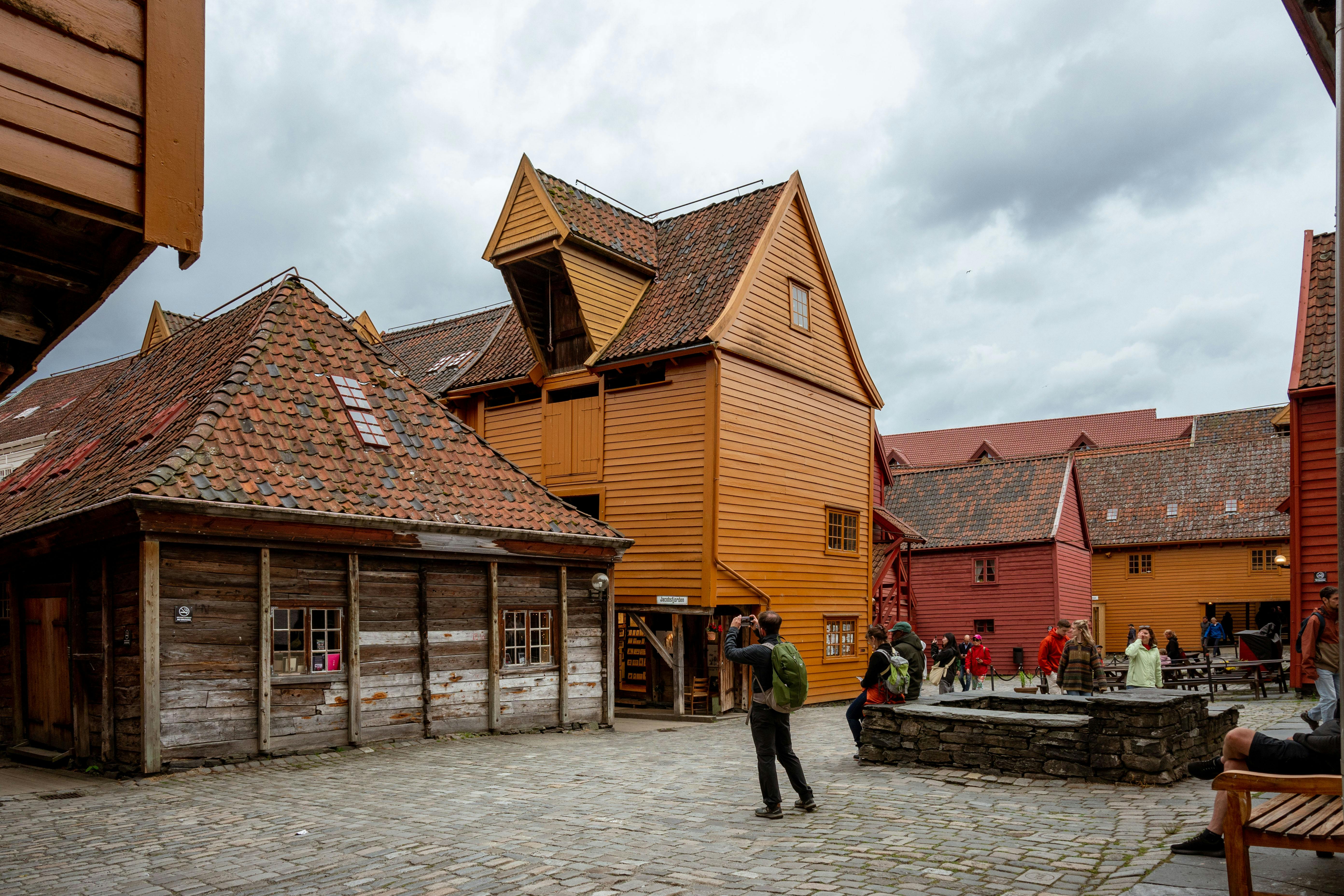
Bryggen consists of a series of approximately 62 gabled wooden warehouses and tenement houses lining the eastern side of the Vågen harbor. While the foundations date back to the 11th century, most of the current structures were rebuilt after a catastrophic fire in 1702, strictly following the medieval layout. The site is characterized by its narrow, “secret” wooden alleyways (passages) between rows of tall, colorful buildings. Inside these passages, you’ll find lopsided wooden floors, artisanal workshops, galleries, and hidden boutiques that look like they have been frozen in time.
Attraction
Bryggen is one of Norway’s most photographed landmarks and a magnet for international visitors for several reasons:
- The “Toy-Town” Aesthetic: The bright ochre, red, and white facades reflecting in the harbor create a postcard-perfect scene.
- Hanseatic History: It is the only preserved Hanseatic “office” in the world, offering a unique look into the life of German bachelor merchants who dominated northern European trade for centuries.
- Cultural Hub: It isn’t just a museum; it’s a living neighborhood filled with local jewelry designers, textile artists, and some of Bergen’s most prestigious seafood restaurants, such as Enhjørningen (The Unicorn).
- The Gateway to the Fjords: Most tourists visit Bryggen as the starting point for fjord cruises to the Sognefjord or Hardangerfjord.

Heritage
Bryggen was inscribed on the UNESCO World Heritage List in 1979.
- Criterion (iii): UNESCO recognizes Bryggen as a unique example of a northern “fondaco” (a trading colony). It preserves the memory of the Hanseatic League’s social and economic organization from the 14th to the 18th century.
- Architectural Authenticity: Despite numerous fires over nearly a thousand years, the site has been rebuilt using traditional timber-log construction and beam techniques, meticulously preserving the original medieval urban structure.
Gateway
- Gateway City: Bergen is the direct gateway, with Bryggen located in the heart of the city center.
- Commercial Airport: Bergen Airport, Flesland (BGO) is the closest international airport, located about 18 km from Bryggen. It is well-connected to major European hubs like London, Amsterdam, and Copenhagen.
- Lodging: Bergen has a high density of lodging options. For a truly immersive experience, visitors can stay at Radisson Blu Royal Hotel (located right at the edge of Bryggen) or Clarion Hotel Havnekontoret, which is housed in a grand historic building nearby.
When
- May to September (High Season): This offers the best weather and the longest daylight hours (up to 19 hours of sun). The Bergen International Festival in late May/early June is a cultural highlight.
- December: For those who don’t mind the cold, Bryggen is magical during the Christmas market season, with snow-covered rooftops and warm lighting in the alleys.
- Avoid: Late Autumn (October/November) can be extremely rainy and dark, as Bergen is famously one of Europe’s wettest cities.
Consideration
- Rain Gear: Regardless of the season, bring a high-quality raincoat and waterproof shoes. Umbrellas are often useless against Bergen’s mountain winds.
- The “Bergen Card”: If you plan to visit the Hanseatic Museum or the Bryggens Museum, this card provides free entry and discounts on the Fløibanen Funicular.
- Fragile Architecture: These are active wooden buildings. Be mindful of narrow, uneven stairs and steep ladders when exploring the inner courtyards.
- Crowd Timing: Visit early in the morning (before 9:00 AM) to experience the quiet, atmospheric charm of the alleys before the large cruise ship groups arrive.

Resources
- UNESCO World Heritage Centre – Bryggen: For the official history, maps, and criteria for its protected status.
- Visit Bergen (Official): The local tourism board’s site for events, hotel bookings, and restaurant recommendations.
- The Hanseatic Museum and Schøtstuene: The best site for learning about the daily life of the German merchants who lived in Bryggen.
- Stiftelsen Bryggen: The foundation responsible for the conservation and management of the site.
- Get Your Guide – Bryggen Tours: A reliable platform for booking guided walking tours and fjord cruises departing from the wharf.
Featured Image
Bryggen Wharf (Diana Melnyk, Pexels/Free To Use).
In The News
Advertisement


Comment:
9 responses to “Bryggen”
-
Bergen has so much to do and see. I was only there as a port stop on a cruise so I didn’t get to do all the fabulous things. I really enjoyed Bryggen and the fish market.
LikeLike
-
The wood alleyways are really unique. I’m sure it feels like stepping back in time!
LikeLike
-
The Hanseatic wharf Bryggen is where you’ll find the oldest buildings in Bergen – and the prettiest.
I enjoyed learning about the German merchants who lived in the region between 1360 and 1754 at the nearby Hanseatic Museum, then taking a stroll between the colourful, crooked buildings where traditional knitwear sellers, tiny art galleries and unique craft stores are hidden away in narrow alleyways just waiting to be discovered.
Bryggen has a place on the UNESCO World Heritage List, so it’s a must-see for all visitors.
LikeLike
-
One of the most enjoyable things to do in Bergen is to simply wander the streets and soak up the welcoming atmosphere – taking in the pretty houses and the bustling fish and flower market, before perhaps popping into one of the intriguing museums you’ll stumble across along the way. A ride on the cable cars – which offer sweeping views over the city – is not to be missed, as are sights including the Maria Church, King Håkon’s Hall and the Rosenkrantz Tower.
LikeLike
-
I decide to see the Bryggen immediately after landing at Flesland airport. I walk along the docks, and get to the center of the Hanseatic League: narrow streets, wooden sidewalks, tall buildings that once were used as warehouses. The wood creaking under my steps, the rain hammering on the roofs make me go back to the past, among wood planks smelling of moist and moss, among ancient workshops and small inns with rickety floorboards. From here, I walk towards Håkonshallen, the fortress were the royal family used to live. Rosenkrantztarnet, the tower where king Eirik Magnusson lived until his death, stands close-by. When the king passed away, the tower was used a prison until 1800. It’s worth climbing to the top and get a good view of the city before going to the Fisketorget on the main harbor. The fish market is the historical meeting point for fishermen, fishmongers, merchants and cooks. From one of the stalls I buy my first fiskeboller: they look like meatballs but are made with cod, rolled in breadcrumbs and deep-fried.
LikeLike
-
We were captivated by Bryggen before we ever set foot in Bergen, and finally seeing the UNESCO World Heritage site in person did not disappoint. Bryggen is the oldest—and possibly most colorful—section of the city, with footprints dating back to the 1200s. The current 58 buildings date from after a fire that devastated the city in 1702. From the front, you would never know that these narrow buildings lead to a maze that includes workshops, specialty stores, boutiques, and more. It’s easy to lose yourself in the history, architecture, and shopping here.
LikeLike
-
The narrow passageways were great places to stroll through and we never knew what pleasant surprises greeted us at the end. In addition to shops, there were also several galleries, craft stores and cafes within the area. There were plenty of tables and chairs outside to enjoy the waterfront area or to rest after all the exploring.
LikeLike
-
You’ll have a great time walking past this harbor. Just take your time and try to go in all the little streets and you’ll be surprised to see colorful wooden buildings, gift shops, cafes, restaurants, museums, and historic buildings. It will be a lovely way to spend your time in the city without costing you so much.
LikeLike
-
[…] The Hanseatic League’s Influence on Bryggen […]
LikeLike

 All About World Heritage Sites (...and more)
Leave a comment