Featured Image
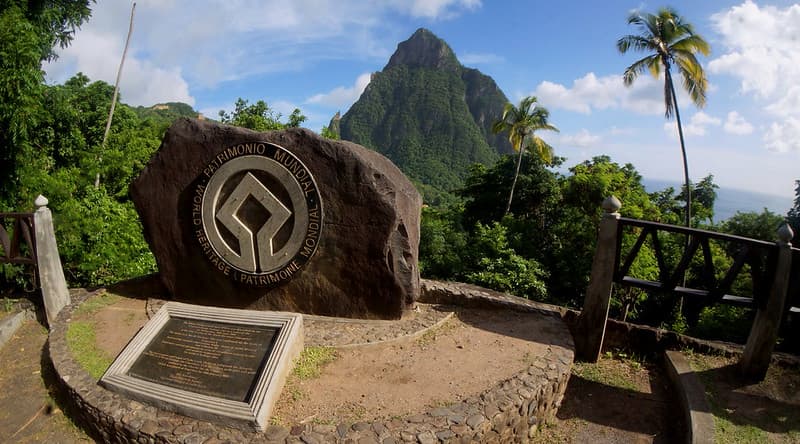
Pitons Management Area, Saint Lucia (Anax Media, Flickr/CC BY-SA 2.0).
In The News
Advertisement



Comments:
One response to “World Heritage Sites In The Caribbean”
-
For UNESCO, the LAC (Latin America and the Caribbean) region consists of 33 Member States. While the “Latin America” portion refers to the mainland Spanish- and Portuguese-speaking countries, the “Caribbean” portion is defined by a mix of geography, language, and political ties.
UNESCO identifies 16 countries as being “Caribbean,” including three mainland nations that are culturally and politically aligned with the islands.1. The 13 Nations of the “Kingston Cluster”1
UNESCO’s Cluster Office for the Caribbean (based in Kingston, Jamaica) officially serves 13 Member States.2 These are mostly English- and Dutch-speaking:3
- Antigua and Barbuda4
- The Bahamas5
- Barbados6
- Belize (Mainland Central America, but culturally Caribbean)7
- Dominica8
- Grenada9
- Guyana (Mainland South America, but culturally Caribbean)10
- Jamaica11
- Saint Kitts and Nevis12
- Saint Lucia13
- Saint Vincent and the Grenadines14
- Suriname (Mainland South America, but culturally Caribbean)15
- Trinidad and Tobago16
2. The Spanish and French-Speaking Caribbean
While managed under different administrative offices (like the Havana office), these three nations are geographically and fundamentally part of the Caribbean sub-region in UNESCO’s reporting:
- Cuba17
- Dominican Republic18
- Haiti19
3. Associate Member States
UNESCO also includes several non-independent territories in the Caribbean as Associate Members.20 These territories participate in UNESCO programs specifically within the Caribbean grouping:TerritoryStatusAnguillaBritish Overseas TerritoryArubaConstituent Country (Netherlands)British Virgin IslandsBritish Overseas TerritoryCayman IslandsBritish Overseas TerritoryCuraçaoConstituent Country (Netherlands)MontserratBritish Overseas TerritorySint MaartenConstituent Country (Netherlands)Summary for your records:
In the UNESCO LAC acronym, the “Caribbean” isn’t just a list of islands; it includes the “Mainland Caribbean” (Belize, Guyana, and Suriname) because they share the history and challenges of the island nations (such as being Small Island Developing States, or SIDS).
LikeLike

 All About World Heritage Sites (...and more)
Leave a reply to AllAboutWorldHeritage Cancel reply