Where Reinforced Concrete Became Art
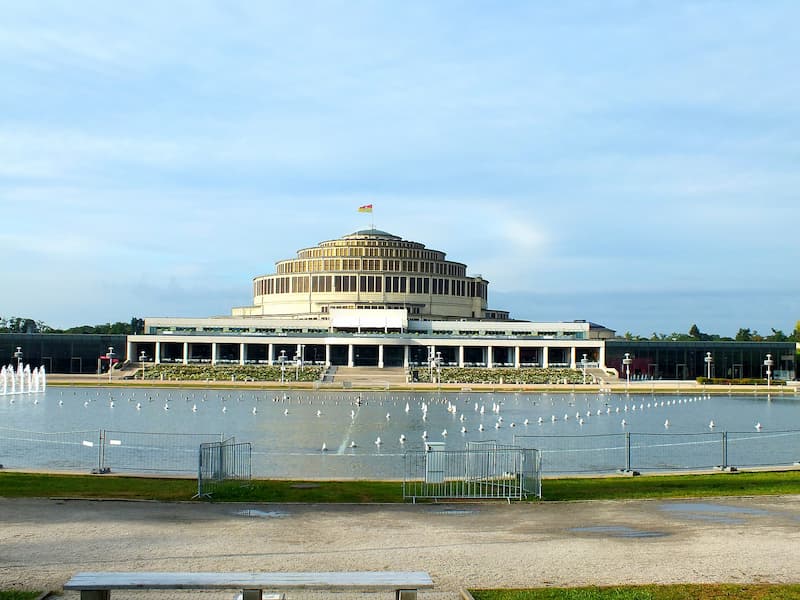
The UNESCO World Heritage site titled “Centennial Hall in Wrocław” (Hala Stulecia, historically Jahrhunderthalle) is an early 20th-century landmark exhibition venue situated in Wrocław, the capital of Lower Silesia in southwestern POLAND. Designed by German architect Max Berg between 1911 and 1913, the hall was constructed to commemorate the centenary of King Frederick William III’s 1813 proclamation to the German people following the Battle of Leipzig against Napoleon Bonaparte.
Physically situated within Szczytnicki Park, the hall represents a pivotal structural milestone in modern architecture. The building features a symmetrical, central, four-lobed layout topped by a soaring reinforced concrete dome. The monumental dome spans an inner diameter of 65 meters and reaches a height of 42 meters, making it the largest reinforced concrete structure of its time. The wider heritage perimeter includes the Four Domes Pavilion (Pawilon Czterech Kopuł), the historical Pergola arcade enclosing a vast pond, and the iconic 96-meter-tall steel needle monument (Iglica) erected in 1948, forming an integrated architectural and cultural ensemble.
Attraction
Centennial Hall attracts architects, engineering enthusiasts, historians, and cultural tourists globally who come to admire one of the most important structural achievements of early modernism. Rather than concealing its raw materials beneath decorative facades, the hall boldly showcases exposed reinforced concrete, structural ribs, and functional geometry, making it a pilgrimage site for lovers of 20th-century design.
Beyond its architectural significance, the hall functions as a vibrant global cultural hub hosting major international sports championships, opera performances, trade expos, and conventions. Visitors explore the interactive Visitor Center (Centrum Poznawcze), which uses touchscreens, archival models, and virtual reality displays to chronicle the building’s complex engineering history. Surrounding the hall, tourists flock to the Wrocław Multimedia Fountain—one of Europe’s largest operational water fountain displays featuring evening light and music shows. The adjacent Szczytnicki Park, serene Japanese Garden (Ogród Japoński), and historical Wrocław Zoological Gardens further elevate the site’s appeal as a premier tourist destination.

World Heritage
Inscribed on the UNESCO World Heritage List in 2006 under Cultural Criteria (i), (ii), and (iv), Centennial Hall stands as an extraordinary pioneer of modern structural design:
- Criterion (i) – Masterpiece of Human Creative Genius: Centennial Hall is a supreme creative achievement of early 20th-century structural engineering. Max Berg’s daring use of raw reinforced concrete created a vast, column-free interior covered by an innovative, rib-vaulted dome that surpassed existing historical engineering precedents.
- Criterion (ii) – Influence on Modern Architecture: The building marks a key turning point in the development of modern architectural construction worldwide. By demonstrating the structural capabilities and aesthetic potential of reinforced concrete on a grand civic scale, it profoundly influenced the modern movement and international engineering design across the 20th century.
- Criterion (iv) – Outstanding Architectural Ensemble: The hall, together with its accompanying Pergola and Four Domes Pavilion, constitutes an outstanding architectural ensemble that illustrates a crucial phase in urban public building design and modern exhibition architecture.
Gateway
Travelers can access Centennial Hall via two practical Polish gateway cities featuring public IATA-listed commercial airports, overnight lodging options, transport infrastructure, and tour guide services:
- Wrocław (Primary Local Gateway):
- Airport: Wrocław Copernicus Airport (IATA Code: WRO; ICAO Code: EPWR).
- Infrastructure and Distance: Located 13 kilometers west of Centennial Hall within the same city. As a major regional aviation hub, WRO hosts daily domestic and international European commercial flights. Wrocław offers extensive lodging ranging from luxury international hotels to Old Town boutique apartments. Municipal bus line 106 connects the airport directly to the main railway station (Wrocław Główny), from where frequent electric trams (lines 2, 4, 10, and 16) take visitors straight to the “Hala Stulecia” stop. Certified tour operators provide guided excursions across the city.
- Poznań (Secondary Regional Gateway):
- Airport: Poznań-Ławica Henryk Wieniawski Airport (IATA Code: POZ; ICAO Code: EPPO).
- Infrastructure and Distance: Located 170 kilometers north of Wrocław. Poznań operates an active commercial airport with domestic and European connections, offering hotels and car rentals. Express PKP Intercity trains connect Poznań Główny to Wrocław Główny in approximately 1 hour and 40 minutes.
When
The optimal window to visit Centennial Hall is during Late Spring to Early Autumn (May to September), when outdoor amenities are fully operational:
- Late Spring and Summer (May to August): Brings warm weather (18°C to 27°C / 64°F to 81°F) and long daylight hours. This is the prime season to enjoy the Wrocław Multimedia Fountain shows, stroll through the Japanese Garden, and attend vibrant outdoor cultural events along the Pergola.
- Early Autumn (September to October): Offers mild weather (12°C to 20°C / 54°F to 68°F) with lower tourist density and colorful autumn foliage across Szczytnicki Park, ideal for architectural photography and scenic walks.
- Winter (November to March): Features cold weather (-2°C to 6°C / 28°F to 43°F). While outdoor fountains are closed, winter offers quiet indoor exploration of the Visitor Center, Four Domes Pavilion, and Wrocław’s Old Town Christmas Market.
Consideration
- Event Availability Restrictions: Because Centennial Hall remains an active sports and concert arena, access to the main interior dome floor can be restricted during private events or major conferences. Checking the official event schedule beforehand is advised.
- Separate Tickets for Attractions: Individual tickets are required for the Visitor Center, Four Domes Pavilion, and Japanese Garden. Booking combined or advance tickets online saves time during peak summer weekends.
- Getting Around via Public Transit: Wrocław features an efficient public tram and bus system. Trams 2, 4, 10, and 16 stop directly outside the complex. Contactless credit card payments are accepted on board.
- Comfortable Footwear: Exploring the hall interiors, walking along the concrete Pergola, and wandering through Szczytnicki Park involves extensive walking on paved stone and gravel paths; comfortable, sturdy footwear is essential.
- Currency and Payments: Poland uses the Polish Złoty (PLN). Digital payments and credit cards are universally accepted at ticket desks, cafes, and transportation kiosks.

Resources
- UNESCO World Heritage Centre: Official designation page providing boundary documentation, criteria summaries, and conservation reports.
- Centennial Hall Official Website: Official portal offering event calendars, Visitor Center hours, and online ticket booking.
- Wrocław Official Tourist Portal: Official city tourism website detailing transport routes, attractions, and lodging listings.
- Poland Official Travel Portal: Official national tourist board website providing travel routes and regional travel advice.
- GetYourGuide: Online travel marketplace offering guided walking tours, architecture excursions, and ticket packages in Wrocław.


Comments:
Leave a Reply