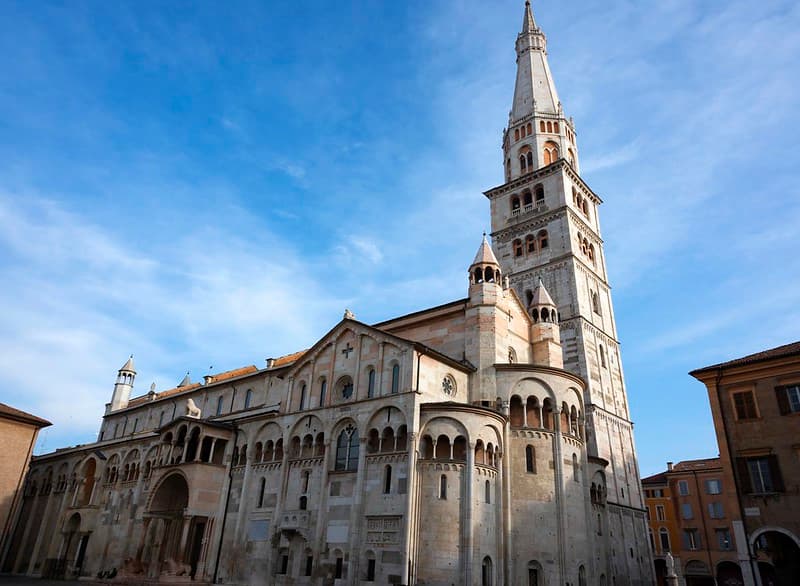
Discover Modena: Art, History, and the Ghirlandina Tower
The UNESCO World Heritage site titled “Cathedral, Torre Civica and Piazza Grande, Modena” is an extraordinary medieval architectural complex located in the heart of Modena, a historic city in the Emilia-Romagna region of northern ITALY. Constructed beginning in 1099, the site represents one of the finest surviving examples of early Romanesque urban architecture in Western Europe, harmoniously combining civic authority and religious devotion.
The property comprises three core components:
- Modena Cathedral (Duomo di Modena): Dedicated to the Assumption of the Virgin Mary and Saint Geminianus, the cathedral is a supreme masterpiece of Romanesque architecture. Designed collaboratively by the visionary architect Lanfranco and master sculptor Wiligelmo, the building incorporates repurposed ancient Roman marble blocks and columns (spolia). The exterior façade features relief carvings depicting scenes from Genesis, while the northern Porta della Pescheria portal showcases some of the earliest stone depictions of Arthurian legend in European art. Later additions by the Maestri Campionesi sculptors introduced the large central rose window and the southern Porta Regia entrance. Inside, the crypt preserves the tomb and relics of Saint Geminianus.
- Torre Civica (Ghirlandina Tower): Soaring 86.12 meters above the square, this monumental bell tower serves as the iconic symbol of Modena. Built in stages between the 12th and 14th centuries, its name derives from the two decorative marble balustrades (ghirlande) crowning its upper octagonal spire.
- Piazza Grande: The expansive cobblestone public square framing the cathedral and the historical town hall (Palazzo Comunale). For centuries, Piazza Grande served as the central node for civic governance, judicial proceedings, religious assemblies, market trade, and community gatherings.
Attraction
The Modena ensemble captivates international visitors through its breathtaking artistic craftsmanship, historical atmosphere, and rich integration into the vibrant cultural life of Emilia-Romagna. Art historians and architecture enthusiasts travel from across the globe to admire Wiligelmo’s ground-breaking relief sculptures on the cathedral facade, which fundamentally reshaped medieval European art by reintroducing dramatic emotional realism and classical spatial depth into stone sculpture. Standing inside the cathedral’s vaulted crypt or gazing up at the magnificent rose window crafted by the Campionese masters offers an immersive encounter with High Middle Ages artistic genius.
Beyond its artistic monuments, tourists are drawn to the living civic heritage of Piazza Grande. Visitors can climb the 200 steps of the Ghirlandina tower to enjoy panoramic views stretching across Modena’s red-tiled roofs to the distant Apennine Mountains. The site serves as the gateway to Modena’s celebrated gastronomic traditions, situated steps away from historic vinegar cellars producing authentic Traditional Balsamic Vinegar of Modena (Aceto Balsamico Tradizionale), lively local food markets like Mercato Albinelli, and world-renowned culinary establishments. The seamless harmony between medieval majesty, vibrant daily market life, and warm Italian hospitality creates a deeply rewarding travel experience.

World Heritage
In 1997, UNESCO inscribed the Cathedral, Torre Civica and Piazza Grande, Modena on the World Heritage List under cultural criteria (i), (ii), (iii), and (iv).
- Masterpiece of Human Creative Genius (Criterion i): The joint creation of architect Lanfranco and sculptor Wiligelmo represents an extraordinary artistic achievement. Their collaborative design yielded a harmonious synthesis of architecture and narrative stone sculpture that defined the Italian Romanesque style.
- Interchange of Human Values (Criterion ii): The site served as a vital cultural center that exerted a profound influence across northern Europe. The architectural innovations and stone carving techniques developed at Modena spread throughout the Po Valley and influenced Romanesque and Gothic building practices across Italy and neighboring regions.
- Exceptional Cultural Tradition (Criterion iii): The ensemble offers exceptional physical testimony to the vibrant urban democracy and civic pride of the medieval Italian free commune (comune), illustrating the unique historical period when religious and secular civic authorities co-existed and developed shared urban spaces.
- Outstanding Architectural Ensemble (Criterion iv): The complex constitutes an outstanding example of a medieval urban center where a monumental cathedral, a civic watchtower, and a public square form a tightly unified, fully preserved spatial layout.
Gateway
Travelers bound for Modena can access the site using three practical Italian gateway cities equipped with active IATA-coded airports, comprehensive lodging options, transit infrastructure, and tour services:
- Bologna (Primary Regional Gateway):
- Airport: Bologna Guglielmo Marconi Airport (IATA Code: BLQ; ICAO Code: LIPE).
- Infrastructure: Situated just 40 kilometers southeast of Modena. Direct Trenitalia regional and high-speed rail connections run constantly between Bologna Centrale and Modena Station in 20 to 30 minutes. Bologna offers high-capacity hotel options, car rentals, and tour packages exploring Emilia-Romagna.
- Parma (Western Regional Gateway):
- Airport: Parma Airport “Giuseppe Verdi” (IATA Code: PMF; ICAO Code: LIMP).
- Infrastructure: Located 50 kilometers west of Modena. Regular regional trains connect Parma to Modena in approximately 35 minutes along the historical Via Emilia route. Parma features plentiful lodging, dining, and local tour operators.
- Milan (Northern International Gateway):
- Airports: Milan Malpensa Airport (IATA Code: MXP), Milan Linate Airport (IATA Code: LIN), and Orio al Serio / Bergamo Airport (IATA Code: BGY).
- Infrastructure: Located 170 kilometers northwest. High-speed train services depart frequently from Milano Centrale to Modena, reaching the city in 1 hour and 15 minutes, offering an international transit hub with extensive hotel inventory.
When
The ideal time to visit the Modena UNESCO ensemble is during Spring (April to June) and Autumn (September to October).
- Spring and Autumn: These shoulder months provide delightful weather with comfortable average daytime temperatures ranging between 16°C and 24°C (61°F to 75°F). Walking across the open paving of Piazza Grande and exploring medieval alleyways is pleasant, while regional food festivals and seasonal harvests add vibrant cultural appeal.
- Summer (July to August): Temperatures regularly exceed 32°C (90°F) with high humidity, making sightseeing under the mid-day sun physically demanding, while many local family-run shops and restaurants close briefly during August holidays.
- Winter (November to March): Brings cold, foggy conditions with temperatures ranging from 0°C to 10°C (32°F to 50°F). However, winter offers minimal crowds, peaceful atmosphere inside the cathedral, and cozy dining experiences centered on rich seasonal Italian cuisine.
Considerations
- Tower Ascent Physicality: Reaching the top viewing balcony of the Ghirlandina tower requires climbing roughly 200 steep stone steps without elevator access. Visitors with mobility issues or severe vertigo should exercise caution.
- Religious Decorum and Dress Code: The Cathedral of Modena is an active Roman Catholic place of worship. Visitors must dress modestly with covered shoulders and knees. Silence and respectful behavior are required during ongoing liturgical services.
- Ticketing and Opening Times: While entering the main body of the cathedral is free, accessing the Ghirlandina tower, the Cathedral Museum (Musei del Duomo), and the historic rooms of the Palazzo Comunale requires purchasing a combined entry ticket. Advance online booking is recommended during weekends and peak travel seasons.
- Vehicular Restrictions (ZTL): Piazza Grande and the surrounding old town fall inside Modena’s strictly enforced Limited Traffic Zone (Zona a Traffico Limitato / ZTL). Visitors arriving by private or rental car should park in designated public parking lots outside the historic center and walk to the site.

Resources
- UNESCO World Heritage Centre: Official UNESCO repository containing technical inscription records, criteria explanations, and conservation reports.
- Sito Ufficiale del Duomo di Modena: Official website of Modena Cathedral providing liturgical schedules, historical background, and museum details.
- VisitModena (Official Tourism Board): Official tourism platform for the City of Modena offering visitor guides, tower ticket bookings, and local food itineraries.
- Italia.it: Official Italian national tourism portal detailing regional attractions, travel routes, and cultural context for Emilia-Romagna.
- Trip.com: Leading global travel platform featuring user reviews, community travel advice, hotel reservations, and local tour booking options.


Comments:
Leave a Reply