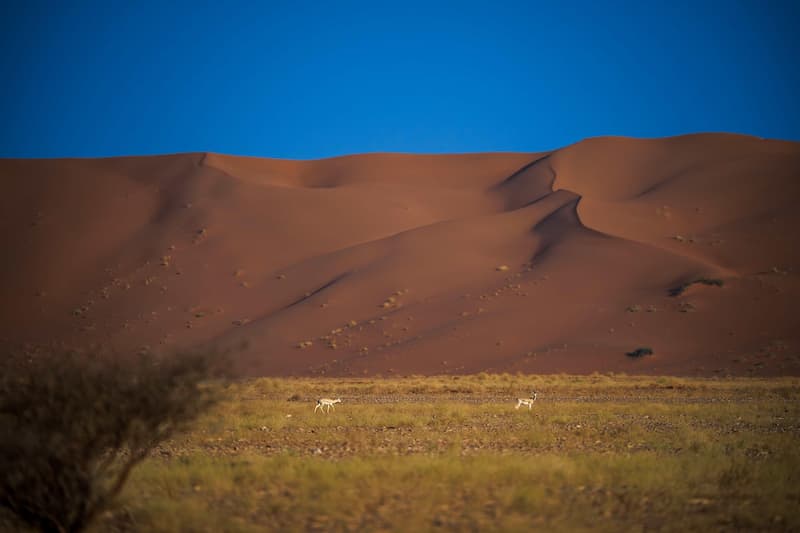
The ‘Uruq Bani Ma’arid Protected Area is a pristine wilderness located on the western edge of the Rub’ al Khali (the Empty Quarter), the largest continuous sand desert on Earth. Inscribed as SAUDI ARABIA‘s first natural UNESCO World Heritage site in 2023, it represents one of the most spectacular and ecologically significant desert landscapes in the world.
Spanning over 1.2 million hectares, ‘Uruq Bani Ma’arid is a landscape of stark contrasts. It is defined by the interaction between the towering, rust-red longitudinal dunes of the Empty Quarter and the rugged limestone plateau of the Tuwayq Escarpment.
The site features massive sand structures known as uruq (veins), some reaching up to 200 kilometers in length and 170 meters in height. Between these dunes lie gravelly corridors and vegetated wadis that serve as critical habitats for desert-adapted life. Despite its hyper-arid climate, the area supports a surprisingly rich variety of flora and fauna, including rare perennial plants and specialized “sand-diving” reptiles.
Attraction
For the modern traveler, ‘Uruq Bani Ma’arid offers a “hard mode” desert adventure that feels worlds away from commercial tourism:
- The Arabian Oryx Reintroduction: This was the last place the Arabian Oryx was seen in the wild before its extinction and is now the centerpiece of a world-class reintroduction program. Seeing these “white unicorns” of the desert in their natural habitat is a premier draw for wildlife enthusiasts.
- Untouched Silence: The sheer vastness and isolation provide a level of silence and “dark sky” clarity that is nearly impossible to find elsewhere. It is a top-tier destination for astrophotography.
- Adventure Activities: While limited and strictly regulated, the area is becoming a hub for high-end eco-tourism, including hot air ballooning over the dunes, guided 4WD safaris, and camel trekking.
- The “Atlantis of the Sands”: The site is located near Qaryat Al-Faw, an ancient archaeological site that adds a layer of deep human history to the natural excursion.

.jpg)
World Heritage
The site was inscribed under Criteria (vii) and (ix):
- Criterion (vii): It possesses exceptional natural beauty, representing the most iconic “sand sea” landscape on Earth. The visual fusion of the red dunes with the white limestone of the Tuwayq escarpment creates a unique aesthetic found nowhere else.
- Criterion (ix): It is an outstanding example of ongoing ecological and biological processes. The site demonstrates the remarkable adaptation of species to a hyper-arid environment. It serves as a vital refuge for the Arabian Oryx, Sand Gazelle, and Mountain Gazelle, maintaining a functioning trophic network in one of the world’s harshest climates.
Gateway
The most practical gateway to ‘Uruq Bani Ma’arid is the city of Wadi al Dawaser.
- Commercial Airport: Wadi al Dawaser Domestic Airport (WAE) serves regular flights from major hubs like Riyadh and Jeddah.
- Lodging: As a vital agricultural and crossroads hub, the city offers several lodging options suitable for an overnight stay before heading into the desert, such as the Ghaythah Hotel or various furnished apartments.
- Logistics: It is the closest urban center where you can arrange for the necessary 4WD transport and local guides required to enter the protected area.
When
- The “Sweet Spot” (November to March): This is the prime window. Daytime temperatures are manageable, ranging from 20^C to 28^C, making outdoor activities and hiking possible.
- Winter Nights: Be prepared for the cold. During December and January, nighttime temperatures in the desert can drop significantly, sometimes near freezing.
- Avoid Summer: From May to September, the heat is life-threateningly extreme, often exceeding 50^C, and most tourism activities are suspended for safety.
Consideration
- Permits are Mandatory: You cannot simply drive into the reserve. You must obtain a permit from the National Center for Wildlife (NCW). Most travelers do this through an authorized tour operator.
- 4×4 Only: The terrain is unforgiving. A high-clearance 4WD vehicle with satellite navigation and recovery gear is non-negotiable. It is highly recommended to travel in a convoy.
- Cultural Sensitivity: As with most rural areas in Saudi Arabia, modest dress is required. Ensure you have loose-fitting clothing that covers arms and legs.
- No Infrastructure: Once inside the core zone, there are no facilities. You must carry all your own water, food, and fuel. Leave no trace; the ecosystem is extremely fragile.
Resources
- UNESCO World Heritage Centre – The official source for scientific data, maps, and inscription details.
- Visit Saudi (Official) – The national tourism portal providing basic visitor info and regional highlights.
- IUCN World Heritage Outlook – Provides detailed conservation reports and environmental status updates.
- National Center for Wildlife (KSA) – The official body where you can find information regarding permits and environmental regulations.
- Take Your Backpack – A comprehensive travel guide by an independent explorer that includes links to travel insurance and gear.
Featured Image
‘Uruq Bani Ma’arid (Saudi Press Agency, Wikimedia/CC BY-SA 4.0).

News Feed
Advertisement


Comments:
Leave a Reply