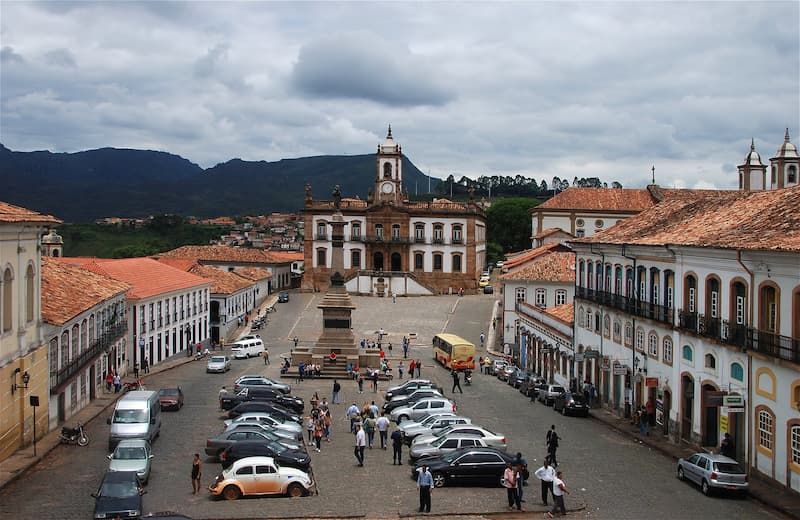
The Historic Town of Ouro Preto, nestled in the Serra do Espinhaço mountains of Minas Gerais, Brazil, is a stunning open-air museum of 18th-century colonial life. Once the epicenter of the world’s greatest gold rush, it remains one of the most well-preserved Baroque cities in the Americas.
Founded at the end of the 17th century and originally named Vila Rica (“Rich Village”), Ouro Preto (meaning “Black Gold”) was built upon a series of vertiginous hills and steep valleys. The town’s layout is organic and irregular, following the winding contours of the landscape.
The skyline is dominated by the white-and-gold towers of its many churches, while the streets are lined with whitewashed colonial houses featuring colorful window frames and heavy clay-tile roofs. Beneath the surface, the hills are honeycombed with old gold mines, many of which are now open to the public, offering a stark contrast to the opulence found in the town’s sacred architecture.
Attraction
Tourists flock to Ouro Preto to experience a unique fusion of art, history, and festive culture:
- The Art of Aleijadinho: The town is the primary showcase for the works of Antônio Francisco Lisboa, known as Aleijadinho. Despite a debilitating disease that cost him the use of his hands, he sculpted masterpieces in soapstone and wood that are considered the pinnacle of Brazilian Baroque.
- Golden Splendor: The interiors of churches like Nossa Senhora do Pilar are draped in hundreds of kilograms of gold leaf, reflecting the immense wealth of the colonial era.
- Political History: It was the birthplace of the Inconfidência Mineira, Brazil’s first significant independence movement. Visitors can explore the Museu da Inconfidência to see the relics of this revolutionary era.
- Vibrant Student Life & Carnival: Home to a major federal university, the town has a youthful energy. Its Carnival is legendary, characterized by massive street parties (blocos) organized by traditional student fraternities (repúblicas).

Heritage
Inscribed in 1980 as Brazil’s first UNESCO World Heritage site, it met several criteria for its universal value:
- Criterion (i): Ouro Preto is a masterpiece of human creative genius. The Baroque architecture and the “Barroco Mineiro” art style represent a unique, national expression of art that evolved in isolation from European direct influence.
- Criterion (iii): The town bears exceptional testimony to the Gold Rush and the creative talents of a society built on mining wealth. It illustrates the peak of the Portuguese colonial empire in South America.
- Preservation of Authenticity: Because the state capital was moved to Belo Horizonte in 1897, Ouro Preto experienced a period of economic stagnation that ironically saved its 18th-century urban fabric from being replaced by modern skyscrapers.
Gateway
The gateway to Ouro Preto is Belo Horizonte, the capital of the Minas Gerais state.
- Airport: Fly into Belo Horizonte International Airport (CNF), also known as Confins. It is a major commercial hub with frequent domestic and international connections.
- Lodging: Belo Horizonte has a vast range of accommodations, from luxury business hotels in the Savassi district to boutique stays.
- Access: Ouro Preto is approximately 100km away. You can reach it in about 2 hours by car or via comfortable executive buses that depart almost every hour from the Belo Horizonte central bus station (Rodoviária).
When
- The Dry Season (April to October): This is the ideal time. The weather is cool and clear, which is crucial because the steep cobblestone streets can become extremely slippery and dangerous when wet.
- Holy Week (Easter): For a deeply cultural experience, visit during Holy Week to see the streets covered in “floral carpets” made of colored sawdust and petals for religious processions.
- Note: If you are visiting for Carnival (mid-February), you must book your accommodation at least six months in advance, as the town reaches maximum capacity.

Consideration
- Physical Endurance: Ouro Preto is a workout. You will be constantly climbing or descending steep, uneven hills. High heels are useless here; bring sturdy, high-grip walking shoes.
- The “Monday” Rule: Most museums and churches in Ouro Preto are closed on Mondays. Plan your itinerary to ensure you are there between Tuesday and Sunday.
- Dark History: While the gold and art are beautiful, the town was built on the back of enslaved labor. Visiting the Chico Rei Mine or Casa dos Contos provides a necessary and sobering perspective on the human cost of the “Black Gold.”
- Altitude: At roughly 1,150 meters above sea level, the air is thinner and the sun is stronger than on the coast. Stay hydrated and use sun protection.

Resources
- UNESCO World Heritage Centre – The official technical and historical dossier for Ouro Preto.
- Ouro Preto Tourism (Official) – Practical information on church opening hours and local events.
- Visit Brasil – The Brazilian Embratur portal, great for general regional context.
- Frommer’s Guide to Ouro Preto – Detailed logistical planning and restaurant reviews.
- Viator – Useful for booking private guided day trips and historic city circuits from Belo Horizonte.
Featured Image
Ouro Preto (AlvesGaspar, Wikimedia/CC BY-SA 3.0).
In The News
Advertisement



Comment:
 All About World Heritage Sites (...and more)

Leave a comment