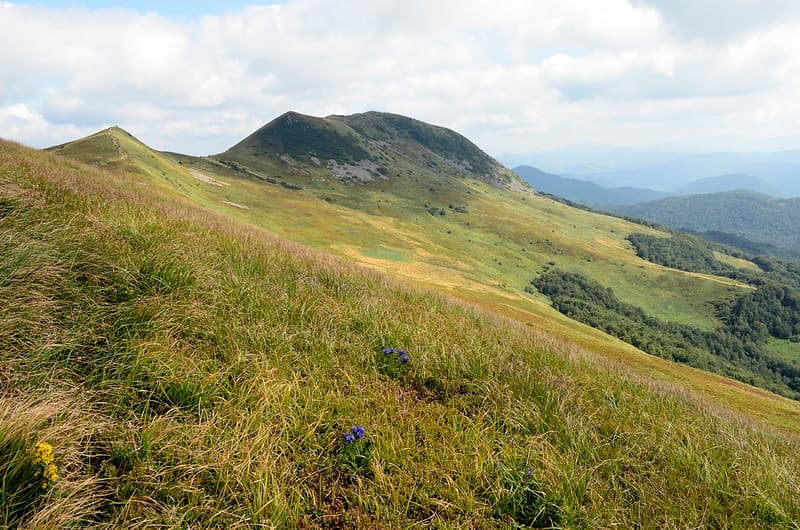
In Poland, the Ancient and Primeval Beech Forests of the Carpathians are concentrated within the remote and rugged Bieszczady National Park, located in the extreme southeastern corner of the country. These forests represent the best-preserved remnants of the “Carpathian Forest,” a wild landscape that has remained largely untouched by industrial forestry due to its historical inaccessibility.
Attraction
Bieszczady is often called the “Wild West” of Poland, attracting those who seek a raw, spiritual connection with nature:
- The Poloninas: Unique to this region, these are vast alpine meadows that sit above the timberline of the beech forests, offering panoramic views of Poland, Ukraine, and Slovakia.
- Untamed Wildlife: This is one of the few places in Europe where you can find the “Big Five” of the forest: European bison, brown bears, wolves, lynx, and the Aesculapian snake.
- Dark Sky Park: Because of the lack of light pollution, it is a premier destination for astrotourism and stargazing.

Heritage
The Polish components were added to the serial transnational site in 2021 under Criterion (ix). These forests are exceptional because they have evolved naturally since the last Ice Age without human interference. They provide a vital “ecological laboratory” for studying the natural processes of the European beech (Fagus sylvatica), including its ability to re-colonize high-altitude mountain environments.
Gateway
- The City: Rzeszów is the capital of the Podkarpackie province and the nearest major urban hub.
- Airport: Rzeszów–Jasionka Airport (RZE) serves commercial international and domestic flights.
- Lodging: Rzeszów offers extensive options like the Hotel Bristol Tradition & Luxury. For a stay closer to the park, the town of Ustrzyki Górne provides rustic mountain lodges and guesthouses.
When
- October: Undisputedly the best time. The beech forests “explode” into a seasonal carnival of crimson, orange, and gold, while the air is crisp and clear for hiking.
- Late May to June: For the vibrant “neon green” of new leaves and blooming mountain wildflowers.
- Note: Winter (December–March) is beautiful but harsh; many mountain trails require expert gear and experience with heavy snow.

(Przemyslaw Kozuch, Flickr/CC BY-SA 2.0).
Consideration
- Strict Protection: The UNESCO zones are within the “Strict Protection” areas of the National Park. You must stay on marked hiking trails; wandering off-path is strictly prohibited.
- Border Awareness: The park borders Ukraine (a non-Schengen country). Ensure you follow all border guard signage and carry your passport, as some trails run directly along the international boundary.
- Limited Infrastructure: Unlike the Alps, there are no cable cars or paved roads into the forest interior. Be prepared for long, physical hikes.
- Safety: Bear encounters are rare but possible. Familiarize yourself with local safety protocols regarding food storage and behavior if you spot one.

Resources
- Bieszczady National Park (Official): The primary source for maps, trail conditions, and entry tickets.
- UNESCO World Heritage – Beech Forests: For the global context of the Polish forest components.
- European Beech Forests Portal: A specialized site describing the unique flora and fauna of the Polish Bieszczady.
- Poland.travel – Bieszczady Guide: The national tourism board’s overview of the Podkarpackie region.
- Booking.com – Rzeszów & Bieszczady: (Affiliate Marketing) Use this to book your gateway city hotel or a mountain hut near the trails.
Featured Image
Bieszczady National Park (Przemyslaw Kozuch, Flickr/CC BY-SA 2.0).
In The News
Advertisement


Comment:
 All About World Heritage Sites (...and more)
Leave a comment