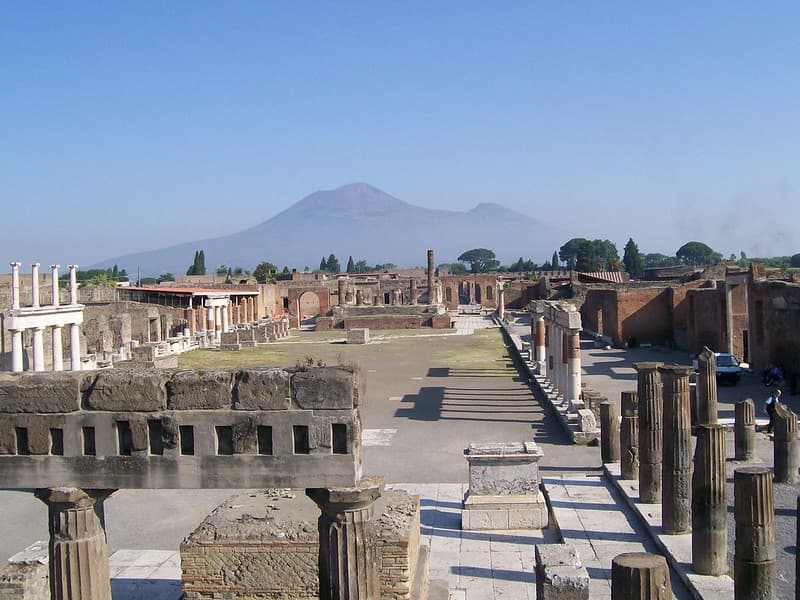
Frozen in time by the catastrophic eruption of Mount Vesuvius in 79 AD, the Archaeological Areas of Pompeii, Herculaneum and Torre Annunziata offer the most vivid and complete window into the Roman world. While Pompeii provides the sprawling scale of a commercial capital, Herculaneum offers the intimacy of a better-preserved resort town, and Torre Annunziata (ancient Oplontis) reveals the sheer opulence of the Roman elite.
- Pompeii: A vast urban center covering over 60 hectares. It features a grand Forum, an amphitheater that predates the Colosseum, and the Villa of the Mysteries, famous for its enigmatic Dionysian frescoes.
- Herculaneum: Buried under deeper, denser pyroclastic material, this site is more intact than Pompeii. You can still see charred wooden beams, upper floors of houses, and even fossilized food in the pantries.
- Torre Annunziata (Oplontis): Home to the Villa of Poppaea, a massive suburban estate likely owned by Emperor Nero’s second wife. Its sprawling gardens and intricate wall paintings represent the pinnacle of Roman interior design.
Attraction
The primary draw is the “Time Capsule” effect. Nowhere else on Earth can you walk down 2,000-year-old streets that remain exactly as they were on the day they were destroyed. Visitors are captivated by the poignant body casts of the inhabitants, the remarkably preserved erotic art in the Lupanar (brothel), and the ability to touch the wheel ruts worn into the ancient stones.

Heritage
Inscribed in 1997, the site meets several criteria, primarily:
- Criterion (iii): The sites provide an unparalleled picture of Roman society and daily life at a specific moment in history.
- Criterion (iv): The ensemble represents the most comprehensive urban and suburban Roman settlements surviving from antiquity.
- Criterion (v): They are outstanding examples of the human response to a major natural catastrophe.
Gateway
- The City: Naples is the official gateway, located just 25 km north of the ruins.
- Airport: Naples International Airport (IATA: NAP) is a major commercial hub with direct flights across Europe and connections to North America.
- Lodging: Naples offers thousands of options, from 5-star seaside hotels like the Grand Hotel Vesuvio to boutique B&Bs in the Centro Storico. Alternatively, Sorrento serves as a popular, more resort-style secondary gateway.
When
- April to June and September to October (2026): These “shoulder seasons” provide the best balance of manageable crowds and comfortable temperatures (18–25°C).
- Avoid July/August: The intense heat and lack of shade at Pompeii can make a 4-hour walk dangerous; temperatures often exceed 35°C.
- Pro Tip: Arrive at 9:00 AM sharp or visit in the late afternoon (after 3:30 PM) to avoid the massive cruise ship tour groups.

Consideration
- Footwear: The ancient Roman “basalt” roads are extremely uneven. Sturdy, closed-toe walking shoes are mandatory; sandals are not recommended.
- Bag Policy: Strict security rules limit bags to 30x30x15 cm. Large backpacks and suitcases must be left in the free storage lockers at the entrance.
- Nominative Tickets: Pompeii has introduced personalized (nominative) tickets and a daily cap of 20,000 visitors. You must bring a valid ID matching the name on your ticket.
- Context: Visit the National Archaeological Museum of Naples (MANN) first. Most of the original mosaics, statues, and the famous “Secret Cabinet” are kept there, not at the actual ruins.

Resources
- Pompei Sites Official: The definitive portal for opening hours, ticket booking, and real-time site alerts.
- UNESCO World Heritage – Pompeii: Detailed historical data and maps of the core and buffer zones.
- Herculaneum Conservation Project: Insights into the ongoing restoration of the smaller, more preserved town.
- Rough Guides – Pompeii & Herculaneum: Excellent for practical logistics, train schedules, and dining tips.
- Viator – Pompeii Tours: Use this to book skip-the-line tickets or archaeologist-led private tours.
Featured Image
Pompeii Forum (Ethan Gruber, Flickr/CC BY-SA 2.0).
In The News
Advertisement


Comment:
 All About World Heritage Sites (...and more)
Leave a comment