The UNESCO World Heritage property known as Arab-Norman Palermo and the Cathedral Churches of Cefalù and Monreale is a stunning “serial site” in Sicily, Italy. It consists of nine civic and religious structures that date back to the Norman Kingdom of Sicily (1130–1194).
This site is a collection of palaces, churches, a cathedral, and a bridge. It represents a “syncretism”—a blending—of Western, Islamic, and Byzantine cultures.
- The Nine Components:
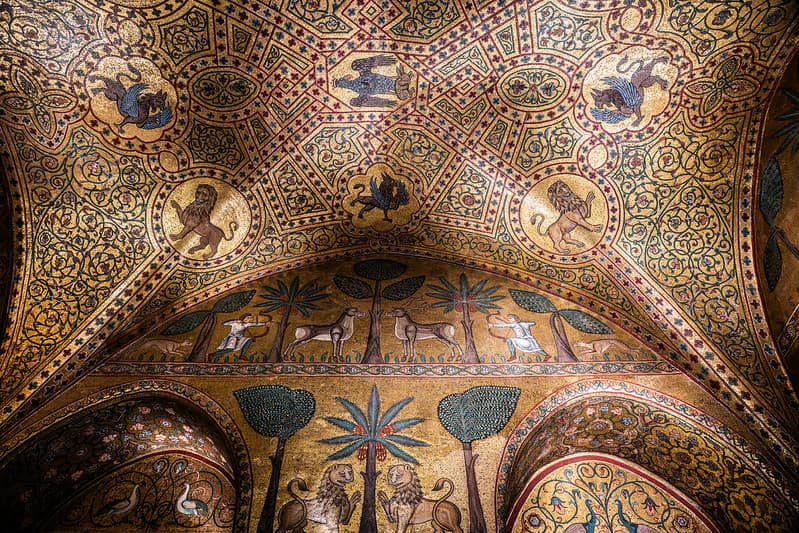
- Palazzo dei Normanni (Royal Palace) and Palatine Chapel: The seat of the Norman kings, featuring the world-famous Palatine Chapel with its gold mosaics and Islamic muqarnas ceiling.
- Palermo Cathedral: A massive complex showing a timeline of architectural styles from Norman to Gothic and Neoclassical.
- Church of San Giovanni degli Eremiti: Iconic for its five bright red Oriental-style domes.
- Church of Santa Maria dell’Ammiraglio (Martorana): Famous for some of the oldest and most beautiful Byzantine mosaics in Sicily.
- Church of San Cataldo: A fortress-like church topped with three red domes.
- Zisa Palace: A summer residence designed as an “earthly paradise” with ingenious Arab cooling systems.
- Admiral’s Bridge: A 12th-century stone bridge where the first Arab-style arches were used in a civil engineering context.
- Cefalù Cathedral: Located on the coast, known for its twin fortress-towers and a massive mosaic of Christ Pantocrator.
- Monreale Cathedral: Arguably the most spectacular, containing over 6,000 square meters of gold mosaics and a peaceful Benedictine cloister.
Attraction
Travelers flock here to see the shimmering gold mosaics, which are among the finest in the world. The site offers a rare glimpse into a historical “Golden Age” where different religions lived and worked together to create art. Photographers love the contrast between the palm trees, red domes, and the rugged Sicilian coastline, particularly in the seaside town of Cefalù.

Heritage
Inscribed in 2015, the site meets Criteria (ii) and (iv):
- Criterion (ii): It bears witness to a unique political and cultural condition where people of different origins (Muslim, Byzantine, Latin, Jewish) coexisted. This interchange generated a conscious combination of techniques from three different traditions.
- Criterion (iv): It is an outstanding example of a stylistic synthesis that created new concepts of space and decoration, specifically the “Arab-Norman” style that influenced architecture throughout the Mediterranean.
Gateway
- The City: Palermo is the capital of Sicily and the primary base for visiting all nine sites.
- Airport: Falcone Borsellino Airport (IATA: PMO) is the main commercial gateway, located about 35 km from the city center.
- Lodging: Palermo has endless options, from luxury stays like Villa Igiea to boutique guesthouses in the historic Quattro Canti district.
When
- Best Overall: April to June and September to October. The weather is mild (20–25°C), and the Sicilian landscape is either in bloom or harvest.
- Avoid August: It is incredibly hot (35°C+), crowded, and many local businesses close for the Ferragosto holiday.
- Winter: Great for avoiding crowds, but be prepared for shorter opening hours and occasional rain.

Consideration
- Dress Code: These are active places of worship. Shoulders and knees must be covered.
- Transportation: Cefalù is an hour away by train; Monreale is a 30-minute bus or taxi ride from Palermo center. Do not rent a car for use within Palermo; the traffic is chaotic and the ZTL (Limited Traffic Zones) will result in heavy fines.
- Opening Times: Many churches close for a “siesta” between 1:00 PM and 4:00 PM. Plan your day to see the main cathedrals in the morning.
- Walking: The streets of Palermo are old and uneven. Wear comfortable walking shoes.

Resources
- UNESCO – Arab-Norman Palermo: The official archive for maps and historical dossiers.
- Palermo Arabo-Normanna: The Italian Ministry of Culture’s dedicated site for the site’s management.
- Visit Sicily – Official Portal: The regional tourism board’s guide to the “Arab-Norman Route.”
- The Thinking Traveller – Sicily Guide: A high-end guide for logistical planning and cultural context.
- Viator – Palermo UNESCO Tours: Useful for booking guided day trips to Monreale and Cefalù.
Featured Image
Royal Palace’s ceiling (Michael Gaylard, Flickr/CC BY 4.0).
In The News
Advertisement


Comment:
 All About World Heritage Sites (...and more)
Leave a comment