The Routes of Santiago de Compostela in France represent a vast network of historical paths that have served as conduits for pilgrims, ideas, and art for over a millennium. Unlike a single monument, this World Heritage site is a “serial” property consisting of 71 individual buildings and seven sections of the trail that illustrate the journey toward the tomb of St. James in Spain.
The site encompasses four symbolic medieval routes that originate in different parts of France and converge at the Pyrenees:
- Via Turonensis (from Paris): The northernmost route, passing through Tours and Bordeaux.
- Via Lemovicensis (from Vézelay): A route favored by pilgrims from Northern and Eastern Europe, passing through Limoges.
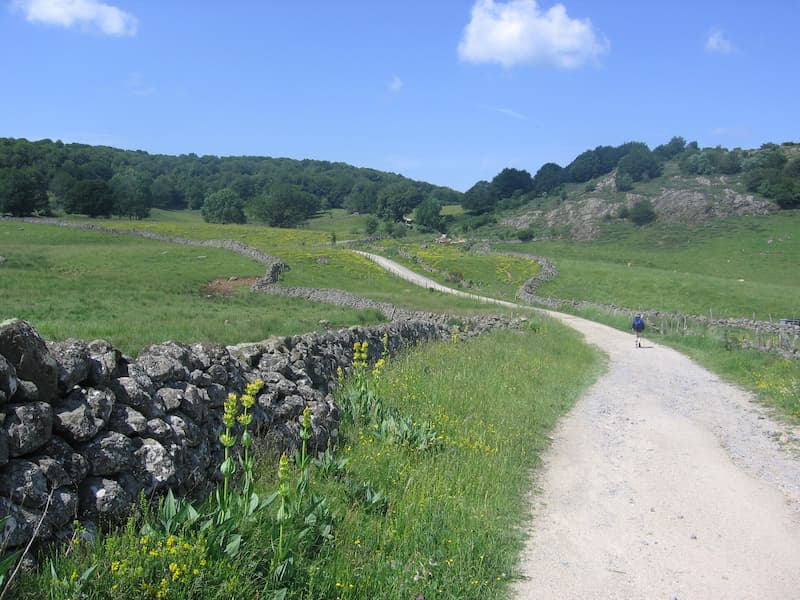
- Via Podiensis (from Le Puy-en-Velay): The most popular and scenically diverse route, noted for its volcanic landscapes and the stunning village of Conques.
- Via Tolosana (from Arles): The southernmost path, crossing through Toulouse and the Somport Pass.
The ensemble includes grand cathedrals (Amiens, Bourges), simple rural chapels, medieval pilgrim hospitals (such as the one at Pons), and stone bridges designed specifically to aid those on their spiritual journey.
Attraction
The routes attract hundreds of thousands of “modern pilgrims” and tourists annually for several reasons:
- Slow Travel and Mindfulness: It is one of the world’s premier destinations for long-distance hiking, offering a chance for mental “unplugging” and physical challenge.
- Architectural Diversity: Visitors can witness the evolution of European art, from the robust Romanesque portals of Moissac to the soaring Gothic spires of Chartres and the refined Classical styles of Bordeaux.
- Cultural Immersion: Walking the routes allows travelers to experience the “real” rural France—small hamlets, local markets, and centuries-old traditions that remain untouched by mass tourism.

Heritage
Inscribed in 1998, the routes are recognized for their “Outstanding Universal Value” under UNESCO Criteria (ii), (iv), and (vi):
- Criterion (ii): The routes played a fundamental role in religious and cultural exchange during the Middle Ages, allowing for the spread of architectural styles and musical traditions across Europe.
- Criterion (iv): The site provides a comprehensive record of the specialized architecture created for pilgrims, such as the hospitium (guest house) and bridges, which were vital for the physical well-being of travelers.
- Criterion (vi): It is an exceptional testimony to the power of the Christian faith in the Middle Ages, influencing all social classes across the continent.
Gateway
While many towns serve as entry points, Toulouse is the most practical and culturally significant gateway.
- Commercial Airport: Toulouse-Blagnac Airport (TLS) is a major international hub with connections to cities worldwide.
- Lodging: As France’s fourth-largest city, it offers thousands of options ranging from the historic Hôtel du Grand Balcon to budget-friendly pilgrim hostels.
- Significance: Toulouse is home to the Basilica of Saint-Sernin, a key monument on the Arles route and one of the largest Romanesque buildings in Europe.
When
- Spring (May–June): This is widely considered the best time. The days are long, the Pyrenees are lush, and the weather is mild enough for walking 20-25 km a day.
- Autumn (September–October): The summer heat has dissipated, and the vineyards along the routes (especially near Bordeaux and Cahors) are in their harvest colors.
- Avoid July and August: Southern France can reach temperatures exceeding 35°C, and popular sections of the trail become overcrowded.

Consideration
- The Credencial: Even if you are not religious, obtain a “Pilgrim Passport” (Credencial). This document allows you to stay in specialized pilgrim accommodations (gîtes d’étape) and serves as a wonderful souvenir of your stamps from each village.
- Physical Preparation: If you plan to walk, train with a loaded backpack. The terrain can be surprisingly hilly, particularly on the Via Podiensis.
- Footwear: Do not bring brand-new boots. Ensure your hiking shoes are well broken-in to avoid the “pilgrim’s curse”—blisters.
- Language: In rural France, English is less common than in Paris. Learning basic French phrases for food and lodging will significantly enhance your experience.

Resources
- UNESCO – Routes of Santiago de Compostela in France: The official technical and historical dossiers for the site.
- ACIR Compostelle: The leading association for the French routes, providing maps, current trail conditions, and accommodation lists.
- France.fr – Official Tourism Portal: Great for lifestyle tips, regional gastronomy along the routes, and travel inspiration.
- Miam Miam Dodo: The “bible” for hikers on the French trails, detailing every bed and bakery along the way.
- TripAdvisor – Santiago de Compostela Tours: A platform to book guided walking tours, luggage transfer services, and hotels in gateway cities like Toulouse or Bordeaux.
Featured Image
Aubrac, Via Podiensis (Graphophile, Wikimedia/CC BY-SA 3.0).
In The News
Advertisement

Comment:
 All About World Heritage Sites (...and more)

_sur_le_chemin_de_St.Jacques.JPG)
Leave a comment