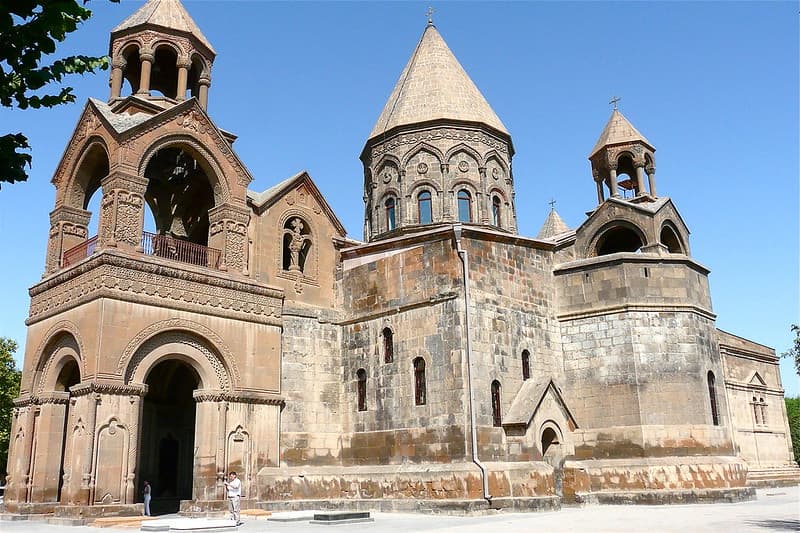
The Cathedral and Churches of Echmiatsin and the Archaeological Site of Zvartnots represent the dawn of Christian architecture in one of the world’s oldest Christian nations. Located in the fertile Ararat Valley, these sites are the spiritual and artistic beating heart of Armenia.
This UNESCO ensemble consists of several distinct religious and archaeological components situated in and around the city of Vagharshapat (commonly known as Echmiatsin):
- Mother Cathedral of Holy Echmiatsin: Founded in 301–303 AD by St. Gregory the Illuminator, it is widely considered the oldest cathedral in the world. Its current cruciform, central-domed design dates back to a 5th-century reconstruction, with ornate 17th-century bell towers and 18th-century frescoes.
- St. Hripsime and St. Gayane Churches: Masterpieces of the 7th century, these churches are dedicated to Christian martyrs. St. Hripsime is a perfect example of a “cross-in-square” design, while St. Gayane is a three-aisled basilica known for its slender proportions.
- Archaeological Site of Zvartnots: The ruins of a 7th-century circular cathedral. Once three stories tall and nearly 45 m high, it collapsed in the 10th century (likely due to an earthquake). Today, its iconic basalt columns and carved capitals stand against the backdrop of Mount Ararat.
Attraction
Echmiatsin and Zvartnots draw travelers for their intersection of deep faith and “Golden Age” aesthetics:
- The Vatican of Armenia: As the seat of the Catholicos of All Armenians, the Mother Cathedral is a major pilgrimage site. Visitors can witness elaborate Armenian Apostolic liturgies filled with incense and traditional chants.
- The Treasury of Echmiatsin: A world-class museum housing legendary relics, including the Holy Spear (Geghard) believed to have pierced Christ, and a fragment of Noah’s Ark found on Mount Ararat.
- Architectural Photography: Zvartnots is one of the most photographed spots in the Caucasus. The play of light through the circular ruins during sunset, with the biblical peak of Ararat behind them, is a bucket-list experience.

Heritage
Inscribed in 2000, the site fulfills UNESCO Criteria (ii) and (iii):
- Architectural Evolution: These buildings document the birth and “flowering” of Armenian ecclesiastical architecture. This style—specifically the central-domed cross-hall—significantly influenced church design across the Byzantine Empire and eventually Europe.
- Spiritual Legacy: The site is a living testimony to the implantation of Christianity in Armenia, illustrating the unique synthesis of local artistic traditions with early Christian theology.
Gateway
The capital city of Yerevan is the undisputed gateway to the site.
- Airport: Zvartnots International Airport (EVN) is located directly between Yerevan and the archaeological site (only 5 km away from the ruins).
- Lodging: Yerevan offers extensive options, from 5-star luxury (The Alexander or Grand Hotel Yerevan) to charming boutique stays in the city center.
- Proximity: Echmiatsin is only 20 km (12.5 miles) west of Yerevan. It can be reached in 30 minutes by taxi, private tour, or a highly affordable marshrutka (minibus) from the Kilikia Bus Station.
When
- Late Spring (May–June): The weather is mild (20°C to 25°C), and the Ararat Valley is lush and green.
- Early Autumn (September–October): Clearer skies provide the highest probability of seeing Mount Ararat without haze, and the temperatures are comfortable for outdoor walking among the ruins.
- Religious Holidays: Visiting during Easter or the Blessing of the Grapes (in August) offers a deep dive into Armenian culture, though crowds will be significantly larger.

Consideration
- Dress Code: While the cathedral is a museum, it is also a functioning holy site. Men should avoid shorts and hats; women are encouraged to cover their shoulders and knees. Headscarves are not strictly required for tourists but are a sign of respect.
- Monday Closures: Note that the Zvartnots Archaeological Site and the Treasury Museum are typically closed on Mondays.
- Restoration Work: The Mother Cathedral has undergone extensive structural renovations over the last several years. It is wise to check if the interior scaffolding has been removed before visiting for the frescoes.
- Currency: Entry to the Cathedral grounds is free, but the Treasury and Zvartnots require tickets (approx. 2-5 USD). Carry Armenian Dram (AMD) in cash, as small ticket booths may not always accept international cards.

Resources
- UNESCO World Heritage – Echmiatsin/Zvartnots: The definitive source for the history and protection status of the monuments.
- Mother See of Holy Etchmiadzin: The official website of the Armenian Apostolic Church for religious schedules and news.
- Visit Armenia Official Portal: A government-run tourism site with logistics, maps, and cultural guides.
- Armenia Discovery: Provides detailed breakdowns of each individual church (Hripsime, Gayane, Shoghakat).
- GetYourGuide – Armenia Tours: A reliable platform for booking guided day trips from Yerevan that include transportation and English-speaking guides.
Featured Image
Echmiatsin Cathedral (Rita Willaert, Flickr/CC BY 2.0).
In The News
Advertisement


Comment:
 All About World Heritage Sites (...and more)
Leave a comment