
The Melaka and George Town, Historic Cities of the Straits of Malacca UNESCO World Heritage Site is a unique serial nomination that protects two of the most historically significant port cities in Southeast Asia. Together, they tell the story of 500 years of cultural and trade exchange between the East and the West. Inscribed in 2008, the site comprises the historic urban centers of Melaka and George Town (on Penang Island). These cities served as vital links along the maritime trade routes between Europe, the Middle East, the Indian subcontinent, and China.
- Melaka reflects the early stages of this history, with roots in the 15th-century Malay Sultanate followed by Portuguese and Dutch colonial periods. Its landscape is defined by the “Red Square,” St. Paul’s Hill, and the narrow lanes of its old Chinatown.
- George Town represents the later British colonial era from the late 18th century. It is characterized by grand neo-classical buildings, a sprawling grid of traditional shophouses, and unique coastal settlements like the Clan Jetties.
Attraction
The primary draw for global travelers is the living heritage. Unlike many heritage sites that feel like museums, these cities are bustling hubs where traditional trades, ancient religious practices, and modern life coexist.
- The Food Scene: Both cities are culinary capitals. Melaka is the heart of Peranakan (Nyonya) cuisine, while George Town is world-renowned for its street food, such as Char Koay Teow and Assam Laksa.
- Street Art and Architecture: George Town is famous for its interactive murals that blend art with physical objects (like bicycles). Melaka offers a picturesque river walk lined with murals and historic bridges.
- Harmonious Diversity: On a single street (like the “Street of Harmony” in George Town), you can find a mosque, a Hindu temple, a Taoist temple, and a church all within walking distance, reflecting centuries of peaceful coexistence.

Heritage
UNESCO recognizes the site under three specific criteria:
- Criterion (ii): It represents an exceptional example of multicultural trading towns forged from the exchange of Malay, Chinese, and Indian cultures with three successive European powers (Portuguese, Dutch, and British).
- Criterion (iii): It is a living testimony to the multi-cultural heritage and traditions of Asia and European colonial influences, expressed in its diverse festivals, languages, and religious buildings.
- Criterion (iv): It reflects a unique architectural townscape, specifically the evolution of the Straits Shophouse, which blended Eastern and Western designs to adapt to the tropical climate.

Gateway
George Town (Penang) serves as the most convenient primary gateway for international and domestic travelers.
- Commercial Airport: Penang International Airport (PEN) is a major hub with frequent daily flights from Singapore, Bangkok, Hong Kong, Kuala Lumpur, and other regional cities.
- Lodging: George Town offers an incredible range of “heritage boutique hotels”—restored shophouses or colonial mansions that allow you to sleep inside the World Heritage zone. There are also high-end beach resorts in nearby Batu Ferringhi and modern business hotels in the city center.
Note: While Melaka has the Malacca International Airport (MKZ), it has limited commercial flights. Most travelers reach Melaka via a 2-hour bus or car ride from Kuala Lumpur International Airport (KUL).
When
The best time to visit is during the dry season (late November to February). During these months, the humidity is slightly lower, and there is less rainfall, making it ideal for the extensive walking required to explore the heritage zones.
- Festivals: If you enjoy cultural vibrancy, visit in July for the George Town Festival or during Chinese New Year (January/February) to see the temples at their most spectacular.
Consideration
- Walking & Heat: These are walking cities. Bring comfortable shoes and stay hydrated, as the tropical heat and humidity can be intense by midday.
- Conservative Dress: When visiting active religious sites (mosques and temples), you should wear clothing that covers your shoulders and knees. Some sites provide robes for visitors.
- Weekend Crowds: Melaka, in particular, becomes extremely crowded on weekends due to the Jonker Street Night Market. If you prefer a quieter experience, visit Melaka between Tuesday and Thursday.
- Trishaw Scams: While trishaws are iconic, always agree on the price before you start the journey to avoid being overcharged.

Resources
For more information, refer to these websites:
- UNESCO World Heritage Centre: The official technical dossier and maps of the site.
- George Town World Heritage Incorporated (GTWHI): The official body managing the site in Penang; excellent for heritage news and events.
- Tourism Melaka Official Portal: The government-run guide for attractions and history in Melaka.
- Penang Global Tourism: Comprehensive guides on food, art, and hidden spots in George Town.
- Agoda: A reliable platform to find and book specific heritage-listed boutique hotels in the core zones of both cities.
Featured Image
Red Square, Melaka (Natalie Thoo, Wikipedia/CC BY-SA 4.0).
In The News
Advertisement

Comment:
11 responses to “Melaka and George Town, Historic Cities of the Straits of Malacca”
-
I LOVE Malacca. Lived there for a month a couple of years ago and it truly became one of my favourite places in Malaysia. The locals are lovely and the food (much like the rest of the country) was delicious. Can’t wait to go back.
LikeLike
-
For me, Melaka’s appeal is the food and the architecture. It’s just dawned on me that every entry is going to mention the food as a highlight but that’s Malaysia in a nutshell (or should that be a coconut shell?!).
The eclectic mix of architecture is best appreciated on foot, following the town’s Heritage Trail (you can pick up a map at the Tourist Information Centre), visiting China Town and the Old Town. And when you’re ready to start eating, head to Jonker Street.
Depending on your interests, there is plenty to keep you occupied for a few days in Malacca. We’re not so into museums, but if you are, you’ll probably need to stay a week! If you only visit one museum it should be the Baba-Nonya Heritage Museum where you can learn about the history of the region.
Other ‘must see’ sights in Melaka include the Stadthuys (a Dutch-built historical building), Dutch Square, historic Christ Church, and the 17th century Cheng Hoon Teng Chinese temple.
We enjoyed walking along the river that cuts through the town, particularly at nightfall when lights from the traditional houses produce a photogenic reflection. There is also a thriving street art scene in Melaka which I have yet to fully appreciate since it has mushroomed since our last visit to the city, around four years ago. A lot of murals can be seen from the riverbanks, and the narrow alleys in the old town are another good place to go street art hunting.
LikeLike
-
Perhaps the most conspicuous symbol of the Chinese presence in Penang is Kek Lok Si, “The Temple of Supreme Bliss,” founded in 1891. This sprawling Buddhist temple complex built into Penang Hill is among the largest in Southeast Asia.
I slipped off my shoes and stepped into a vast prayer hall where I discreetly observed worshippers kneeling before a gleaming Buddha so massive, it made them appear as insignificant as the ephemeral smoke wafting from their heavily perfumed incense sticks.
Meandering aimlessly through a maze of towers, pagodas and gardens dotted with tortoise-filled ponds, I encountered a photo-worthy sculpture or mural at practically every turn.
I saved the best for last. The Sky Lift, a tram that climbs to the top of the mountain, takes visitors to see the impressive, 90-foot statue of Kuan Yin, the Chinese goddess of mercy, that was added in 2009. A sweeping, bird’s-eye view of the city is a bonus.
LikeLike
-
The Melaka streets are full of colourful, photogenic Baba Nyonya shophouses, with their mandatory shuttered windows while on Jalan Tukang Emas – also known as “Harmony Street” – an Islamic mosque and Hindu and Buddhist temples are neighbours. But it is the magnificent crimson-coloured 18th-century Dutch church – Malacca’s own “Red Square”, that draws the most tourists. It was the oldest building I’d ever seen when I first visited all those years ago. The Dutch built the church to commemorate the centenary of their colonial rule of Malacca in 1653. Eventually the British, having conquered the Dutch, transformed it into an Anglican church but, in looks alone, it will forever remain Dutch.
LikeLike
-
Like most tourists, I started my tour in the Dutch Square or the Stadthuys (Jalan Gereja, Malacca), which is believed to be the oldest Dutch building on this side of the world. Also known as the Red Square because of its bright, salmon-colored structures, this is where visitors have their photos taken, most of them in front of the Christ Church, the Tang Beng Swee Bell Tower, and the Queen Victoria Fountain. It took me a while to get past the crowds of tourists wanting to get every angle of the square, but I cannot blame them. The whole square is picturesque, with the undeniable European feel from its old world architecture and romantic cobblestone steps. Walking further, I immersed myself in the extensive Malacca history as I made my way to their complex of museums. For RM 5, I was able to visit three: History and Ethnography Museum, Literature Museum, and the Democratic Government Museum.
LikeLike
-
A trishaw is one of the best ways to take in Penang and all its romantic colonial architecture, UNESCO Heritage sites, and seaside. The canny trishaw cyclist will be able to cut through traffic quickly and recommend some good places to try out the famous Penang cuisine.
LikeLike
-
Chew Jetty: It’s the most interesting because it isn’t every day that you see something like this! Clan jetties are Chinese waterfront settlements comprised of wooden houses built on stilts. They were built more than a century ago by poor Chinese immigrants who moved to Penang from Fujian province and worked near the port.
LikeLike
-
Me and m husband were there in November last year, as part of a tour. I wasn’t expecting to like Penang, pre conceived ideas, but I was completely wrong and really loved it. We visited the Peranaken Museum, which I found incredibly fascinating, especially all the beautiful costumes and jewellery. There was so much more that we didn’t see and I would love to go and spend more time there. I’m working on trying to persuade my friend in Canada to go with me next year, combined with Langkawi and Singapore.
LikeLike
-
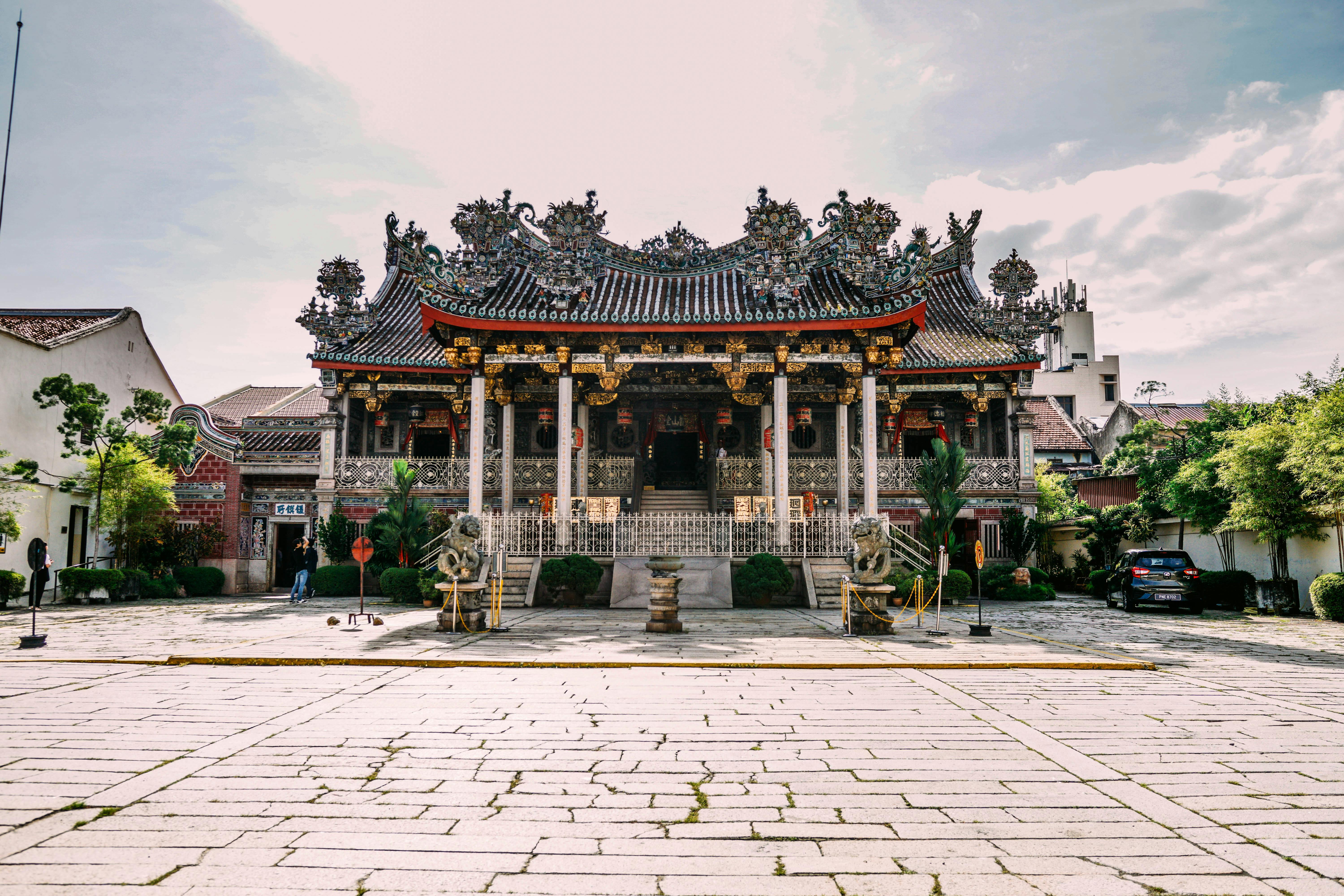
Head to the nearby Khoo Kongsi (18 Cannon Square) for what is one of the most intricately designed clan houses in Southeast Asia. Similar in purpose to those found in places like Singapore, Hoi An, Melaka, etc – these clan houses served as the headquarters of family associations. There is an entrance fee of MYR 10 – pretty steep for a temple in Malaysia but worth it for the architecture. On certain evenings, Khoo Kongsi is also floodlit which makes the building’s details stand out even more.
LikeLike
-
A big part of Penang’s identity is its Peranakan history. The term refers to the earliest Chinese immigrant traders who mixed with locals, creating a unique culture in terms of food, art and architecture. Some of their traditional homes have been turned into hotel-museums. The two most well-kept mansions are the Pinang Peranakan Museum and the Cheong Fatt Tze Mansion or the Blue Mansion. If I had to choose one, I would go for the Pinang Peranakan, simply because it is more ornate.
LikeLike
-
George Town’s center is UNESCO World Heritage listed thanks to its unique architecture, culture, and townscape. You need to set aside at least a couple of hours to wander around this Penang famous place to visit. There are neighborhoods to visit within it as well with Little India, its famous Chinese shop fronts and colonial architecture left by the British. It’s also easy to visit with it being centrally located within the most popular parts of Penang. Some area to explore include Love Lane, Armenian Street and around Queen Street, Chulia Street and Market Streets for Little India. There are also some Penang points of interest to visit to learn more the history of this area at Peranakan Mansion and Cheong Fatt Tze Mansion.
LikeLike

 All About World Heritage Sites (...and more)


Leave a comment