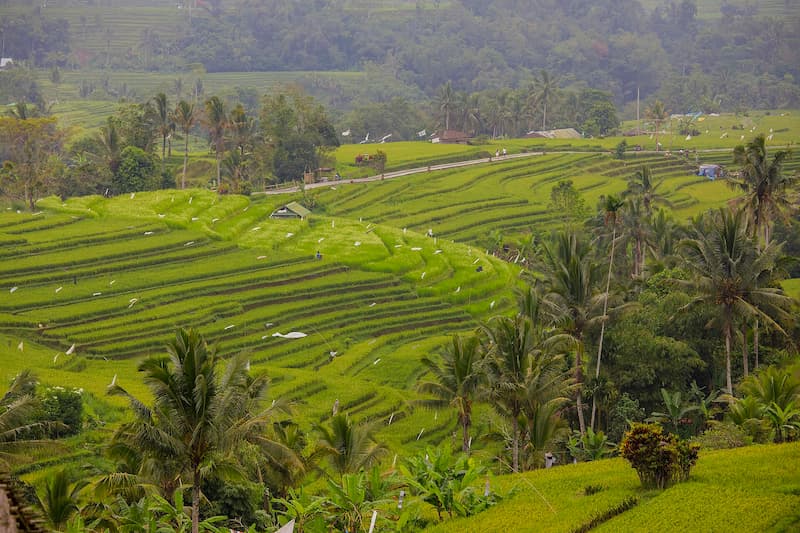
The Cultural Landscape of Bali Province is a living masterpiece that harmonizes human ingenuity, spiritual devotion, and the natural environment. Spanning over 19,500 hectares, this site is not just a single landmark but a network of five distinct areas, including the iconic Jatiluwih Rice Terraces, the Pakerisan Watershed, and majestic water temples like Pura Taman Ayun and Pura Ulun Danu Batur.
At the heart of this landscape is the Subak, a cooperative water management system that dates back to the 9th century. In Bali, water is considered a gift from the Goddess of the Lake, and its distribution is managed through a democratic association of farmers. This system uses a complex network of canals, weirs, and tunnels to channel water from volcanic lakes and rivers down to the terraced paddies.
The site is the physical manifestation of the Tri Hita Karana philosophy, which dictates three causes of prosperity:
- Parhyangan: Harmony between humans and the Divine (represented by the water temples).
- Pawongan: Harmony between humans and fellow humans (the democratic Subak associations).
- Palemahan: Harmony between humans and nature (the sustainable irrigation and forests).
Attraction
- Aesthetic Wonder: The sprawling, emerald-green tiers of the Jatiluwih Rice Terraces are widely considered the most beautiful in the world, offering a vast, panoramic view that feels infinite.
- Living Heritage: Unlike many ruins, this is a “living” site. Tourists can witness ancient farming rituals and the communal effort of harvesting rice exactly as it was done a millennium ago.
- Spiritual Serenity: Temples like Pura Ulun Danu Batur (the “floating” temple) provide a tranquil, mist-covered backdrop that is both a photographer’s dream and a spiritual haven.

(Victoria Lara Labaila, Wikimedia/CC BY-SA 4.0).
Heritage
UNESCO inscribed the landscape in 2012 because it represents an exceptional cultural tradition that has survived for over 1,000 years:
- Criterion (iii): It provides unique testimony to the Tri Hita Karana philosophy, showing how a spiritual belief can actively shape and sustain a physical landscape.
- Criterion (v): The Subak is an outstanding example of a traditional human settlement and land use that is both highly efficient and environmentally sustainable.
- Criterion (vi): The landscape is directly associated with living religious traditions and the profound ritual significance of water and rice in Balinese culture.
Gateway
The city of Denpasar serves as the official gateway to the Bali Province.
- Commercial Airport: Ngurah Rai International Airport (DPS) is Indonesia’s second busiest airport, with direct flights from across Asia, Australia, and Europe.
- Lodging: While Denpasar is the commercial hub, most heritage-focused travelers use Ubud as their primary base. Ubud is roughly 60–90 minutes from the airport and offers everything from luxury “hanging garden” villas to affordable homestays within easy reach of the Subak sites.
When
- Dry Season (April to October): This is the ideal time for trekking through the terraces. The skies are clear, and the mud paths are significantly easier to navigate.
- Harvest Cycles: To see the terraces at their greenest, aim for March/April or August/September. However, the landscape remains beautiful year-round as different Subak associations plant at different times to manage water flow.

(Muhd Rushdi Samsudin, Wikimedia/CC BY-SA 2.0).
Consideration
- Temple Etiquette: You must wear a sarong and sash to enter any temple grounds. These are usually available for rent at the entrance, but having your own is a sign of prepared respect.
- Physical Activity: Exploring sites like Jatiluwih or the Pakerisan Watershed involves hundreds of steep, uneven stone steps and narrow paths. Good hiking shoes with grip are essential.
- The “Right Hand” Rule: When eating, giving, or receiving items (including your entrance ticket), always use your right hand. The left is traditionally considered “unclean.”
- Transportation: Bali does not have a comprehensive public transit system for these rural sites. Your best option is to hire a private driver for the day or rent a scooter if you are an experienced rider.
- Entrance Fees: Expect to pay separate fees for each component area (e.g., approx. IDR 50,000 for Jatiluwih). Keep small bills (IDR 5,000–10,000) for parking fees and donations.

Resources
- UNESCO World Heritage Centre – For the official maps and deep historical context of the five protected zones.
- Indonesia Travel (Official) – The national tourism board’s guide to the Jatiluwih and Subak systems.
- Bali.com Heritage Guide – A practical local resource explaining the technical side of the irrigation networks.
- Jatiluwih.id – The official local management site for the most famous of the rice terraces, providing up-to-date visitor info.
- Trip.com – A high-utility platform for booking “Heritage Villas” in Ubud or transport to the remote Batukaru region.
Featured Image
Jatiluwih Rice Terraces (Thomas Fuhrmann, Wikimedia/CC BY-SA 4.0).
In The News
Advertisement



Comment:
3 responses to “Cultural Landscape of Bali Province: the Subak System as a Manifestation of the Tri Hita Karana Philosophy”
-
I particularly enjoyed a visit to the Tegallalang Rice Terraces in Ubud. I even walked through most of it for the perfect photo! Also in Ubud, the Sacred Monkey Forest Sanctuary is a must visit! You don’t have to spend tons of time here (but you will WANT to!). I truly enjoyed walking around and seeing the most amazing forest, complete with over 600 long-tailed Balinese macaques.
I particularly enjoyed visiting the Royal Palace in Ubud and a few of the temples associated with the fascinating Hindu religion and culture. All in one day, I was able to visit the UNESCO world heritage site of Taman Ayun Temple and also the temple on by the sea – Tanah Lot Temple.
LikeLike
-
The site to visit is the Tegalalang Rice terraces that are pretty close to Ubud. Although these Rice Fields are a popular choice to see, it’s still worth stopping off for an exploration of the area. If you want to avoid some of the crowds, head here in the early morning or visit Jatiluwih rice fields instead. Oh yes, make sure to pack a few coins for the landowners to cross their bridges near the rice fields.
LikeLike
-
It was interesting to read about Bali’s remarkable water temple system and cultural landscape! It’s incredible to observe how the island’s landscape and way of life have been created for ages by ancient customs and ideas. Thank you for this amazing Blog!! I can’t wait to learn more about these landscapes and would also like to explore them!”
LikeLike


 All About World Heritage Sites (...and more)
Leave a reply to Subi Chauhan Cancel reply