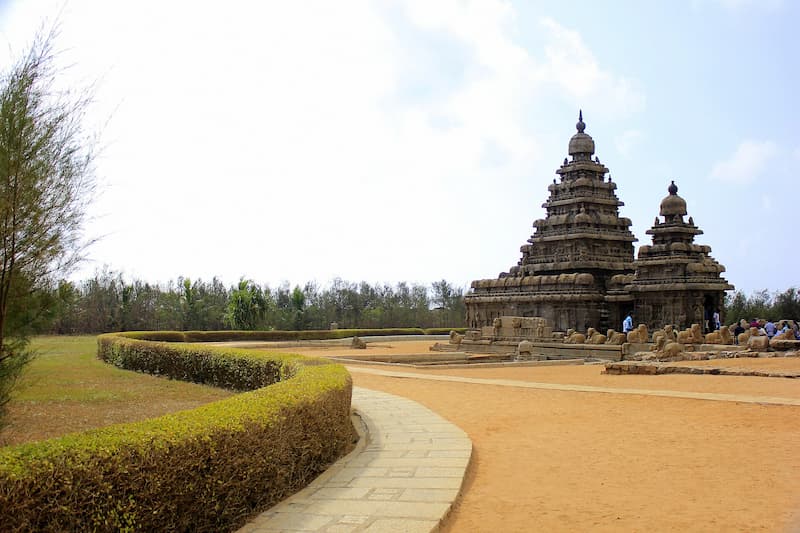
Perched on the Coromandel Coast of the Bay of Bengal, the Group of Monuments at Mahabalipuram (also known as Mamallapuram) is a stunning collection of 7th- and 8th-century religious structures. It serves as a monumental testament to the artistic and architectural peak of the Pallava Dynasty in South India.
The site is a sprawling open-air museum of granite carvings and structural temples. It is uniquely categorized into four distinct types of architecture:
- Rathas (Chariot Temples): Monolithic structures carved from single boulders to resemble processional chariots. The most famous are the Pancha Rathas (Five Rathas), each representing a different architectural style.
- Mandapas (Cave Sanctuaries): Ten rock-cut caves adorned with intricate bas-reliefs depicting Hindu mythology, such as the Varaha and Mahishasuramardini caves.
- Rock Reliefs: The massive Descent of the Ganges (or Arjuna’s Penance) is one of the world’s largest open-air bas-reliefs, featuring hundreds of life-sized figures, including a famous family of elephants.
- Structural Temples: Unlike the rock-cut monuments, the Shore Temple was built using cut stone blocks. It is one of the oldest structural stone temples in South India and has withstood over a millennium of sea spray and tsunamis.
Attraction
Mahabalipuram attracts global visitors due to its unique blend of maritime history and artistic mystery:
- Pancha Rathas: Nowhere else can you see five distinct styles of Indian temple architecture in a single, compact row, all carved from the same bedrock.
- Krishna’s Butterball: A massive natural granite boulder that sits precariously on a smooth slope, seemingly defying gravity. It is a favorite spot for playful tourist photos.
- Living Tradition: The town remains a world-renowned center for stone carving. Tourists can walk through streets filled with the rhythmic “clink-clink” of modern sculptors practicing the same techniques used 1,300 years ago.

Heritage
Inscribed in 1984, the site meets UNESCO Criteria (i), (ii), (iii), and (vi):
- Masterpiece of Genius: The rock-cut architecture represents a pinnacle of human creative effort in the transition from wood to stone construction.
- Regional Influence: The “flexible” and elegant Pallava style significantly influenced the temple architecture of distant regions, including Cambodia (Angkor Wat), Java, and Vietnam.
- Cultural Testimony: The monuments provide an exceptional record of the social and religious life of the Pallava kingdom, particularly the synthesis of Shaivite and Vaishnavite traditions.
Gateway
The bustling metropolis of Chennai (formerly Madras) serves as the primary gateway.
- Airport: Chennai International Airport (MAA) is a major global hub located just 55 km (34 miles) from the site.
- Lodging: Chennai offers a vast array of accommodations, from ultra-luxury heritage hotels like the ITC Grand Chola to budget-friendly stays in areas like T. Nagar and Mylapore.
- Proximity: Travelers can reach Mahabalipuram via the scenic East Coast Road (ECR) in approximately 1.5 to 2 hours by private taxi or public bus.
When
- Peak Season (November–February): This is the ideal time. The weather is dry and pleasant (20°C to 28°C).
- Mamallapuram Dance Festival: Held in December and January, this festival features classical Indian dances (Bharatanatyam, Kathak) performed against the magnificent backdrop of Arjuna’s Penance.
- Avoid Summer (April–June): Temperatures frequently soar above 38°C (100°F), making the unshaded granite monuments uncomfortably hot to touch or walk near.

Consideration
- Footwear: You will need to remove your shoes to enter many of the active or sanctified areas. However, for the general rocky terrain, comfortable, easily removable walking shoes are best.
- The “Granite Heat”: Even in winter, the stone radiates heat. Start your tour as early as 6:30 AM to see the monuments in the soft morning light before the rocks get too hot.
- Combined Tickets: The Archaeological Survey of India (ASI) usually issues a single ticket that covers the Shore Temple and the Pancha Rathas. Buy your ticket online via the ASI portal to avoid long queues at the booths.
- Local Guides: Authorized guides are helpful for explaining the complex iconography of the bas-reliefs, but ensure you agree on a price beforehand.

Resources
- UNESCO World Heritage – Mahabalipuram: The official page detailing the historical significance and protection status of the site.
- Archaeological Survey of India (ASI): The official government site for visitor rules, heritage data, and online ticketing.
- Tamil Nadu Tourism: The state tourism portal offering details on the Dance Festival and local beach attractions.
- Wikipedia – Mahabalipuram Monuments: A highly detailed breakdown of every cave, ratha, and inscription found at the site.
- Expedia – Mahabalipuram Travel & Hotels: A reliable platform for booking day tours from Chennai or securing a resort stay along the East Coast Road.
Featured Image
Shore Temple (Sai Sathish Vijayan, Wikimedia/CC BY-SA 4.0).
In The News
Advertisement


Comment:
3 responses to “Group of Monuments at Mahabalipuram”
-
The Five Rathas are some of the most intriguing structures you’ll ever see. Mostly because it’s unimaginable that each of the rathas were carved whole from monoliths of granite – which is pretty crazy considering these structures date back to the late 7th century.
LikeLike
-
Shopping is a must, especially for stoneware. And food is always a highlight, especially the different fish curries. We’ve also attended dance festivals here and have walked the length and breadth of the shore, soaking in the wonderful climate.
LikeLike
-
The best time for a visit would absolutely be morning when the sun rises and the front of the temple glows in the golden light. You can easily spend a few hours at the temple, especially if you love old temples as much as I do. Otherwise, you will be able to see and admire most of it within an hour. I would suggest going to try backside of the temple (there is lane on the right of the entrance) for some nice chai/ breakfast as well as a stroll on the beach. The beach isn’t exceptionally clean, but the morning breeze is good.
LikeLike

 All About World Heritage Sites (...and more)

Leave a reply to Siddhartha Cancel reply