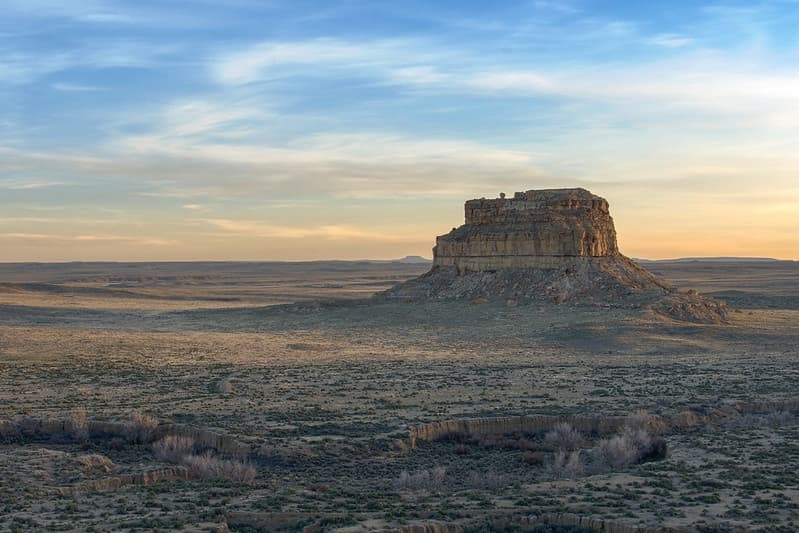
Located in the remote, high-desert canyon of northwestern New Mexico, Chaco Culture National Historical Park is a monumental testament to the architectural and engineering prowess of the Ancestral Puebloan people. It is widely considered the most significant cultural and historical area in the United States, once serving as the hub of a vast social and religious network that dominated the Four Corners region between 850 and 1250 AD.
The Chaco Culture site is a network of archaeological ruins that includes the National Historical Park, the Aztec Ruins National Monument, and several smaller protected sites. The centerpiece of the canyon is the “Great House” architecture—multi-story masonry buildings that were the largest structures in North America until the 19th century.
These complexes, such as Pueblo Bonito, featured over 600 rooms and dozens of kivas (underground ceremonial chambers). Chacoans utilized sophisticated masonry techniques, hauling massive timber beams from mountains over 60 miles away and fitting sandstone blocks with remarkable precision. The site is also known for its extensive “Chacoan Roads,” an engineered system of arrow-straight paths that radiated from the canyon to outlier communities across the San Juan Basin.
Attraction
Chaco Canyon attracts visitors from around the globe for its unique blend of archaeology and science:
- Archaeoastronomy: Many of the great houses are precisely aligned with solar and lunar cycles. The “Sun Dagger” petroglyph on Fajada Butte, which marks the solstices and equinoxes, is a world-renowned example of ancient astronomical knowledge.
- International Dark Sky Park: As a designated Gold-tier Dark Sky Park, it offers some of the best stargazing in the United States. The park hosts “Night Sky Programs” where visitors can see the cosmos much as the Chacoans did 1,000 years ago.
- The Scale of the Ruins: The sheer size of Pueblo Bonito and Chetro Ketl, with their towering walls and complex layouts, provides a sense of wonder similar to the pyramids of Giza or Machu Picchu.

Heritage
UNESCO inscribed Chaco Culture in 1987, citing its Outstanding Universal Value. It met the following specific criterion:
- Criterion (iii): The site bears a unique and exceptional testimony to a cultural tradition that has disappeared. It illustrates the highly organized social and political structure of the Chacoan people, who flourished in a harsh, marginal environment through advanced engineering and agricultural techniques.
The designation recognizes Chaco not just as a collection of ruins, but as the center of a regional system that influenced the development of the entire American Southwest.
Gateway
The primary gateway to Chaco Culture is Albuquerque, the largest city in New Mexico.
- Airport: Albuquerque International Sunport (ABQ) is the nearest major commercial airport, located approximately 3 hours (150 miles) southeast of the park.
- Lodging: Albuquerque offers thousands of hotel rooms, from luxury resorts to budget-friendly stays, making it an ideal base for travelers before they head into the remote canyon.
- Alternative: While Farmington and Durango are closer, Albuquerque remains the most accessible gateway for international tourists due to its robust flight schedule and rental car availability.
When
- Spring (April to May): Mild temperatures and blooming desert wildflowers make this a peak time for hiking.
- Fall (September to October): This is widely considered the best time to visit. The days are warm, the nights are crisp, and the “Monsoon” rains of summer have usually subsided, making the dirt access roads safer to traverse.
- Winter: Stunning for photography when the ruins are dusted in snow, but temperatures frequently drop below freezing, and roads can become impassable.

Consideration
- Rugged Access: The final 13 to 21 miles to the park are on unpaved dirt roads. These can be rough, “washboarded,” or completely impassable during rain or snow. A high-clearance vehicle is highly recommended.
- Remote Location: There is no food, gas, or lodging (other than camping) inside the park. You must bring all necessary supplies, including plenty of water.
- Altitude: At 6,200 feet (1,890 meters), the air is thin. Visitors should stay hydrated and move slowly to avoid altitude sickness.
- Respect Sacred Ground: Chaco is a sacred ancestral site for modern Pueblo and Hopi tribes. Climbing on the 1,000-year-old walls is strictly prohibited, and visitors are asked to “walk softly” and leave artifacts where they lie.

Resources
- National Park Service (Official) – The definitive source for current road conditions, camping reservations, and historical data.
- UNESCO World Heritage Centre – Detailed documents regarding the site’s global significance and preservation status.
- Visit Albuquerque – Information on lodging, dining, and logistics for your gateway city stay.
- Chaco Culture Conservancy – A non-profit partner focused on the protection and education of the canyon.
- TripAdvisor – User reviews and booking links for guided tours and nearby accommodation.
Featured Image
Fajada Butte, where Sun Dagger petroglyph is found (Adam Meek, Flickr/CC BY 2.0).
In The News
Advertisement


Comment:
 All About World Heritage Sites (...and more)
Leave a comment