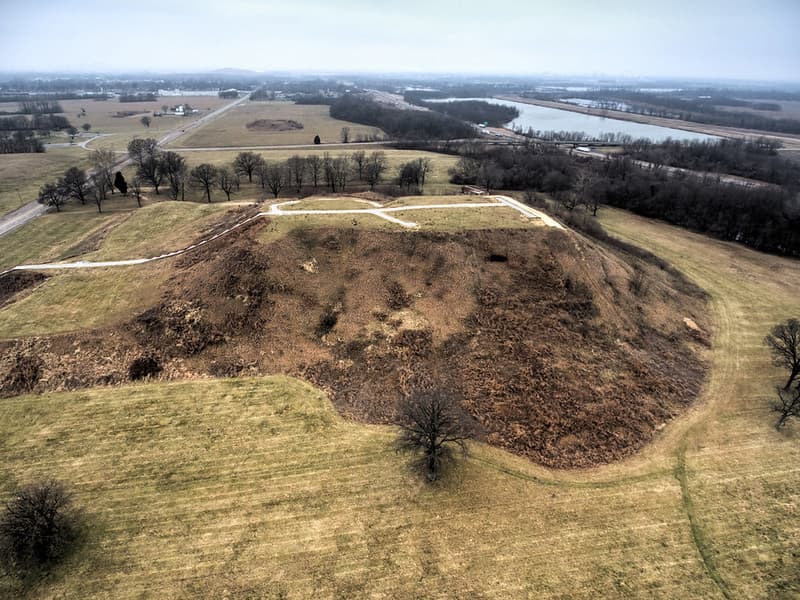
Located in southwestern Illinois, just across the Mississippi River from St. Louis, Missouri, the Cahokia Mounds State Historic Site is the largest pre-Columbian settlement north of Mexico. This sprawling archaeological park preserves the central core of a sophisticated Mississippian culture city that flourished between 800 and 1350 CE.
Cahokia Mounds covers approximately 2,200 acres and contains about 80 of the original 120 earthen mounds. The site is a feat of ancient urban planning:
- Monks Mound: The centerpiece of the site, this is the largest prehistoric earthwork in the Americas. It stands 100 feet high, covers 14 acres at its base, and was built using an estimated 22 million cubic feet of earth moved by hand in baskets.
- Grand Plaza: A massive, leveled central area used for public gatherings, religious ceremonies, and games like “chunkey.”
- Woodhenge: A reconstructed solar calendar consisting of a circle of wooden posts used to track the solstices and equinoxes.
- Mound 72: An elite burial mound that provided significant insight into the social hierarchy and sacrificial practices of the Mississippian people.
Attraction
Cahokia attracts international visitors as a “lost city” of North America. It challenges the common misconception that pre-colonial Indigenous societies were exclusively nomadic.
- Ancient Metropolis: At its peak (circa 1100 CE), Cahokia had a population of 10,000 to 20,000 people—larger than London at the same time.
- The View from the Top: Climbing the stairs of Monks Mound provides a panoramic view of the ancient city layout against the modern skyline of St. Louis, offering a powerful sense of historical scale.
- Interpretive Center: The site features a world-class museum with life-sized dioramas, a massive collection of artifacts (pottery, stone tools, and jewelry), and an award-winning film, “City of the Sun.”

(Thank You (25 Millions), Flickr/CC BY 2.0).
Heritage
Inscribed in 1982, Cahokia Mounds is recognized under UNESCO Criteria (iii) and (iv):
- Exceptional Testimony: It is the pre-eminent example of a complex chiefdom society in North America, with a clear hierarchy and specialized labor.
- Architectural Significance: The site demonstrates a highly organized urban plan with residential, public, and specialized activity areas, anchored by monumental earthen architecture that has survived for a millennium.
Gateway
The city of St. Louis serves as the primary gateway to the site.
- Airport: St. Louis Lambert International Airport (STL) is a major commercial hub with frequent domestic and international connections.
- Lodging: St. Louis offers a vast range of accommodations, from luxury hotels like The Four Seasons (with views of the Gateway Arch) to boutique options in the Central West End.
- Proximity: The site is a short 15-minute drive from downtown St. Louis via I-55/I-70.
When
- Spring (April–May) and Autumn (September–October): These are the most pleasant months. The weather is mild for walking the extensive outdoor trails, and the foliage is particularly beautiful in the fall.
- Solstice Events: Visiting during the spring or fall equinox (March and September) allows you to participate in special sunrise observations at Woodhenge, led by site archaeologists.
- Avoid Summer: July and August can be oppressively hot and humid in the Mississippi River Valley, making the climb up Monks Mound taxing.

Consideration
- Walking is Required: The site is vast. To see the major mounds and Woodhenge, you should be prepared to walk several miles. Comfortable, closed-toe walking shoes are essential.
- Exposure: Most of the park is open grassland with little shade. Sunscreen and hats are necessary even on overcast days.
- Seasonal Closures: While the grounds are usually open daily, the Interpretive Center (Museum) sometimes has specific closure days (often Mondays and Tuesdays) or may be undergoing renovations. Always check the official site before visiting.
- Respect the Mounds: These are sacred ancestral sites. Visitors are required to stay on designated paths and stairs and are strictly prohibited from digging or removing any materials.

Resources
- Cahokia Mounds State Historic Site (Official): The primary source for visitor hours, museum updates, and event calendars.
- UNESCO World Heritage Center – Cahokia: Technical documentation regarding the site’s historical significance and preservation status.
- Illinois Department of Natural Resources: Government information on park rules, facilities, and conservation.
- Explore St. Louis: The city’s official tourism site for lodging and dining recommendations in the gateway city.
- Viator – St. Louis: A platform to book guided sightseeing tours that include transportation and expert commentary on the mounds.
Featured Image
Cahokia Mounds (Terry Robinson, Flickr/CC BY-SA 2.0).
In The News
Advertisement



Comments:
 All About World Heritage Sites (...and more)

Leave a comment