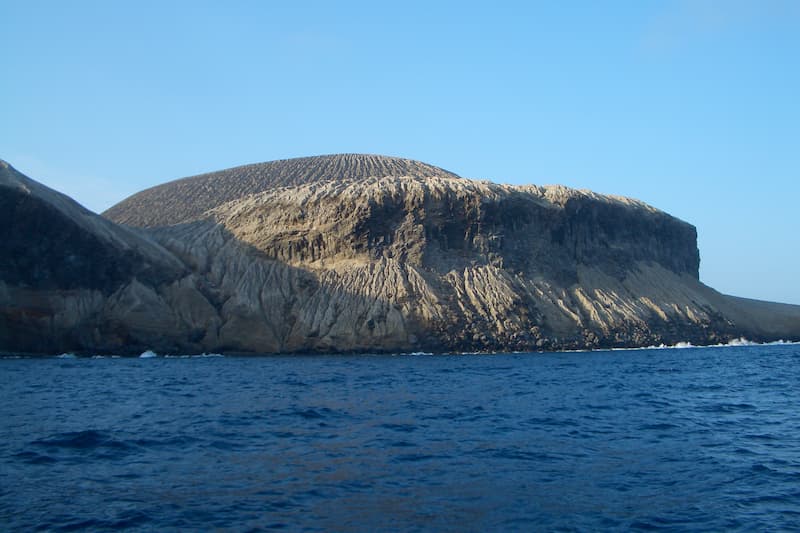
The Archipiélago de Revillagigedo is a stunning, remote group of four volcanic islands located in the Pacific Ocean, approximately 386 km southwest of the southern tip of the Baja California Peninsula in Mexico. Comprised of Isla San Benedicto, Isla Socorro, Isla Roca Partida, and Isla Clarión, these islands are uninhabited except for small Mexican naval bases. They are renowned as a “serial” natural heritage property due to their unique volcanic origins and extreme isolation, resulting in a distinct, high-level ecosystem of endemic terrestrial flora and fauna, particularly birds.
- Volcanic Origin: The islands are the peaks of submerged volcanoes rising from a submarine mountain range.
- Unique Ecosystems: The relative isolation has created specialized habitats, harboring species found nowhere else on earth, such as the critically endangered Townsend’s Shearwater.
- Marine Haven: The surrounding waters are a critical convergence zone for the California and Equatorial currents, making them incredibly nutrient-rich and biodiverse.
Attraction
The archipelago is primarily a destination for recreational scuba divers and marine photographers, often referred to as the “Galapagos of Mexico.”
- Giant Mantas: The islands are famous for the massive populations of Giant Manta Rays (some completely black), which often approach divers closely.
- Pelagic Giants: Visitors come to see massive schools of sharks (hammerheads, Galapagos, silvertip, whale sharks) and Humpback Whales (which migrate through from January to April).
- Adventure Diving: The remoteness and challenging conditions offer a true wilderness experience, far from crowded tourist spots.

Heritage
Inscribed in 2016 (with extension in 2017), the site is recognized under three criteria:
- Criterion (vii): The landscape and seascape exhibit impressive active volcanoes, dramatic arches, cliffs, and isolated rock outcrops.
- Criterion (ix): The site represents an exceptional convergence of two marine biogeographic regions, creating a highly productive transition zone.
- Criterion (x): It harbors abundant populations of large pelagic fish, sharks, rays, and whales, and features high levels of species endemism among birds and fish.
Gateway
- The City: Cabo San Lucas, located at the tip of the Baja California Peninsula, serves as the primary gateway.
- Airport: Los Cabos International Airport (IATA: SJD) offers numerous international and domestic flights.
- Lodging: Cabo provides vast lodging options, from luxury resorts to budget hotels, necessary for the overnight stay required before boarding a dive boat.
- Transit: The archipelago is accessed exclusively by liveaboard dive boats, which take approximately 24–30 hours to reach the islands from Cabo San Lucas.
When
- November to May: This is the primary season for diving.
- Humpback Whales: The best time to see whales is generally January through April.
- Avoid Summer: Trips are rarely operated in summer due to the risk of hurricanes and uncomfortable sea conditions.

(BrianRoe88, Wikimedia/CC BY-SA 3.0).
Consideration
- Liveaboard Only: You must stay on a boat for the duration of the trip (usually 7–10 days).
- No Land Access: Permits are strictly required to land on the islands, and these are rarely granted to tourists; the experience is almost entirely underwater.
- Advanced Diving: Due to currents, depths, and the presence of sharks, this is an advanced diving destination. Participants should have significant experience and often an Advanced Open Water certification.
- Remote Location: There are no medical facilities, phone service, or internet on the islands or during transit.

Resources
- UNESCO – Archipiélago de Revillagigedo: Official archive for conservation status and universal value.
- Parque Nacional Revillagigedo – CONANP: Official Mexican government site for regulations and park management.
- DAN (Divers Alert Network): Vital resources for safety and insurance regarding remote diving.
- Liveaboard.com – Revillagigedo Tours: For booking liveaboard diving trips departing from Cabo San Lucas.
- Sport Diver – Revillagigedo Guide: Articles and photography highlighting diving conditions and marine life.
Featured Image
Isla San Benedicto (Fred von Lohmann, Flickr/CC BY 2.0).
In The News
Advertisement

Comment:
 All About World Heritage Sites (...and more)

Leave a comment