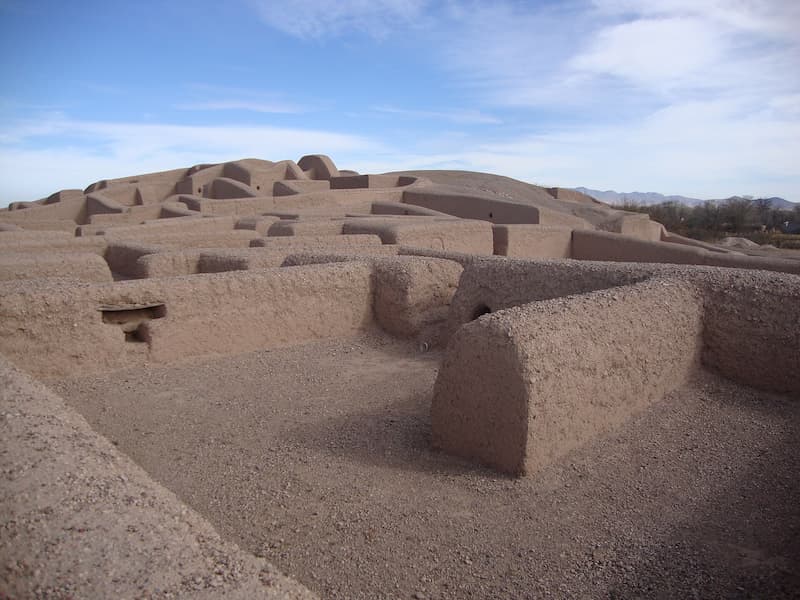
The Archaeological Zone of Paquimé, Casas Grandes, located in the Chihuahua Desert of northern Mexico, is a remarkable example of pre-Hispanic earthen architecture. Reaching its apogee in the 14th and 15th centuries, this urban center served as a critical nexus for trade and cultural exchange between the Pueblo cultures of the southwestern United States and the advanced civilizations of Mesoamerica.
- Earthen Architecture: The city is distinguished by its massive, multi-story adobe structures. Some walls still reach several stories in height, featuring iconic T-shaped doorways.
- Urban Planning: Paquimé exhibits sophisticated urban planning, with specialized areas for residential clusters, workshops, ceremonial activities, and water management.
- Cultural Influence: The site showcases a unique blend of architectural styles, combining northern adobe techniques with Mesoamerican elements like ball courts and platform mounds.
Attraction
Paquimé is a major attraction for those interested in pre-Columbian history and architecture.
- Unmatched Preservation: The scale and preservation of the earthen ruins are unparalleled in North America, offering a vivid picture of ancient desert life.
- Mysterious Disappearance: The civilization vanished suddenly at the time of the Spanish Conquest, adding an air of mystery to the ruins.
- Museum of Cultures of the North: Located at the entrance to the site, this modern museum provides excellent context, displaying artifacts like ceramics and shell jewelry found during excavations.

Heritage
Inscribed in 1998, Paquimé was listed under two criteria:
- Criterion (iii): The site bears eloquent and abundant testimony to an important element in the cultural evolution of North America, in particular, pre-Hispanic commercial and cultural links.
- Criterion (iv): The extensive remains provide exceptional evidence of the development of adobe architecture in North America and the blending of this with the more advanced techniques of Mesoamerica.
Gateway
- Commercial Airports:
- Abraham González International Airport (CJS) in Ciudad Juárez (approx. 3.5-hour drive).
- General Roberto Fierro Villalobos International Airport (CUU) in Chihuahua City (approx. 4-hour drive).
- Lodging: Both cities offer a wide range of hotel options. The nearby town of Casas Grandes and the adjacent city of Nuevo Casas Grandes also have sufficient local lodging, including comfortable guesthouses and hotels suitable for an overnight stay.
When
- Spring (March to May) and Autumn (October to November): These seasons offer pleasant, mild temperatures, avoiding the extreme heat of summer and the cold winter nights.
- Avoid Summer: Temperatures in the Chihuahua Desert often exceed 35°C (95°F), making exploration uncomfortable.

Consideration
- Climate Exposure: The site is almost entirely exposed to the sun. Bring sun protection (hat, sunscreen) and plenty of water.
- Walking Terrain: The ground is uneven, and walking shoes are recommended.
- Local Guide: While there is excellent signage, hiring a local guide can provide deeper insight into the engineering and daily life of the ancient residents.
- Combine with Pueblo Magico: The site is located in the Pueblo Mágico of Casas Grandes, which is worth exploring for its colonial architecture and local crafts.

Resources
- UNESCO – Archaeological Zone of Paquimé: Official documentation, maps, and criteria.
- INAH – Paquimé Zone: Official website of the National Institute of Anthropology and History for visitor information.
- Museum of Cultures of the North: Information about the on-site museum and its collections.
- Visit Chihuahua – Casas Grandes: Official tourism portal with practical information on local lodging and attractions.
- Viator – Chihuahua Tours: For booking guided trips from Ciudad Juárez or Chihuahua City, including transportation and logistics.
Featured Image
Paquime (Fam Gurrola, Wikimedia/CC BY-SA 4.0).
In The News
Advertisement



Advertisements
Advertisements
Advertisements
Advertisements
Comment:
Advertisements
 All About World Heritage Sites (...and more)

Leave a comment