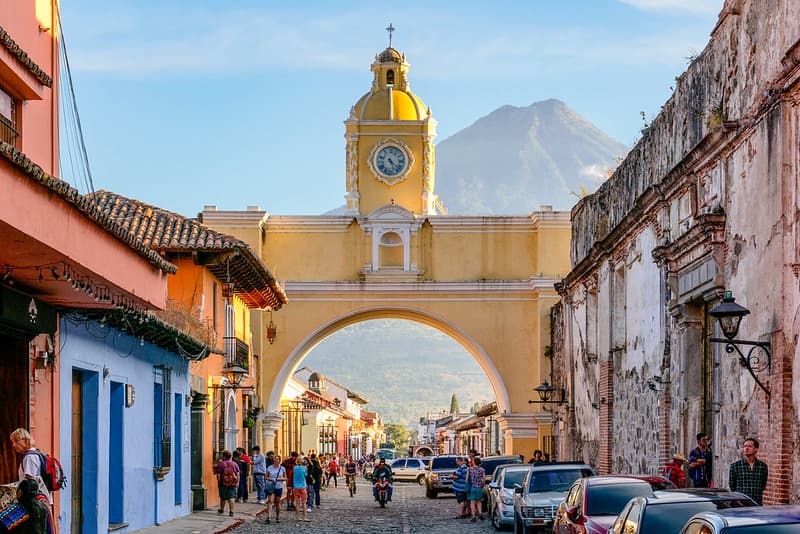
Antigua Guatemala, nestled in the central highlands of Guatemala, is one of the most enchanting colonial cities in the Americas. Surrounded by three massive volcanoes—Agua, Fuego, and Acatenango—this “Land of Eternal Spring” is a living museum where 500-year-old history breathes through pastel-colored facades and cobblestone streets.
Founded in 1543 as Santiago de Guatemala, the city served as the capital of the Captaincy-General of Guatemala for over 200 years. Its layout follows a classic Renaissance-inspired grid.
- Architecture: The city is defined by the Barroco Antigüeño style—a regional adaptation of Baroque architecture designed with thick walls and low bell towers to withstand frequent earthquakes.
- The Ruins: After the devastating Santa Marta earthquakes in 1773, the capital was moved to present-day Guatemala City. Many structures were left as “frozen” ruins, such as the Convento de las Capuchinas and the Catedral de San José, which visitors can still explore today.
- Icons: The yellow Santa Catalina Arch and the Iglesia de La Merced with its intricate white stucco filigree are the city’s most recognizable landmarks.
Attraction
Antigua is a magnet for travelers due to its unique blend of adventure and tradition:
- Volcano Trekking: It is the base for the world-famous overnight hike up Acatenango, where travelers can watch the neighboring Volcán de Fuego erupt with lava against the night sky.
- Cultural Vibrancy: During Semana Santa (Holy Week), the city hosts the largest Easter celebrations in the world, featuring elaborate “alfombras” (carpets) made of colored sawdust and flowers.
- Language & Coffee: It is a global hub for Spanish language schools and sits at the heart of premium coffee-growing territory, offering immersive “bean-to-cup” tours.

Heritage
Inscribed in 1979, Antigua Guatemala meets Criteria (ii), (iii), and (iv):
- Criterion (ii): It reflects an exceptional interchange of Spanish and Indigenous cultural values, particularly in the export of religious imagery and art.
- Criterion (iii): It is an outstanding example of 16th-century town planning that has preserved its original grid and historic integrity.
- Criterion (iv): The city’s ensemble of religious and civil buildings provides a unique testimony to the power of the colonial church and Spanish administration in Central America.
Gateway
- The City: Guatemala City is the primary gateway, located roughly 40 km (1 hour) from Antigua.
- Airport: La Aurora International Airport (GUA) is the commercial hub, receiving direct flights from major US, Mexican, and Central American cities.
- Lodging: While the capital has luxury stays like the InterContinental, most travelers head straight to Antigua to stay in boutique heritage hotels like Posada del Angel or the former convent turned hotel, Casa Santo Domingo.
When
- November to April (Dry Season): This is the “best” time, offering clear blue skies and mild temperatures (22–26°C).
- Easter (March/April): While crowded and expensive, this is the most culturally significant time to witness the Semana Santa processions.
- November 1: A fantastic time to see the Giant Kite Festival in nearby Sumpango.

Consideration
- Footwear: The streets are made of original, uneven volcanic stone. High heels are impossible; sturdy walking shoes or sneakers are mandatory.
- Water Safety: Never drink tap water in Guatemala. Use filtered water provided by hotels or buy bottled water.
- Altitude: Sitting at 1,500 meters (5,000 ft), the sun is intense, but the air can get chilly at night. Pack light layers.
- Safety: Antigua is generally safe for tourists, but use official shuttles or Uber for travel between the airport and the city, especially at night.

Resources
- UNESCO World Heritage – Antigua Guatemala: The official archive for historical and architectural data.
- Visit Guatemala (INGUAT): The official national tourism portal for events and travel alerts.
- AntiguaDailyPhoto: A long-running local blog that provides excellent insight into daily life and hidden gems.
- Lonely Planet – Antigua Guatemala: For practical budget-friendly tips and restaurant reviews.
- Viator – Antigua Guatemala Tours: Use this to book guided volcano hikes, coffee plantation tours, or transfers from La Aurora Airport.
Featured Image
Santa Catalina Arch (Chad Davis, Flickr/CC BY 2.0).
In The News
Advertisement


Comment:
2 responses to “Antigua Guatemala”
-
Surrounded by smoking volcanoes and painted in a centuries-old palate, Antigua shows off its colors as they would have originally appeared in colonial times. Every building is painted in a careful selection of 12 colors — soft yellows, pinks, blues and reds with names like Rojo Santo Domingo or Amarillo La Merced. When the rain comes, the surrounding mountains burst into greens, setting the city like a flower atop a garden.
LikeLike
-
You could spend a few days wandering around Antigua’s cobblestone streets, but be sure to stroll by the vibrant 17th-century Santa Catalina Arch and the take in the colonial architecture of Plaza Central Park, the city’s main square. Make it a point to wander through the artisan markets, Guatemala has no shortage of beautiful textiles. I stocked up on woven blankets and rugs, colorful masks, and I couldn’t resist a handmade huipil blouse, the brightly embroidered tops worn by the region’s Mayan women.
LikeLike

 All About World Heritage Sites (...and more)
Leave a comment