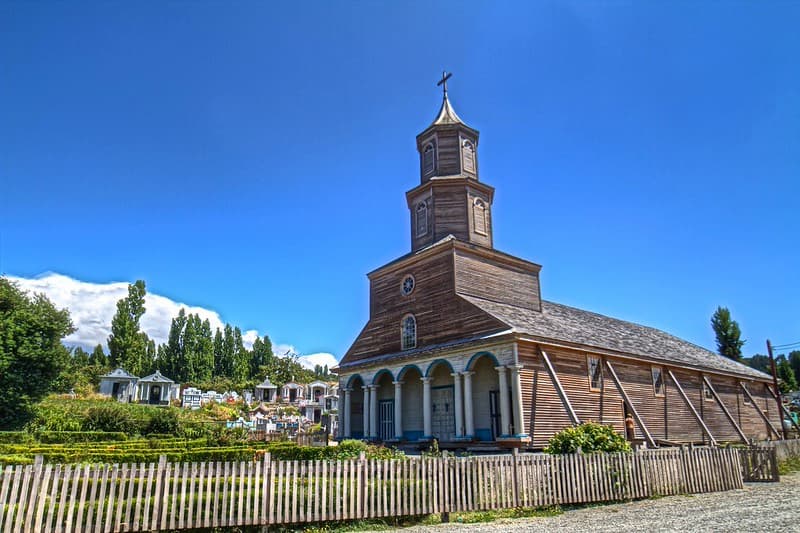
The Churches of Chiloé in southern Chile represent a unique architectural phenomenon in the Americas. These wooden temples are not just religious sites but are structural marvels that reflect the soul of an isolated island culture.
The “Churches of Chiloé” is a collective UNESCO World Heritage site comprising 16 wooden churches scattered across the Chiloé Archipelago. Built primarily in the 18th and 19th centuries, these churches are a distinct departure from the stone and mortar colonial architecture found in the rest of Latin America.
The churches were constructed using native timber—such as alerce, cypress, and coigüe—and are covered in wooden shingles (tejuelas) that create a textured, scale-like appearance. Their design typically features a basilican floor plan and a “tower-façade” that faces the sea to guide returning sailors. Inside, the vaulted ceilings often resemble the inverted hulls of ships, a direct result of the local shipbuilders who applied their maritime skills to terrestrial construction.
Attraction
- Shipbuilding Techniques: Visitors are fascinated by the “joinery” used in the older churches; many were built entirely of wood, using wooden pegs (tarugos) instead of iron nails, which were scarce and prone to rusting in the humid climate.
- The Chilote Mythology: The churches are the spiritual heart of an archipelago famous for its folklore. The fusion of Catholicism with indigenous Huilliche myths of sea monsters (the Caleuche) and forest spirits (the Trauco) creates a mysterious, ethereal atmosphere.
- Vibrant Colors: Unlike the austere churches of Europe, many Chilotan churches are painted in brilliant shades of yellow, purple, blue, and white, making them a photographer’s dream against the backdrop of rolling green hills.
- Cultural Experience: Visiting the churches often involves experiencing a Minga (a communal work tradition) or eating Curanto (a traditional feast cooked in a hole in the ground with hot stones).

Heritage
UNESCO inscribed the churches in 2000 for their “Outstanding Universal Value,” citing two main criteria:
- Criterion (ii): The churches are an exceptional example of the fusion of European and indigenous traditions. The Jesuit and later Franciscan missionaries provided the designs, but the local indigenous craftsmen executed them using their own materials and ancestral techniques, creating a unique “Mestizo” architecture.
- Criterion (iii): The churches are the most visible evidence of the culture of the Chiloé Archipelago, which has remained remarkably intact due to the islands’ historical isolation. They represent a living tradition of community and spiritual life that continues to this day.
Gateway
The city of Castro, the capital of the Chiloé Province, is the ideal gateway.
- Airport: Mocopulli Airport (MHC) is located about 20 km north of the city. It receives regular commercial flights from Santiago, typically via LATAM or Sky Airline.
- Lodging: Castro is famous for its Palafitos (colorful wooden houses built on stilts over the water), many of which have been converted into charming boutique hotels and hostels. It offers a wide range of services, car rentals, and tour operators necessary for exploring the more remote churches.
When
- Summer (December to March): This is the best window for travel. The weather is relatively mild, and the rain—constant for most of the year—is at its minimum.
- February: Many of the churches hold their patronal festivals in the summer months, with the Fiesta Costumbrista Chilota in Castro during mid-February being a highlight for local food, music, and crafts.
- Shoulder Season (October-November): Good for those who want to see the landscape in bloom, though you must be prepared for frequent rain.

(Carlos Teixidor Cadenas, Wikimedia/CC BY-SA 4.0).
Consideration
- Rain Gear is Mandatory: Even in the middle of summer, Chiloé can experience sudden, heavy downpours. A high-quality waterproof jacket and sturdy, non-slip shoes are essential for the muddy trails around the rural churches.
- Inter-Island Logistics: While some churches are in major towns, others (like those on Quinchao or Caguach islands) require taking local ferries. Check the ferry schedules locally, as they can change based on the tide and weather.
- Driving Challenges: If you rent a car, be aware that many roads to the smaller churches are unpaved, steep, and winding. A vehicle with higher clearance is recommended.
- Respectful Visitations: Many of these are active places of worship for small villages. Always check if a service is in progress before entering and ask for permission before taking photographs of the parishioners.
- Cash for Remote Areas: While Castro accepts cards, many small island communities and ferry operators deal only in Chilean Pesos (CLP).

Resources
- UNESCO World Heritage Centre – The official site for detailed maps and the specific architectural descriptions of all 16 churches.
- Chiloé Patrimonio Mundial – A dedicated government portal for the preservation of these sites, offering news and visiting tips.
- Chile Travel (Official) – The national tourism site providing excellent logistical guides for the entire island.
- World Monuments Fund – A deep dive into the conservation efforts and the specific types of wood used in the construction.
- GetYourGuide – A platform to book guided full-day tours of the UNESCO churches from Castro, which often include transportation and local guides.
Featured Image
Church of Nercon (Srikanth Jandhyala, Flickr/CC BY 2.0).
In The News
Advertisement


Comment:
 All About World Heritage Sites (...and more)

._Chilo%C3%A9._Chile.jpg)
Leave a comment