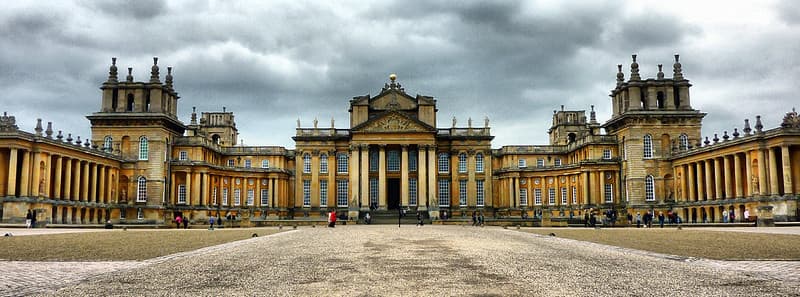
Blenheim Palace, located in Woodstock, Oxfordshire, is a monumental country house that stands as one of the most prestigious examples of English Baroque architecture. Completed in 1722, it remains the only non-royal, non-episcopal country house in England to hold the title of “Palace.”
Blenheim Palace was built between 1705 and 1722 as a national gift to John Churchill, the 1st Duke of Marlborough, in honor of his decisive military victory against the French and Bavarians at the Battle of Blenheim (1704). Designed primarily by Sir John Vanbrugh with the assistance of Nicholas Hawksmoor, the palace is a masterpiece of the English Baroque style.
The estate covers over 2,000 acres of parkland and gardens. A key feature of the site is its “romantic” park, redesigned in the 1760s by the legendary landscape architect Lancelot “Capability” Brown, who dammed the River Glyme to create the Great Lake and Queen Pool.
Attraction
Blenheim Palace attracts over a million visitors annually for several compelling reasons:
- The Churchill Connection: It is the birthplace and ancestral home of Sir Winston Churchill. Visitors can tour the very room where he was born and explore a permanent exhibition dedicated to his life and leadership.
- Architectural Grandeur: The State Rooms are adorned with priceless tapestries, paintings, and porcelain, reflecting the wealth and power of the Churchill-Spencer family.
- Film and Media: The palace is a popular filming location, featuring in movies like Harry Potter and the Order of the Phoenix (the “Harry Potter Tree” is located by the lake), James Bond: Spectre, and Mission: Impossible – Rogue Nation.
- The Gardens: Beyond the formal Italian and Rose gardens, families enjoy the Marlborough Maze (one of the world’s largest hedge mazes) and the Butterfly House.

(Gary Campbell-Hall, Flickr/CC BY 2.0).
Heritage
Inscribed by UNESCO in 1987, Blenheim Palace is recognized for its “Outstanding Universal Value” under Criteria (ii) and (iv):
- Criterion (ii): The palace and its park represent the beginning of the English Romantic movement, characterized by an eclectic style and a return to national roots, which influenced architecture and landscape design across Europe.
- Criterion (iv): It is the ultimate example of an 18th-century princely residence. While many European palaces were royal, Blenheim is unique as a gift from a nation to a subject, embodying the power and autonomy of the British aristocracy.
Gateway
Oxford is the primary gateway to Blenheim Palace, offering a perfect base for international travelers.
- Airport: While there are regional airports, London Heathrow (LHR) is the most convenient major international hub (approx. 1 hour by car or 1.5–2 hours by public transport). Birmingham Airport (BHX) is also a viable option.
- Lodging: Oxford provides extensive lodging, from the historic Randolph Hotel to modern boutiques and budget-friendly options. The town of Woodstock, immediately adjacent to the palace, also offers charming Georgian guesthouses for those who prefer to stay within walking distance.
- Access: Direct buses (Stagecoach S3 or S7) run from Oxford city center to the palace gates every 15–30 minutes.
When
- Late Spring to Summer (May–August): Ideal for exploring the massive parkland. You may even catch a game of cricket being played on the South Lawn.
- Christmas (Late November–December): The palace hosts a spectacular “Christmas at Blenheim” event with illuminated light trails and festive indoor displays.
- Weekday Mornings: To avoid the large tour groups that arrive from London, aim to be at the gates when the palace opens at 10:30 AM.

Consideration
- Walking Distance: The estate is enormous. Expect to walk significant distances between the Palace, the Walled Garden, and the Column of Victory. A miniature train runs between the Palace and the Walled Garden for a small fee.
- Cashless System: Blenheim Palace operates a fully cashless system. All payments for tickets, cafes, and shops must be made via card or mobile payment.
- Annual Pass Conversion: If you buy a standard day ticket directly from the palace, you can often convert it into an Annual Pass for no extra cost, giving you free entry for a year.
- Sustainable Travel Discount: Visitors who arrive by bus, train, or bike can often claim a 20% discount on their entry ticket (use code
GREEN20online).

Resources
- Blenheim Palace Official Site: The primary resource for booking tickets, checking event schedules, and finding opening times.
- UNESCO World Heritage Centre – Blenheim: Detailed information on the historical and architectural criteria for its protected status.
- Experience Oxfordshire: The official tourism guide for the region, helpful for planning lodging and transport from Oxford.
- National Rail Enquiries: Use this to plan train travel to Oxford or Hanborough stations.
- GetYourGuide – Blenheim Palace Tours: A great platform for booking combined day trips that include the Cotswolds and transport from London.
Featured Image
Blenheim Palace (Becks, Flickr/CC BY 2.0).
In The News
Advertisement

Comment:
One response to “Blenheim Palace”
-
I visited Blenheim last year as I love Winston Churchill, it is expensive but worth every penny.
Just a short ride away is the village of Bladon where Winston is buried with his family in a very modest grave , I would recommend anyone to go , well worth a visit.LikeLike

 All About World Heritage Sites (...and more)
Leave a comment