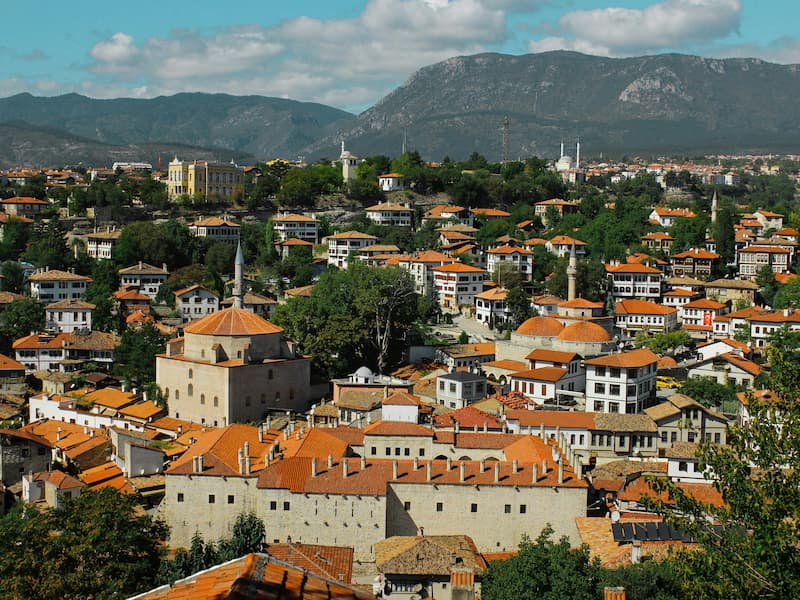
The City of Safranbolu, located in the Black Sea region of northern Turkey, is often described as an open-air museum. Its name is derived from “saffron,” the precious spice that was once produced and traded extensively in the region. It remains one of the few places in the world that has preserved its classic Ottoman urban landscape so meticulously that a walk through its streets feels like stepping back into the 18th century.
Safranbolu is divided into three distinct historical districts:
- Çukur (The Old Town): Located in the lower part of the city, this area was the heart of the town’s economy. It is characterized by narrow, winding cobblestone streets, a bustling marketplace (Arasta), and traditional workshops.
- Kıranköy: Historically the district where the non-Muslim (Greek) population lived. The architecture here features more stone construction compared to the timber-heavy houses of the Old Town.
- Bağlar (The Vineyards): Situated on higher ground, this area served as the summer resort for the town’s wealthy residents. The houses here are spread out among large gardens and orchards to provide relief from the summer heat.
The city’s signature feature is its Ottoman timber-framed houses. These structures are typically two or three stories tall, built with stone on the ground floor and wood and mud-brick on the upper levels. They were designed with high privacy in mind, often featuring cantilevered upper floors and windows that allow residents to see out without being seen.
Attraction
Safranbolu is a magnet for travelers seeking “Slow Travel” and historical authenticity.
- Architectural Preservation: It is one of the best-preserved examples of an Ottoman-era town. Unlike many other historical sites, people still live and work in these 300-year-old buildings.
- Saffron Heritage: The town remains one of the few places in Turkey where the Crocus sativus (saffron flower) is still cultivated. Visitors flock here in the autumn to see the delicate purple flowers being harvested.
- Traditional Crafts: The guild system is still alive in the Yemeniciler Arastası (Cobblers’ Bazaar), where you can watch craftsmen make traditional leather shoes by hand.
- Culinary Delights: Safranbolu is famous for its unique variety of Turkish Delight (Lokum), which is less sweet than the Istanbul variety and often flavored with local saffron.

Heritage
UNESCO inscribed the City of Safranbolu in 1994 based on its role as a key caravan station on the main East-West trade route.
- Criterion (ii): The city was a significant influence on urban development throughout the Ottoman Empire. Its architectural style and town planning influenced the design of many other cities in the region.
- Criterion (iv): It represents an outstanding example of an architectural ensemble that illustrates a significant stage in human history—specifically the peak of the Ottoman era’s economic and social structure.
- Criterion (v): The town is an exceptional example of a traditional human settlement that has successfully adapted to its natural environment while maintaining its cultural integrity.
Gateway
The most practical gateway to Safranbolu is Ankara, the capital city of Turkey.
- Commercial Airport: Ankara Esenboğa Airport (ESB) is a major international hub with frequent domestic and international flights.
- Lodging: As the capital, Ankara offers a massive range of accommodations, from luxury international brands like the Sheraton or JW Marriott to high-quality boutique hotels.
- Proximity: From Ankara, Safranbolu is a comfortable 3-hour drive (approx. 230 km). There are frequent, high-quality intercity buses that run this route daily, making it very accessible for international travelers.
When
- Autumn (September to October): This is arguably the best time. The weather is mild, and the Saffron Harvest Festival takes place in October. The sight of the purple fields against the golden autumn leaves is spectacular.
- Spring (April to June): The gardens in the Bağlar district are in full bloom, and the air is fresh. It is perfect for walking the hilly terrain without the intense heat of summer.

Consideration
- Footwear is Key: The streets are paved with original, uneven cobblestones. High heels or thin-soled shoes are a recipe for a twisted ankle; sturdy walking shoes or sneakers are mandatory.
- Conservative Etiquette: While the town is very welcoming to tourists, it remains a traditional Turkish community. Dress modestly when visiting mosques or the more residential parts of the Old Town.
- The “Saffron” Price: Real saffron is incredibly expensive. If you find “saffron” sold at a very low price in the bazaar, it is likely dried safflower or dyed corn silk. Buy from reputable spice shops if you want the real deal.
- Hilly Landscape: Be prepared for a lot of stairs and steep inclines. The transition between the Old Town and the higher districts involves significant elevation changes.

Resources
- UNESCO World Heritage Centre – The official justification, maps, and historical dossiers for Safranbolu’s inscription.
- GoTürkiye (Official Tourism Portal) – The national guide for practical travel tips, regional food, and event calendars.
- Safranbolu Municipality (Official) – Useful for checking local festival dates and municipal news (some sections may require translation).
- Culture Trip: A Guide to Turkey – A lifestyle-focused look at the best cafes, guesthouses, and photo spots.
- Booking.com – A highly reliable way to find and book “Konak” (mansion) stays in the heart of the Old Town.
Featured Image
Safranbolu (Berkant Akyuz, Pexels/Free To Use).
In The News
Advertisement



Comment:
 All About World Heritage Sites (...and more)


Leave a comment