Aphrodisias, located in southwestern Turkey near the modern village of Geyre, is one of the most remarkably preserved Roman-period cities in the world. Named after Aphrodite, the Greek goddess of love and beauty, the city was the capital of the Roman province of Caria and remains a testament to the artistic and architectural heights of the Greco-Roman era.
Aphrodisias is a vast archaeological complex spanning several centuries of history.
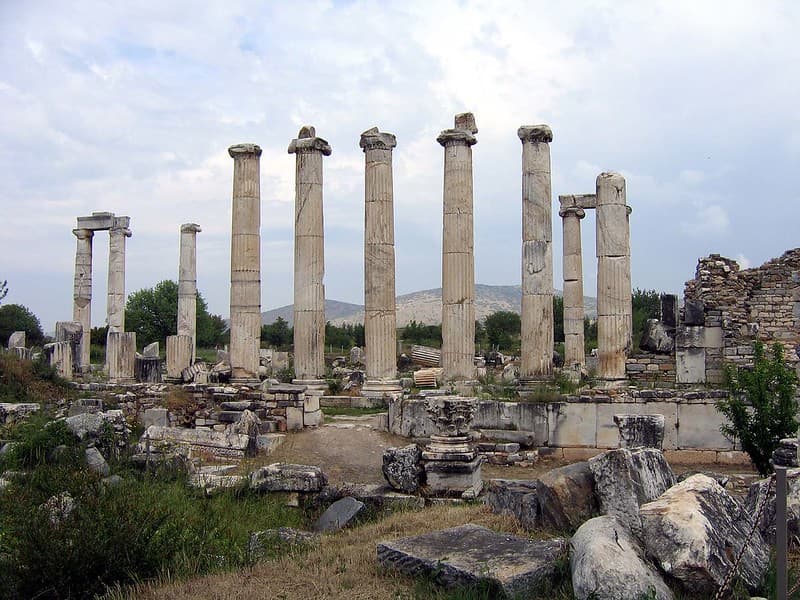
- The Temple of Aphrodite: The spiritual heart of the city, this 3rd-century BCE temple was later converted into a Christian basilica. Fourteen of its original Ionic columns still stand today.
- The Stadium: Arguably the best-preserved stadium from the ancient world, it is 270 meters long and could seat 30,000 spectators. It was used for athletic competitions, festivals, and later, gladiatorial combat.
- The Tetrapylon: A grand monumental gateway that served as the entrance to the temple’s forecourt. Its intricate reliefs are a prime example of the city’s mastery in marble.
- The Sebasteion: A unique religious sanctuary dedicated to Aphrodite and the Julio-Claudian emperors, featuring two 80-meter-long parallel buildings adorned with spectacular marble reliefs.
Attraction
What sets Aphrodisias apart from more crowded sites like Ephesus is its intimacy and artistic depth:
- The School of Sculpture: Aphrodisias was the “Marble Capital of Antiquity.” Its nearby quarries provided high-quality white and blue-grey marble, fueling a world-renowned school of sculptors whose works were exported across the Roman Empire.
- The On-site Museum: The museum houses an extraordinary collection of life-sized statues, busts, and reliefs found during excavations, many in near-perfect condition.
- Off-the-Beaten-Path Experience: Unlike major coastal ruins, Aphrodisias feels like a hidden discovery. The site is spread across a lush, rural landscape, offering a peaceful atmosphere for exploration.

Heritage
Inscribed in 2017, Aphrodisias meets Criteria (ii), (iii), (iv), and (vi):
- Criterion (ii): The site demonstrates an exceptional interchange of values in the development of monumental architecture and the sculpture industry in the Roman East.
- Criterion (iii): It is a unique testimony to the cult of Aphrodite and the artistic tradition of the Aphrodisian school of sculpture.
- Criterion (iv): The city layout and its major monuments, like the Stadium and Sebasteion, are outstanding examples of Roman urban planning and ceremonial architecture.
- Criterion (vi): The site is directly associated with the cult of Aphrodite, which integrated local Anatolian religious traditions with Greek mythology.
Gateway
- The City: Denizli is the most practical gateway, located about 100 km (1.5 hours) from the site.
- Airport: Denizli Çardak Airport (IATA: DNZ) serves domestic flights primarily from Istanbul.
- Lodging: Denizli offers extensive overnight options, including high-end business hotels and thermal spa resorts in nearby Pamukkale.
- Alternative: İzmir (IATA: ADB) is a larger gateway (3 hours away) with more international flight connections.
When
- Spring (April to June) and Fall (September to October): These are the peak windows, offering pleasant temperatures (20–25°C) and lush green scenery.
- Avoid Mid-Summer (July & August): The site has very little shade, and temperatures can soar to 38°C (100°F), making the long walk through the ruins physically draining.

Consideration
- Walking Distance: The archaeological zone is large. You will need at least 3 hours to walk the main circuit. Wear sturdy, comfortable shoes.
- Supplies: There are very few facilities once you enter the ruins. Bring a refillable water bottle and snacks.
- Transport: Public transport to the site is limited. Most travelers rent a car in Denizli or join a guided day trip from Pamukkale or Kuşadası.
- Photography: The light is best in the early morning or late afternoon, especially for capturing the white marble of the Tetrapylon against the blue sky.

Resources
- UNESCO World Heritage – Aphrodisias: The official archive for the site’s maps and history.
- Aphrodisias Excavations (Oxford University): The definitive scientific source for ongoing research and detailed monument descriptions.
- Turkish Museums – Aphrodisias: The official government portal for current ticket prices and visitor information.
- The Friends of Aphrodisias Trust: A dedicated UK-based organization supporting the conservation of the site.
- Tripadvisor – Aphrodisias Tours: Useful for booking private transfers from Denizli or local guided tours.
Featured Image
The Temple of Aphrodite (Julian Fong, Flickr/CC BY-SA 2.0).
In The News
Advertisement

Advertisements
Advertisements
Advertisements
Comment:
Advertisements
 All About World Heritage Sites (...and more)
Leave a comment