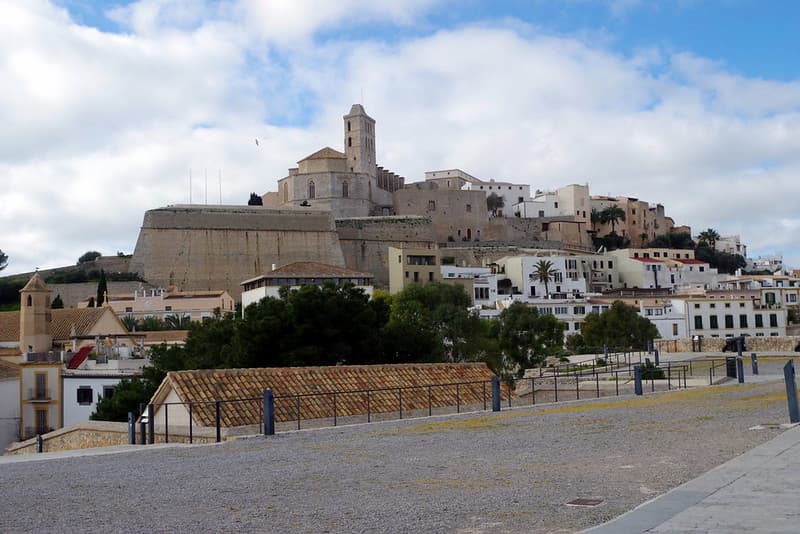
The Ibiza, Biodiversity and Culture World Heritage site in Spain is a unique “mixed” property, meaning it is recognized for both its outstanding natural ecosystems and its deep layers of human history. While many associate the island primarily with its modern “party” reputation, the UNESCO designation protects the ancient soul and biological engine of the island.
The property is a serial site that encompasses both land and sea across the islands of Ibiza and nearby Formentera. It is composed of four main elements:
- Dalt Vila (The Upper Town): A stunningly preserved fortified acropolis in Ibiza Town. Its massive Renaissance walls encase a labyrinth of medieval streets, a cathedral, and a castle.
- Sa Caleta Phoenician Settlement: The remains of the first Phoenician occupation on the island, dating back to the 8th century BC.
- Puig des Molins Necropolis: An ancient cemetery containing thousands of tombs (hypogea) from the Phoenician and Punic periods, considered the most important of its kind in the Western Mediterranean.
- Posidonia Oceanica Meadows: Located primarily in the Ses Salines Natural Park, these underwater seagrass prairies are the “lungs” of the Mediterranean. They are responsible for the incredible clarity and turquoise hue of the surrounding waters.
Attraction
Beyond the world-famous nightlife, Ibiza attracts global travelers for several distinct reasons:
- Crystalline Waters: The Posidonia seagrass filters the water to a degree that makes Ibiza’s beaches some of the clearest in Europe, making it a premier destination for snorkeling and diving.
- Renaissance Grandeur: Walking through the stone gates of Dalt Vila feels like stepping back 500 years. The panoramic views from the bastions provide some of the best photography spots in the Balearic Islands.
- Ancient Mystery: History enthusiasts are drawn to the Phoenician ruins, which offer a rare glimpse into the seafaring cultures that dominated the Mediterranean long before the Roman Empire.
- Bohemian Lifestyle: The island maintains a “hippy” heritage, with vibrant craft markets (like Las Dalias) and sunset rituals that celebrate the island’s natural beauty.

Heritage
UNESCO inscribed the site in 1999 for meeting both cultural and natural criteria:
- Criterion (ii) & (iv): The fortifications of Dalt Vila are a masterpiece of Renaissance military engineering. This specific “Italian-Spanish” model served as the blueprint for the fortified harbor towns built by Spain in the New World (the Americas).
- Criterion (iii): The archaeological sites provide exceptional evidence of the social life and economy of Phoenician colonies.
- Criterion (ix) & (x): The Posidonia oceanica meadows are the best-preserved in the world. They represent a unique evolutionary process in marine biology and support a massive biomass—roughly 21 tons/year of organic matter—which sustains a diverse array of fish and invertebrates, including the endangered Mediterranean monk seal.
Gateway
The city of Ibiza Town serves as the primary gateway to the site.
- Commercial Airport: Ibiza Airport (IBZ) is located just 7km southwest of the city center. It handles millions of international and domestic passengers annually.
- Lodging: The city offers an extensive range of accommodations, from the five-star luxury of Gran Hotel Ibiza to boutique “Hacienda” style hotels and historic guest houses within the walls of Dalt Vila itself.
When
- May to June (Spring): This is the “sweet spot.” The weather is warm (20°C to 25°C), the island is in bloom, and the summer crowds haven’t reached their peak, allowing for peaceful exploration of the heritage sites.
- September to October (Autumn): The sea is at its warmest after the summer sun, but the intense heat has faded. This is the best time for swimming over the Posidonia meadows.
- July and August (Peak): Best for those who want the full “Ibiza experience” including world-class DJs and nightlife, though heritage sites will be much busier.

Consideration
- Footwear: The streets of Dalt Vila are made of ancient, polished cobblestones that can be very slippery and steep. Wear high-grip walking shoes.
- Sun Protection: The reflection of the sun off the white stone buildings and the clear water is intense. Use high-SPF sunscreen even if you are just walking through the town.
- Ecological Respect: When boating or anchoring, it is strictly forbidden to drop anchors on the Posidonia seagrass. Fines are heavy, as these plants grow only a few centimeters per year.
- Timing the Sites: The Archaeological Museum at Puig des Molins has specific afternoon hours. Check the schedule before hiking up the hill.
- Transportation: To see the Phoenician ruins at Sa Caleta or the salt pans of Ses Salines, renting a car or a scooter is highly recommended as public buses to these specific spots can be infrequent.

Resources
- UNESCO World Heritage Centre – The official source for maps, history, and the scientific justification for the site’s status.
- Ibiza.travel (Official) – The official tourism portal with detailed guides on Dalt Vila, local gastronomy, and natural parks.
- Spain.info – Spain’s national tourism website, providing broader travel logistics for visiting the Balearic Islands.
- Trip.com – A comprehensive booking platform for flights to IBZ and local hotels near the historic center.
- Welcome to Ibiza – A local guide that is excellent for checking the cultural agenda, museum opening times, and event calendars for 2026.
Featured Image
Dalt Vila (Rafael Jimenez, Flickr/CC BY-SA 2.0).
In The News
Advertisement



Comment:
 All About World Heritage Sites (...and more)

Leave a comment