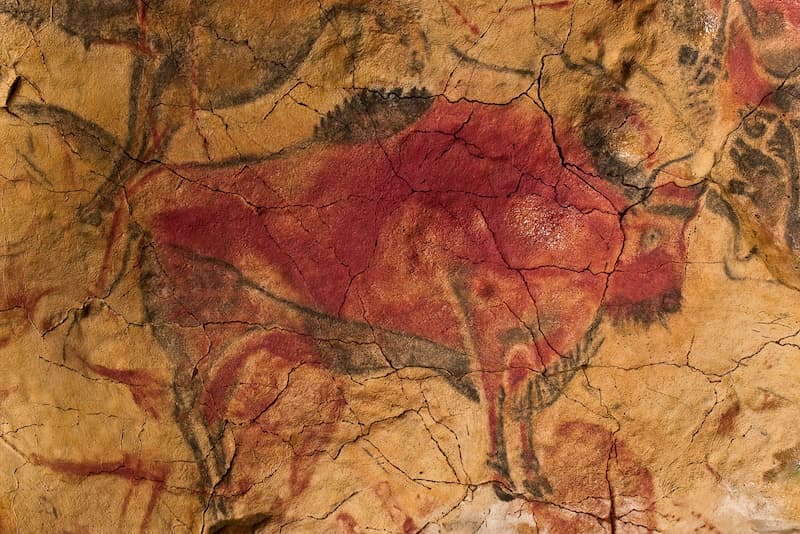
The Cave of Altamira and Paleolithic Cave Art of Northern Spain is more than just a site; it is the “Sistine Chapel of Prehistory.” This UNESCO property represents the peak of human creative genius during the Upper Paleolithic period, offering a breathtaking glimpse into the minds of our ancestors who lived up to 35,000 years ago.
The property consists of 18 caves located across the lush, mountainous regions of Northern Spain (Cantabria, Asturias, and the Basque Country). While Altamira is the crown jewel, the listing was extended in 2008 to include 17 other decorated caves like El Castillo, Tito Bustillo, and Ekain.
Inside Altamira, the most famous chamber is the “Polychrome Ceiling.” It features a herd of steppe bison, deer, and horses painted with incredible realism. These artists didn’t just paint on flat surfaces; they used the natural bulges and contours of the cave walls to give their animals a three-dimensional, “living” volume. The pigments—made from charcoal and ochre—remain strikingly vivid despite the passage of millennia.
Attraction
Why do people travel from across the globe to see these caves? It’s the profound connection to our collective human origin.
- Technical Mastery: The use of shading, perspective, and the integration of the rock’s anatomy into the artwork was so advanced that when the cave was discovered in 1879, experts initially dismissed it as a modern forgery.
- The “Neocave” Experience: To protect the original cave from the carbon dioxide of tourists’ breath, a world-class replica called the Neocave was built. It is so precise that you can feel the humidity and see every crack and pigment stroke exactly as it exists in the original.
- The Setting: The caves are located in some of Spain’s most beautiful landscapes—rugged limestone cliffs, emerald valleys, and medieval villages like Santillana del Mar.

(Locutus Borg, Wikimedia/Public Domain).
Heritage
UNESCO inscribed the site based on two major criteria:
- Criterion (i): The art represents a masterpiece of human creative genius. It is the earliest accomplished art of humankind, displaying a level of technical sophistication that wouldn’t be seen again for thousands of years.
- Criterion (iii): It bears exceptional testimony to a vanished cultural tradition. The caves provide the most significant evidence of the social, spiritual, and artistic life of the hunter-gatherer groups of the Paleolithic era.
Gateway
The city of Santander, the capital of the Cantabria region, is the primary gateway to Altamira.
- Commercial Airport: Seve Ballesteros–Santander Airport (SDR) offers frequent flights from Madrid, Barcelona, and various European hubs.
- Lodging: Santander is a sophisticated coastal city with an abundance of hotels, from the historic Hotel Real to modern boutique stays.
- Proximity: From Santander, it is a pleasant 30-minute drive (roughly 30km) to the Altamira Museum in Santillana del Mar.
When
- May to June or September to October: These “shoulder seasons” offer the best balance of mild weather (15°C to 22°C) and fewer crowds.
- Recommendation: Since Northern Spain (the “Green Coast”) is prone to rain, visiting in late spring allows you to see the Cantabrian landscape at its most vibrant green.
- Avoid August: This is the peak vacation month for Spaniards. The museum and nearby medieval towns can become very crowded.

(Guerin Nicolas, Wikimedia/CC BY-SA 3.0).
Consideration
- The “Original Cave” Lottery: Access to the real Altamira cave is extremely restricted. Every Friday morning, five visitors are chosen by random draw from those present at the museum. If you aren’t one of the lucky five, you will visit the Neocave (which is still an incredible experience).
- Booking Other Caves: If you want to see an original cave (not a replica), caves like El Castillo or Las Monedas allow visitors but require booking weeks or months in advance.
- Temperature: Even if it’s a hot Spanish summer day outside, the caves stay a constant, damp 14°C (57°F). Bring a light jacket or sweater.
- Walking Surface: Cave floors are uneven and can be slippery. Wear shoes with good grip.

Resources
- Museo de Altamira (Official) – The definitive source for tickets, lottery rules, and exhibition info.
- UNESCO World Heritage Centre – For a deep dive into the historical and scientific significance of the 18 caves.
- Cuevas de Cantabria – The official booking portal for the other original caves in the region (El Castillo, etc.).
- Spain.info – The national tourism portal with excellent logistical and regional travel advice.
- Viator – Useful for booking organized day trips from Santander that combine Altamira with a tour of the medieval village of Santillana del Mar.
Featured Image
Drawing of bison found in Altamira Cave (D Rodriguez, Wikimedia/CC BY-SA 3.0).
In The News
Advertisement


Comment:
 All About World Heritage Sites (...and more)
-Museo_Arqueol%C3%B3gico_Nacional.jpg)
.jpg)


Leave a comment