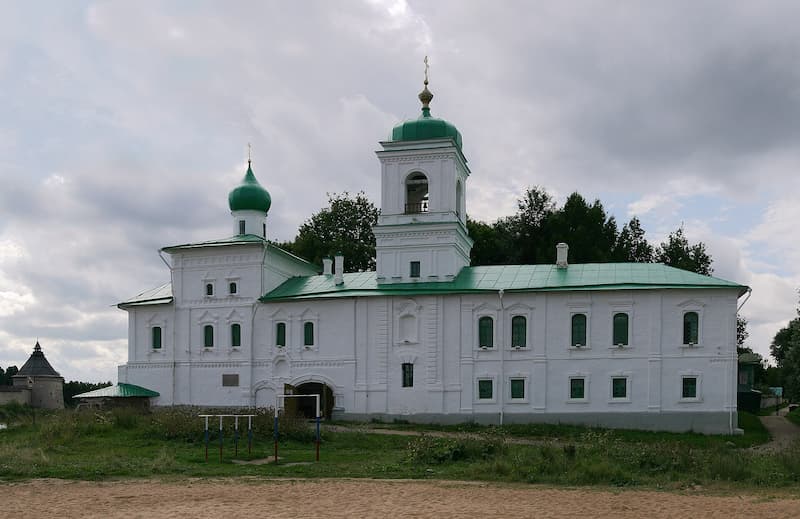
The Churches of the Pskov School of Architecture comprise a serial property of ten religious monuments located in the historic city of Pskov, Russia. These structures, dating from the 12th to the early 17th century, represent a distinct and influential architectural movement that merged Byzantine and Novgorod traditions with local vernacular styles to create a uniquely “Pskovian” aesthetic.
The site consists of ten churches and cathedrals, often accompanied by remnants of their original monastic walls or belfries. These buildings are characterized by their minimalistic and pragmatic design. Built primarily from local limestone, they feature thick, whitewashed walls, cubic volumes, and single or triple domes.
A defining feature of the Pskov style is the belfry—often a multi-arched, wall-like structure built directly atop the church porch or as a separate bell-gable—rather than the tall, independent bell towers seen in other parts of Europe. Inside, many of these churches house priceless examples of medieval mural painting, most notably the 12th-century frescoes of the Mirozhsky Monastery.
Attraction
Pskov is often called a “museum town” because of its high concentration of well-preserved medieval structures. Travelers are drawn to:
- The “Golden Age” Aesthetic: The churches reflect the era when Pskov was a wealthy independent republic and a key partner of the Hanseatic League.
- Ancient Art: The Transfiguration Cathedral at Mirozhsky Monastery contains some of the best-preserved pre-Mongol Byzantine frescoes in the world, covering almost the entire interior.
- Fortified History: The churches are often situated near the Pskov Krom (Kremlin), a massive medieval limestone fortress that stands at the confluence of the Pskova and Velikaya rivers.
- Spiritual Serenity: Unlike the grand, colorful cathedrals of Moscow or St. Petersburg, these churches offer a more austere, “human-scaled” spirituality that many find more evocative of ancient Russia.

Heritage
UNESCO inscribed the Pskov School of Architecture on the World Heritage List in 2019 under Criterion (ii). The justification focuses on the following:
- Influence on Russian Architecture: The Pskov School was one of the most influential architectural movements in Russia. Pskov masters were so renowned that they were hired by Moscow Czars to build iconic structures in the Moscow Kremlin and as far away as Kazan.
- Synthesis of Styles: It represents a masterful integration of Byzantine traditions (transmitted via Novgorod) with local building materials and techniques, creating a “clean” architectural language that influenced Eastern European religious architecture for five centuries.
- Integrity of the Urban Fabric: The ten selected churches illustrate the evolution of this style from its early experimental stages in the 12th century to its peak in the 15th and 16th centuries, remaining perfectly integrated into the city’s historic town planning.
Gateway
The city of Pskov serves as the primary gateway to the site.
- Airport: Princess Olga Pskov International Airport (PKV) is located just 6 km from the city center. It handles domestic flights, primarily from Moscow and other regional hubs.
- Lodging: Pskov is well-equipped for overnight stays, offering everything from boutique hotels like Dvor Pozdnoeva (housed in a restored 17th-century merchant’s chamber) to modern business hotels and budget-friendly guesthouses.
When
- Summer (Late June to mid-August): This is the ideal time for general tourism. The days are long and warm (averaging 22°C), and the “White Nights” effect provides twilight that lasts late into the evening.
- Winter (December to February): While very cold (often below -10°C), the sight of the white churches against a deep snow landscape is arguably when they look their most traditional.
- Note on Frescoes: If your primary goal is to see the frescoes at Mirozhsky Monastery, avoid rainy or highly humid days. The cathedral is often closed during wet weather to protect the delicate paintings from moisture.

Consideration
- Dress Code: These are active places of worship. Women should bring a headscarf and wear a skirt or dress that covers the knees. Men should wear long trousers (no shorts) and remove hats before entering.
- Financial Logistics: International credit cards (Visa/Mastercard) issued outside of Russia may still face restrictions. It is essential to carry cash (Russian Rubles) for museum entries, smaller shops, and public transport.
- Language: While younger staff in hotels may speak English, most signage and church personnel communicate primarily in Russian. Downloading an offline translation app is highly recommended.
- Photography: Photography is usually allowed outside, but many churches strictly prohibit taking photos of the interior frescoes, especially with a flash, as light exposure damages the pigments.
- Walking City: Most of the UNESCO-listed churches are within walking distance of each other along the riverbanks. Bring comfortable, water-resistant walking shoes.

Resources
- UNESCO World Heritage Centre – For the official technical and historical dossiers of all ten inscribed churches.
- Advantour: Pskov Guide – A comprehensive travel resource covering the Kremlin and the various monasteries.
- Pskov Museum-Reserve (Official) – Information on opening hours, special exhibitions, and fresco viewing conditions.
- World Heritage Site: Pskov – A community-driven site with reviews and travel logs from heritage enthusiasts.
- Agoda – A booking platform that offers a wide range of hotel options in Pskov, from historic chambers to modern apartments (earns a commission on bookings).
Would you like me to research the specific direct flight schedules from Moscow to Pskov for your planned travel window?
Featured Image
Mirozhsky Monastery (Ludvig14, Wikimedia/CC BY-SA 3.0).
In The News
Advertisement


Comment:
 All About World Heritage Sites (...and more)


Leave a comment