
The Churches of Moldavia are a collection of eight Romanian Orthodox churches located in the Bukovina region of northeastern Romania. While the country is home to many beautiful monasteries, these specific eight are world-renowned for their unique external mural paintings. Built between the late 15th and late 16th centuries, they represent a high point in Byzantine-influenced art and architecture.
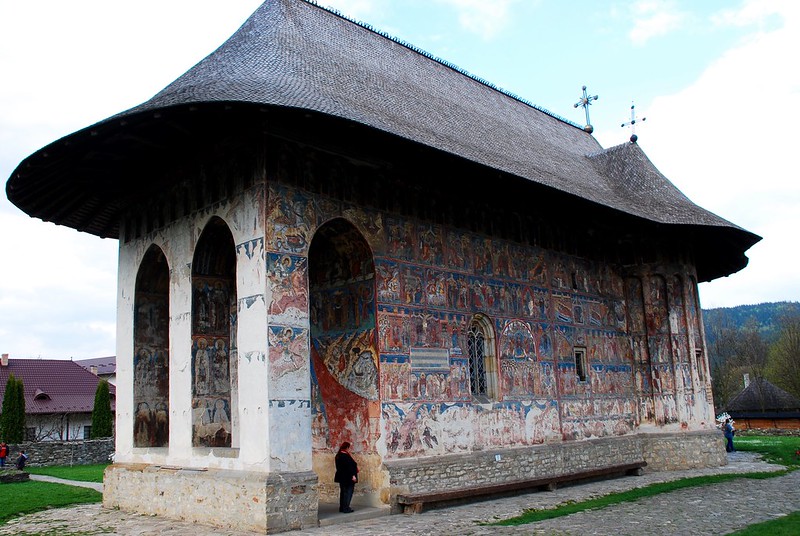
The site consists of eight churches: Arbore, Humor, Moldovița, Pătrăuți, Probota, Suceava (Saint John the New), Voroneț, and Sucevița. These are not just buildings; they are essentially 360-degree canvases. Every exterior wall is covered in intricate frescoes depicting biblical scenes, the lives of saints, and historical events.
Architecturally, they follow a “Moldavian style”—a synthesis of Byzantine elements (like the Greek cross plan) and Gothic influences (pointed arches and tall, shingled roofs). The massive overhanging eaves of these roofs were designed specifically to protect the external paintings from the harsh elements of the Carpathian foothills.
Attraction
What draws people from every corner of the globe is the sheer audacity of the artwork:
- “Comic Book” of the Middle Ages: These murals were created as a visual catechism for the illiterate villagers of the time. They are narrative cycles that “read” like a comic book, teaching theology through vibrant imagery.
- Voroneț Blue: The Voroneț Monastery is famous for a deep, luminous shade of blue made from crushed lapis lazuli and other minerals. The recipe remains a historical mystery, as it has survived five centuries of snow, rain, and sun without fading.
- Dramatic Imagery: The frescoes are not just religious; they are political and emotional. You will see scenes like the Siege of Constantinople (often depicting the “bad guys” in contemporary Ottoman dress) and the terrifyingly detailed Last Judgment.

Heritage
UNESCO inscribed the site in 1993 (and extended it to include Sucevița in 2010) based on:
- Criterion (i): The external paintings are a unique and homogeneous artistic phenomenon, masterpieces of Byzantine art that show a “consummate chromatism” (mastery of color) and remarkable elegance.
- Criterion (iv): The idea of completely covering church exteriors in frescoes is an eminent example of an architectural and decorative type that perfectly illustrates the cultural and religious context of the Balkans during the 15th and 16th centuries.
Gateway
The primary gateway to the Painted Monasteries is the city of Suceava.
- Commercial Airport: Suceava “Ștefan cel Mare” Airport (SCV) is located approximately 12km from the city center and has regular flights to Bucharest and other European hubs.
- Lodging: As a former princely capital, Suceava has a high density of lodging options, ranging from 4-star hotels like Hotel Continental or Sonnenhof to smaller, traditional guesthouses (pensiuni). For a more immersive experience, many travelers stay in the nearby towns of Gura Humorului or Vatra Dornei.
When
- Late Spring to Early Autumn (May to September): This is the goldilocks zone. The weather is warm (20°C–28°C), the gardens are in full bloom, and the light is perfect for photography.
- Easter: Attending a midnight Mass at one of these monasteries is a profound cultural experience, though it will be very crowded.
- Autumn (October): The foliage in the surrounding hills turns a brilliant gold, providing a stunning natural frame for the colorful churches.
Consideration
- Active Monastic Life: These are functioning monasteries, not just museums. Be mindful of monks and nuns in prayer. Silence is expected, especially during services.
- Dress Code: Modesty is strictly enforced. Shoulders and knees must be covered. Most monasteries provide “wrap-around” skirts or shawls at the entrance if you are underdressed, but it’s best to come prepared.
- Photography Fees: While entry is cheap (usually around 10–15 RON), there is often a separate (and higher) fee for taking photos. Flash photography is strictly forbidden indoors to protect the pigments.
- The “Humidity Rule”: On very humid or rainy days, the interiors of some churches (like Voroneț) may be closed to the public to prevent moisture from damaging the 500-year-old plaster.
- Driving: The monasteries are spread out. While you can use local buses, renting a car is the only way to see more than two in a single day.

Resources
- UNESCO World Heritage Centre – The definitive technical resource for the history and criteria of all eight churches.
- RomaniaTourism.com – An excellent official-style overview of each monastery’s specific themes and dominant colors.
- Explore Bucovina – A local regional guide that lists festivals, local crafts (like painted eggs), and hidden gems.
- Patrimoniu.ro – The National Heritage Institute of Romania’s site for detailed preservation and restoration history.
- Booking.com – This link provides a comprehensive list of hotels and traditional guesthouses in the Suceava gateway area (earns a commission on bookings).
Featured Image
Church of Voronet (Ione Pomana, Wikimedia/CC BY-SA 3.0 RO).
In The News
Advertisement


Comment:
 All About World Heritage Sites (...and more)


Leave a comment