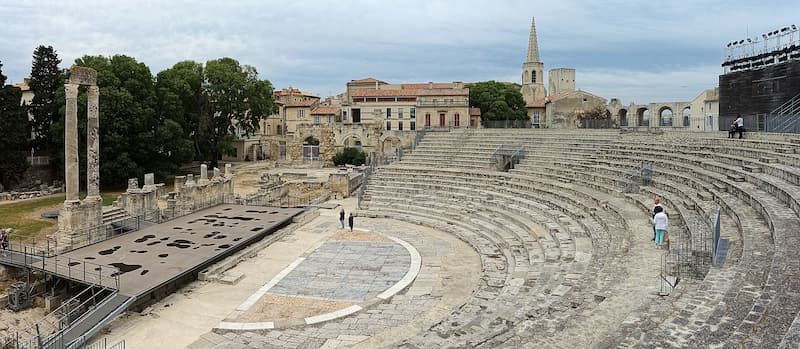
The Arles, Roman and Romanesque Monuments site in France is a remarkable ensemble of structures located in the city of Arles, showcasing the seamless transition and adaptation of an ancient Roman city into a medieval European town. Situated on the banks of the River Rhône in the Provence-Alpes-Côte d’Azur region, the site includes eight major monuments that illustrate different periods of Arles’ history, from its foundational Roman era to its significance in the Middle Ages.
The UNESCO World Heritage property comprises several key monuments:
- Roman Era (1st Century BC – 4th Century AD):
- Amphitheater (Arena): A massive structure built around 90 AD, capable of holding 20,000 spectators for gladiator fights and chariot races.
- Roman Theater: Built in the 1st century BC, it was once a grand venue for performances, now featuring two remaining columns known as the “Two Widows.”
- Cryptoporticus: Subterranean galleries forming a U-shaped foundation for the ancient forum, offering a glimpse into underground Roman engineering.
- Baths of Constantine: Public baths built in the 4th century, showcasing Roman dedication to sanitation and social life.
- Alyscamps Necropolis: A famous ancient Roman burial ground, later transformed into a medieval Christian cemetery.
- Romanesque Era (11th – 12th Century AD):
- Saint-Trophime Church & Cloister: A masterpiece of Provençal Romanesque architecture, renowned for its intricate carved portal representing the Last Judgment and its serene cloister.
Attraction
Arles attracts tourists worldwide due to its unique combination of history, art, and vibrant culture.
- Living History: Tourists can watch modern bullfights (called courses camarguaises) inside the ancient Roman arena, experiencing a continuum of history.
- Artistic Connection: Arles is deeply linked to the painter Vincent van Gogh, who lived here and created many famous works, including Starry Night Over the Rhône.
- Provençal Charm: The city’s charming narrow streets, bustling markets, and sunny Mediterranean climate make it a picturesque destination.

Heritage
Inscribed in 1981, the site is recognized under two criteria:
- Criterion (ii): The monuments, particularly the Cathedral of Saint-Trophime and its cloister, are major examples of Provençal Romanesque art, influencing the Mediterranean world in the 12th and 13th centuries.
- Criterion (iv): Arles provides an exceptional example of how an ancient Roman city was adapted to medieval European civilization, preserving the integrity of its urban layout.
Gateway
- Gateway Cities:
- Marseille: Marseille Provence Airport (IATA: MRS) is the largest international airport nearby (approx. 1-hour drive or train ride).
- Nîmes: Nîmes-Alès-Camargue-Cévennes Airport (IATA: FNI) is closer but has fewer international connections (approx. 30-minute drive).
- Lodging: Both cities offer extensive lodging options. Arles itself also has ample hotels, boutique guesthouses, and apartments suited for an overnight stay.
When
- Spring (April-June) and Autumn (September-October): The weather is pleasant and warm, perfect for walking tours and exploring the outdoor monuments.
- Avoid Summer (July-August): Temperatures can be extremely hot, and the city is very crowded.

Consideration
- Arles Heritage Pass: Purchase a pass that gives access to all major monuments and museums for a discounted price.
- Walking Terrain: The historic center has uneven cobblestone streets; comfortable walking shoes are essential.
- Museum Closures: Check the operating hours of museums, as they may be closed on Mondays or during certain holidays.
- Language: French is the primary language, though English is widely spoken in tourist areas.

Resources
- UNESCO – Arles, Roman and Romanesque Monuments: Official documentation and history from UNESCO.
- Arles Tourist Office: Official guide for tickets, events, and maps.
- Monuments of Arles: Detailed information on the specific historical sites managed by the city.
- France.fr – Arles: Official tourism portal for France with general travel tips.
- GetYourGuide – Arles Tours: For booking guided walking tours, Van Gogh-themed tours, and Arena tickets.
Featured Image
Arles Amphitheater (Velvet, Wikimedia/CC BY-SA 4.0).
In The News
Advertisement

Comment:
 All About World Heritage Sites (...and more)
Leave a comment