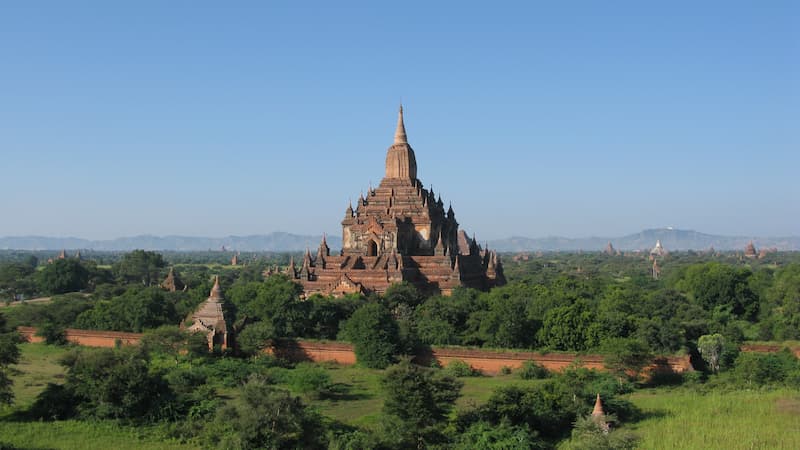
The archaeological site of Bagan is a mesmerizing landscape in central Myanmar that feels more like a dream than a destination. It is a sprawling plain where the silhouettes of over 2,000 ancient Buddhist monuments pierce the horizon, creating one of the most iconic vistas in Southeast Asia.
Bagan is located on the eastern bank of the Ayeyarwady (Irrawaddy) River. Between the 11th and 13th centuries, it was the capital of the Pagan Kingdom, the first empire to unify the regions that now make up Myanmar. During its “Golden Age,” more than 10,000 temples, stupas, and monasteries were constructed. Today, approximately 2,200 remains still stand, ranging from tiny, crumbling brick stupas to massive, multi-tiered temples like the Dhammayangyi and the golden-domed Ananda. The area is divided into three main zones: Nyaung-U (the local hub), Old Bagan (the historic heart), and New Bagan (the residential area).
Attraction
Bagan’s allure lies in its sheer scale and atmospheric beauty.
- Hot Air Ballooning: The most famous image of Bagan is the fleet of red and green balloons rising over the mist at dawn (typically from October to April).
- Sunrise and Sunset: Watching the sun dip below the horizon, casting a golden glow over thousands of red-brick spires, is a spiritual experience for many.
- E-Bike Exploration: Unlike Angkor Wat, which is more structured, Bagan allows for a sense of discovery. Travelers can rent electric bikes (e-bikes) and navigate sandy paths to find “secret” temples all to themselves.
- Art and Craft: The region is world-renowned for its exquisite lacquerware, with many family-run workshops in New Bagan showing the intricate process of layering bamboo and resin.

Heritage
Bagan was officially inscribed as a UNESCO World Heritage Site in 2019. It met three critical cultural criteria:
- Criterion (iii): It bears exceptional testimony to the Bagan Civilization, showcasing the cultural and religious traditions of the first Burmese Empire.
- Criterion (iv): It is an outstanding example of a sacred Buddhist landscape, illustrating a unique architectural evolution of stupas and temples that influenced the region for centuries.
- Criterion (vi): The site is tangibly associated with living traditions of Buddhist merit-making, which remain central to Burmese life today.
Gateway
The direct gateway to the site is the town of Nyaung-U.
- Airport: Nyaung-U Airport (NYU) serves as the primary commercial hub, with frequent domestic flights from Yangon and Mandalay.
- Lodging: Nyaung-U offers a high density of lodging, from budget guesthouses on “Restaurant Row” to boutique heritage hotels. For a more luxury experience, the Aureum Palace in Old Bagan offers views of the ruins directly from the pool.
When
- November to February: This is the peak season. The weather is cool and dry (18°C to 30°C), and the skies are clear, which is essential for hot air balloon flights and photography.
- March to May: It becomes punishingly hot (often exceeding 40°C), making temple-hopping exhausting.
- June to October: The monsoon season brings rain, but since Bagan is in Myanmar’s “dry zone,” showers are often brief. The landscape becomes lush and green, and crowds are minimal.

Consideration
- Safety and Security: Many governments advise against all travel to Myanmar due to ongoing civil unrest and conflict. It is vital to check current travel advisories and ensure your insurance covers the region before planning a trip.
- Temple Climbing Ban: To preserve the fragile structures and ensure safety, climbing on the majority of the temples is strictly prohibited. Use the designated “sunset mounds” provided by the authorities instead.
- Modest Dress: As these are active religious sites, you must cover your shoulders and knees. You must also remove shoes and socks before entering any temple or pagoda platform.
- Archaeological Fee: International visitors must pay a mandatory zone fee (approx. 25,000 MMK) upon arrival, which helps fund the preservation of the ruins.

Resources
- UNESCO World Heritage – Bagan: The official record of the site’s historical and architectural significance.
- Myanmar.com – Bagan Guide: A comprehensive local resource for planning itineraries and finding local guides.
- Balloons Over Bagan: The primary site for booking the iconic sunrise flights (essential to book months in advance).
- Holidify – Bagan Tourism: A great breakdown of specific temples, entry fees, and travel tips for 2026.
- Agoda – Bagan Hotels: A top platform for booking accommodations in Nyaung-U and New Bagan, often featuring “pay at hotel” options which are useful in the current economic climate.
Featured Image
Sulamani Temple (Vyacheslav Argenberg, Wikipedia/CC BY 4.0).
In The News
Advertisement


Comment:
 All About World Heritage Sites (...and more)

Leave a comment