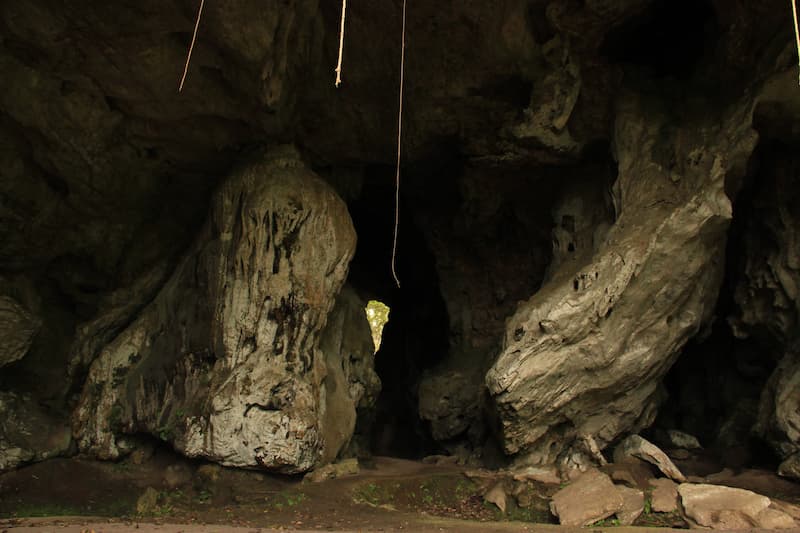
The Archaeological Heritage of the Lenggong Valley is often referred to as Malaysia’s “Open-Air Museum.” Located in the state of Perak, this site is one of the most significant prehistoric locations in Southeast Asia, offering a rare window into human evolution spanning nearly two million years.
The Lenggong Valley is a lush, sedimentary valley nestled between the Bintang and Titiwangsa mountain ranges. The World Heritage site is a serial nomination consisting of four archaeological clusters in two main areas. These clusters include both open-air sites and limestone cave systems along the Perak River.
The landscape was dramatically shaped by two cataclysmic events: a meteorite impact approximately 1.83 million years ago and the catastrophic Toba volcanic eruption in Sumatra roughly 74,000 years ago. These events, though destructive at the time, served to “seal” and preserve prehistoric tool workshops and campsites under layers of ash and suevite rock, creating an undisturbed time capsule for modern archaeologists.
Attraction
For global travelers, Lenggong offers a “frontier” feeling that is rare in modern tourism.
- The Perak Man: Visitors can learn about the “Perak Man,” the oldest and most complete human skeleton found in Southeast Asia (dated to about 10,120 years ago). He was discovered in a fetal position in Gua Gunung Runtuh, providing profound insights into early burial rituals.
- Deep Time Exploration: Unlike many sites that focus on the last few centuries, Lenggong allows tourists to stand on ground where hominids made stone tools nearly two million years ago—the oldest record of human activity outside of Africa.
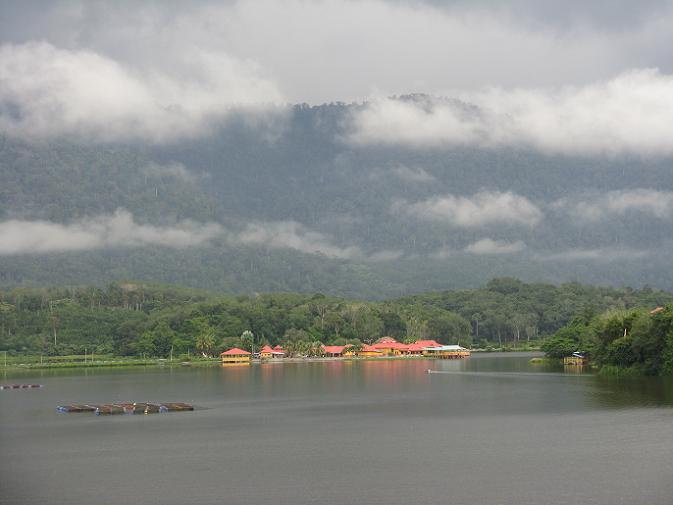
- Off-the-Beaten-Path Nature: The valley is surrounded by stunning limestone karsts, the serene Lake Raban, and vibrant local “Kampung” (village) life. It appeals to “intellectual tourists” who prefer archaeology and quiet landscapes over crowded theme parks.
Heritage
UNESCO inscribed the Lenggong Valley in 2012 based on two primary criteria:
- Criterion (iii): The site provides an exceptional, continuous testimony to hominid occupation from the Palaeolithic era through the Neolithic and Bronze Ages. It is a unique record of human survival and technological adaptation over a vast chronological sequence.
- Criterion (iv): It contains an outstanding ensemble of lithic (stone tool) technology. The undisturbed workshops found at sites like Kota Tampan are globally significant reference points for understanding how early humans manufactured tools in a tropical environment.
Gateway
Ipoh serves as the primary gateway to the Lenggong Valley.
- Commercial Airport: Sultan Azlan Shah Airport (IPH) in Ipoh handles domestic flights and regional international flights (notably from Singapore).
- Lodging: Ipoh offers a wide range of accommodation, from luxury colonial-style hotels to modern boutique stays. From Ipoh, Lenggong is a scenic 1.5-hour drive north.
- Local Option: For those wanting to stay in the valley, there are authentic “boutique homestays” (like Rumah Tiang 16) that offer an immersive cultural experience, though they are limited in number.
When
The best time to visit is during the dry season (June to August) or the cooler months (January to February).
- Weather: Avoiding the heavy monsoon rains (October to December) is crucial, as rainfall can make cave paths slippery and some trekking routes through plantations muddy and difficult to navigate.
- Quietude: Mid-week visits are ideal to have the archaeological gallery and cave sites almost entirely to yourself.
Consideration
- Need for a Guide: Many of the most important sites (like the meteorite impact site at Bukit Bunuh) are located within private oil palm plantations. They are nearly impossible to find and interpret without a licensed local heritage guide.
- Limited Public Transport: There is very little public transport within Lenggong. You should ideally rent a car in Ipoh or hire a driver for the day.
- Academic Vibe: This is an active research site. Some caves may be closed for ongoing excavation, and the Lenggong Archaeological Gallery sometimes undergoes renovations. Always check the current status before traveling.
- Modesty: Since you will be passing through traditional Malay villages, dress modestly (covering shoulders and knees) to respect local customs.
Resources
- UNESCO World Heritage Centre: The official source for the technical history and Outstanding Universal Value of the site.
- Lenggong Geopark Official: Provides the most up-to-date information on the valley’s status as both a World Heritage site and a National Geopark.
- Teja on the Horizon: A detailed, independent travel blog that provides practical “how-to” steps for navigating the valley.
- Rumah Tiang 16: A specialized local host and heritage expert site for those seeking a guided, deep-dive experience into the valley’s culture and archaeology.
- Agoda: A reliable platform to book your “gateway” accommodation in Ipoh or search for guesthouses near Lenggong.
Featured Image
Gua Kajang (Alagappan Ramanathan, Imaggeo/CC BY 3.0).
In The News
Advertisement


Comment:
 All About World Heritage Sites (...and more)

Leave a comment