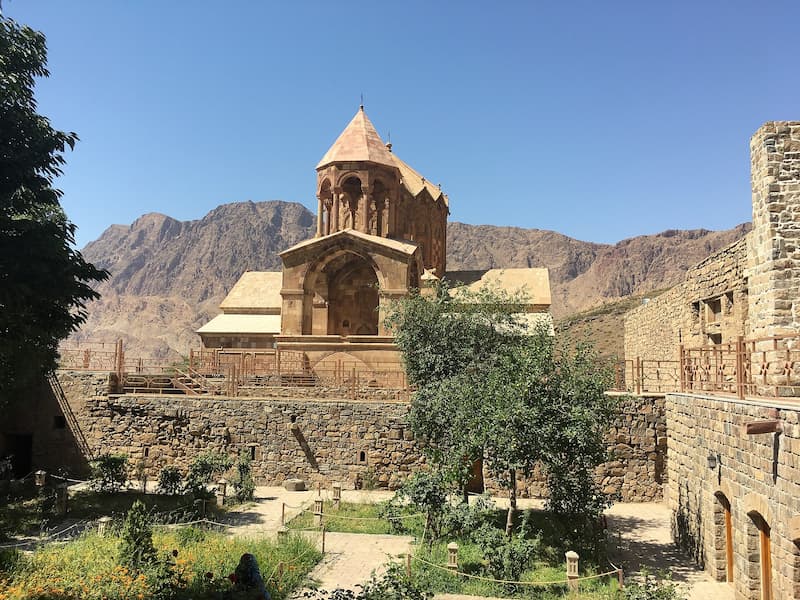
The Armenian Monastic Ensembles of Iran, inscribed on the UNESCO World Heritage list in 2008, consist of three distinct monastic sites located in the north-western provinces of West Azerbaijan and East Azerbaijan: Saint Thaddeus, Saint Stepanos, and the Chapel of Dzordzor. These ensembles are masterpieces of Armenian architectural and decorative traditions, showcasing a sophisticated synthesis of Armenian, Byzantine, Orthodox, and Persian cultural influences. Dating from the 7th century, they represent the last surviving regional remains of Armenian culture in this area, having survived centuries of natural disasters and human conflict.
- St. Thaddeus Monastery (Qara Kelisa): Located near Maku, this is one of the oldest Christian churches in the world, traditionally believed to be the burial site of St. Thaddeus the Apostle. It features a unique black and white stone facade and a stunning blend of styles.
- St. Stepanos Monastery: Situated in a deep canyon near Jolfa, this monastery is known for its intricate carvings, beautiful dome, and fortified walls that blend seamlessly with the surrounding mountainous landscape.
- Chapel of Dzordzor: Originally located elsewhere, this chapel was carefully moved and reconstructed in the 1980s to avoid being submerged by a dam project, demonstrating a significant commitment to heritage preservation.
Attraction
- Spiritual Significance: St. Thaddeus is a major living pilgrimage site for Armenians worldwide, attracting thousands during the annual celebration in July.
- Architectural Mastery: The unique mixture of Armenian architecture with Persian artistic elements (such as muqarnas) provides a visually stunning experience unlike churches in Europe.
- Scenic Landscapes: The monasteries are set in breathtaking, remote mountainous locations, offering adventure travelers both cultural immersion and natural beauty.

Heritage
The site is recognized for its Outstanding Universal Value based on three criteria:
- Criterion (ii): The monasteries illustrate the Outstanding Universal Value of Armenian architectural and decorative traditions, showing significant cultural interchanges with Byzantine, Orthodox, and Persian cultures.
- Criterion (iii): Situated on the south-eastern fringe of the main zone of Armenian culture, they were a major center for its dissemination in the region.
- Criterion (vi): As a place of pilgrimage for the apostle St. Thaddeus, they bear outstanding living testimony to Armenian religious traditions over centuries.
Gateway
- Gateway City: Tabriz, the capital of East Azerbaijan Province, is the best gateway. It boasts Tabriz International Airport (IATA: TBZ) with frequent domestic flights from Tehran and some international connections.
- Lodging: Tabriz offers numerous modern hotels and traditional guesthouses suitable for overnight stays.
- Transit: The monasteries are located 3-5 hours from Tabriz, requiring arranged transport (private driver or guided tour).
When
- Spring (April-May) and Autumn (September-October): The weather is comfortable for exploring the remote mountainous areas.
- July: Ideal if you want to witness the annual pilgrimage at St. Thaddeus, though it will be very crowded and hotter.

Consideration
- Remote Location: These sites are in isolated areas; ensure you have reliable transportation and supplies.
- Dress Code: Visitors must adhere to strict dress codes (modest clothing for both men and women) when entering the monastic compounds.
- Visa Requirements: Check the latest visa policies for Iran for your nationality.

(Soheil Callage, Wikimedia/CC BY-SA 4.0).
Resources
- UNESCO – Armenian Monastic Ensembles of Iran: Official documentation and history.
- Visit Iran – Monasteries: Official tourism site of Iran with practical info.
- Iran Traveling Center – Affiliate: For booking guided tours to the monasteries departing from Tabriz.
- Lonely Planet – Iran: General travel guides and safety advice.
- Google Maps – Tabriz Airport: To plan your route from the gateway city.
Featured Image
St Stepanos Monastery (Phoenix Bird 73, Wikimedia/CC BY-SA 4.0).
In The News
Advertisement


Comment:
 All About World Heritage Sites (...and more)
Leave a comment